
China’s oil and gas logistics sector supports refineries, terminals, pipelines, and industrial users across a vast geography. This article introduces ten notable companies serving these demanding supply chains. The selection considers operating scale, network coverage, safety systems, technical capability, and service reliability.
Oil and gas logistics involves more than moving barrels or cylinders. It requires coordinated storage, road transport, rail connections, port handling, pipeline scheduling, customs documentation, and emergency planning. Leading providers may use GPS tracking, digital dispatch platforms, tank inspection programs, and temperature or pressure monitoring. These details matter when a shipment travels from an inland production area to a coastal terminal.
Safety remains central. So does compliance. Companies must manage hazardous materials responsibly and follow applicable Chinese regulations and international standards. Their performance should also be judged through training quality, incident records, environmental controls, and transparent customer communication. Some firms have stronger national coverage, while others excel in specialized equipment or regional service. The ranking is therefore an informed market overview, not an official government list. Data can change as acquisitions, contracts, and operating licenses develop. That limitation deserves attention.
This guide aims to help manufacturers, energy buyers, and supply-chain managers compare potential partners more carefully. It highlights practical strengths rather than relying only on company size. Readers should verify current certifications, fleet capacity, insurance, service locations, and project references before making decisions. Experience varies by cargo type and route. No single provider fits every requirement.
China Top 10 Oil and Gas Logistics Companies?
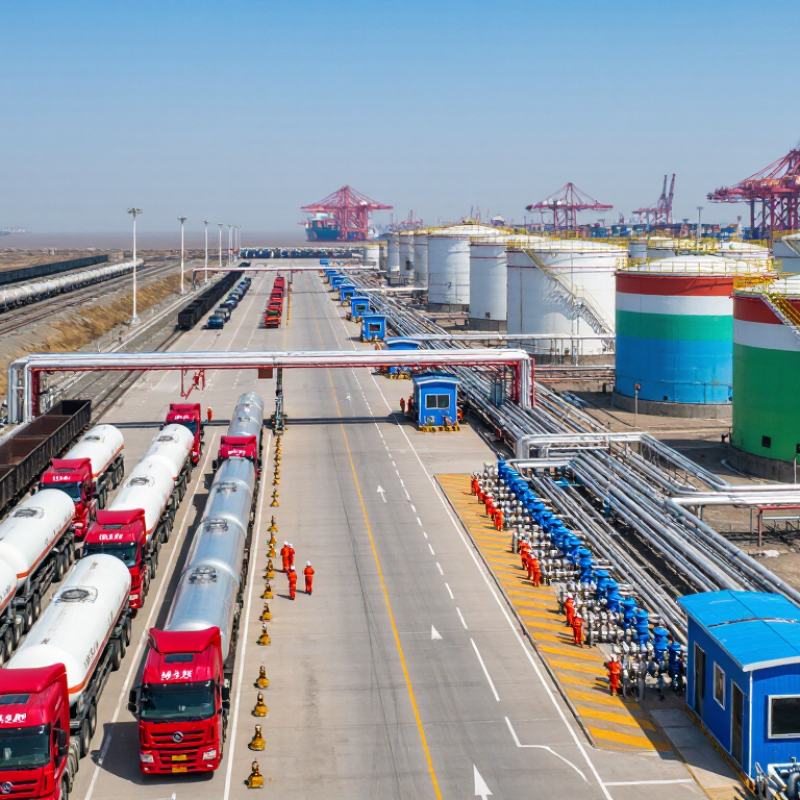
Oil and gas logistics in China covers the movement, storage, handling, and coordination of petroleum and natural gas. Its scope begins at production sites and import terminals. It continues through pipelines, ports, railways, roads, tanks, and distribution stations. The process also includes customs documentation, inventory control, emergency planning, and quality checks. This is more than transportation. A delayed valve inspection can affect an entire delivery schedule.
Professional logistics teams normally assess route distance, cargo properties, weather, storage capacity, and local regulations. They use sealed loading systems, pressure monitoring, vehicle inspections, and digital shipment records. These controls help reduce leakage, contamination, delays, and unsafe transfers. In practice, conditions can change quickly near coastal terminals or northern storage areas. The model is useful, but never complete. Human judgment still matters.
Tips: Check permits before booking transport. Confirm tank compatibility and inspection dates. Keep loading records, temperature data, and emergency contacts together. Ask whether the route has backup storage. A low-cost option may create higher handling risks later. Real experience shows that small documentation errors can stop a shipment for hours. Logistics performance should be measured through safety, traceability, delivery accuracy, and response speed, not price alone.
| Rank | Anonymized Operator Profile | Core Logistics Scope | Main Cargo Categories | Primary Transport Modes | Key Chinese Operating Regions | Typical Infrastructure | Relevant Compliance Areas |
|---|---|---|---|---|---|---|---|
| 1 | Integrated Energy Logistics Operator A | End-to-end movement of crude oil, refined products and natural gas, including storage coordination and multimodal distribution. | Crude oil, gasoline, diesel, fuel oil, LNG and LPG | Pipeline, coastal shipping, rail, road tanker and inland waterway | Bohai Rim, Yangtze River Delta, Pearl River Delta and major inland energy bases | Tank farms, loading terminals, pipeline interfaces and hazardous-material dispatch centers | Dangerous-goods classification, storage safety, transport licensing and emergency response |
| 2 | National Pipeline Logistics Operator B | Long-distance transmission, metering, nomination management and interconnection of upstream, midstream and downstream facilities. | Natural gas, crude oil and refined petroleum products | Trunk pipeline, gathering pipeline, branch pipeline and short-haul road transport | Western gas-producing areas, northern China, coastal receiving regions and central demand centers | Compressor stations, pump stations, metering stations, valve chambers and control centers | Pipeline integrity, pressure control, leak detection, land-use protection and emergency shutdown procedures |
| 3 | Coastal Petroleum Terminal Operator C | Marine receiving, vessel scheduling, ship-to-shore transfer, terminal storage and onward distribution. | Crude oil, naphtha, gasoline, diesel, jet fuel and fuel oil | Coastal tanker, ocean-going vessel, pipeline, rail and road tanker | Northeast, Bohai Rim, East China coast and South China coast | Deep-water berths, loading arms, tank farms, vapor-control systems and firefighting facilities | Port safety, ship-to-shore transfer, spill prevention, fire protection and hazardous chemical handling |
| 4 | LNG and Low-Temperature Logistics Operator D | LNG import, receiving, cryogenic storage, regasification support and road distribution to industrial and city-gas users. | Liquefied natural gas, biomethane and other cryogenic gases | LNG carrier, cryogenic tanker, pipeline and short-distance road transport | Coastal receiving terminals, major city clusters and industrial gas markets | Cryogenic tanks, unloading arms, regasification units, tanker filling stations and satellite stations | Low-temperature equipment, pressure control, boil-off gas management and hazardous-goods transport |
| 5 | Refined-Product Distribution Operator E | Regional distribution from refineries and terminals to retail stations, airports, factories and commercial customers. | Gasoline, diesel, aviation fuel, lubricants and specialty fuels | Road tanker, pipeline, rail tank car and coastal tanker | Urban clusters, airport regions, industrial parks and major highway corridors | Distribution terminals, automated loading racks, tanker fleets and fuel-delivery scheduling systems | Hazardous-chemical road transport, loading controls, grounding, vapor recovery and driver qualification |
| 6 | Hazardous-Gas Road Logistics Operator F | Time-sensitive road transport of compressed and liquefied gases between production sites, storage facilities and customers. | LNG, LPG, CNG, hydrogen and industrial gases | Specialized road tanker, tube trailer and container transport | Industrial corridors, energy hubs, city-gas networks and remote-user supply routes | Pressure vessels, tube trailers, tanker parking areas, GPS monitoring and dispatch platforms | Vehicle qualification, route controls, electronic monitoring, loading procedures and emergency drills |
| 7 | Oilfield Supply-Chain Operator G | Procurement logistics, equipment mobilization, drilling-site supply, return logistics and remote-area inventory management. | Drilling equipment, pipes, chemicals, lubricants, spare parts and camp supplies | Heavy-haul road, rail, multimodal freight and chartered aviation for urgent items | Xinjiang, Inner Mongolia, Sichuan, Chongqing, Shaanxi and offshore support bases | Heavy-load yards, pipe storage, field warehouses, workshops and project-control centers | Oversized-load permits, chemical handling, lifting safety, driver controls and site-access management |
| 8 | Petrochemical Warehouse Operator H | Third-party storage, inventory control, order fulfillment, packaging and distribution of petrochemical materials. | Base oils, solvents, polymers, additives, lubricants and packaged chemicals | Road, rail, container transport and warehouse handling | Yangtze River Delta, Pearl River Delta, Bohai Rim and inland chemical parks | Bonded and general warehouses, liquid storage tanks, drum-filling lines and laboratory areas | Chemical storage compatibility, fire zoning, spill containment, labeling and inventory traceability |
| 9 | Energy Equipment Logistics Operator I | Project logistics for refineries, LNG facilities, pipelines, storage terminals and offshore energy installations. | Compressors, pumps, turbines, pressure vessels, valves, modules and steel pipe | Heavy-haul road, rail, coastal shipping, barge and crane-assisted transport | Coastal construction sites, refinery zones, pipeline projects and western energy bases | Heavy-lift yards, engineering warehouses, modular transport equipment and project-control offices | Oversized cargo permits, lifting plans, route surveys, packaging standards and construction-site safety |
| 10 | Digital Energy Freight Operator J | Freight brokerage, transport visibility, electronic documentation, route optimization and compliance monitoring. | Petroleum products, LNG, LPG, chemicals, equipment and maintenance materials | Road, rail, coastal shipping and multimodal transport arranged through licensed partners | National coverage with emphasis on port clusters, industrial parks and inland energy corridors | Transport-management systems, GPS or BeiDou tracking, electronic proof of delivery and control towers | Carrier qualification, digital records, dangerous-goods documentation, route risk assessment and incident reporting |
Scope: Oil and gas logistics in China covers the planning, transportation, storage, terminal handling, distribution and project support of crude oil, refined products, natural gas, LNG, LPG, petrochemicals and related equipment. The operator profiles above are anonymized sector categories rather than named-company rankings.
It covers transport, storage, loading, quality checks, customs documents, and emergency planning. Routes may use ships, pipelines, railways, roads, and storage tanks. A delayed valve inspection can affect the entire schedule.
Check permits, cargo properties, tank compatibility, inspection dates, route distance, and available storage. Keep loading records, temperature data, and emergency contacts together. Small errors matter.
Rankings should assess safety, capacity, route coverage, delivery accuracy, financial strength, and environmental performance. Counting trucks or tanks is not enough. A large fleet may still perform poorly.
Safety reviews should include incident rates, equipment inspections, worker training, and emergency response times. Teams also need tested backup routes. Infrastructure alone proves little.
Digital systems record vehicle locations, shipment progress, temperatures, seals, and delivery documents. They improve traceability and reveal delays earlier. Manual records can still create gaps.
Ships support coastal movement and terminal unloading. Railways move fuel inland, while trucks serve shorter or flexible routes. Pipelines connect terminals, storage sites, and distribution stations.
LNG transport requires cryogenic trailers, pressure-controlled storage, compatible tanks, and careful temperature monitoring. Loading systems must remain sealed. Conditions can change quickly.
Review fuel efficiency, methane controls, verified emissions, and transport distances. Use consistent calculation methods across companies. Published data is often incomplete.
Cheap services may lack backup storage, updated inspections, or reliable documentation. A small port error can stop delivery for hours. Price alone is a weak measure.
No ranking is perfect. Public data may be incomplete, inconsistent, or self-reported. Verified results should remain separate from company claims. That limitation deserves clear disclosure.
This article presents a practical overview of Oil and gas logistics in China, focusing on how energy materials, equipment, and related supplies are transported, stored, and distributed across domestic and international routes. It explains the criteria used to evaluate the country’s top ten logistics providers, including fleet and storage capacity, safety management, service reliability, digital capabilities, geographic coverage, and experience supporting complex energy projects.
The article also profiles the leading providers without focusing on brand names, comparing their transportation networks, warehousing resources, multimodal solutions, port connections, and specialized project support. In addition, it examines major industry trends, such as smarter logistics platforms, greener operations, improved supply-chain visibility, infrastructure modernization, and the growing need for flexible services that can respond to changing energy demand and regional development.
