
In 2026, Renewable energy logistics is becoming a decisive factor in project performance. Wind farms, solar parks, and battery facilities require carefully timed deliveries. A single offshore turbine blade can exceed 80 meters and demand specialized handling. That constraint changes route planning, port selection, and insurance requirements. Scale matters.
Developers are combining road, rail, coastal shipping, and inland waterways more intelligently. Ports are adding stronger cranes, wider turning areas, and temporary storage zones. Rail connections can reduce congestion around manufacturing hubs. Digital twins are also helping planners test weather delays, vessel capacity, and warehouse limits before equipment moves. Still, technology cannot replace experienced site teams. Small errors matter.
This article examines the leading Renewable energy logistics trends shaping projects in 2026. It considers predictive analytics, low-carbon transport, regional warehousing, and circular equipment management. It also explores how suppliers verify emissions data and maintain traceability across complex routes. Experienced logistics managers increasingly measure delivery reliability, not only freight cost. The strongest plans include backup ports, spare lifting equipment, and clear communication with local contractors.
No forecast is perfect. Data quality remains uneven across suppliers, and rural infrastructure can disappoint even well-funded projects. That uncertainty deserves attention. Reliable logistics depends on practical audits, documented safety procedures, compliant transport planning, and honest performance reporting. These trends may improve speed and resilience, but careful judgment will remain essential as renewable projects grow larger and more geographically dispersed.
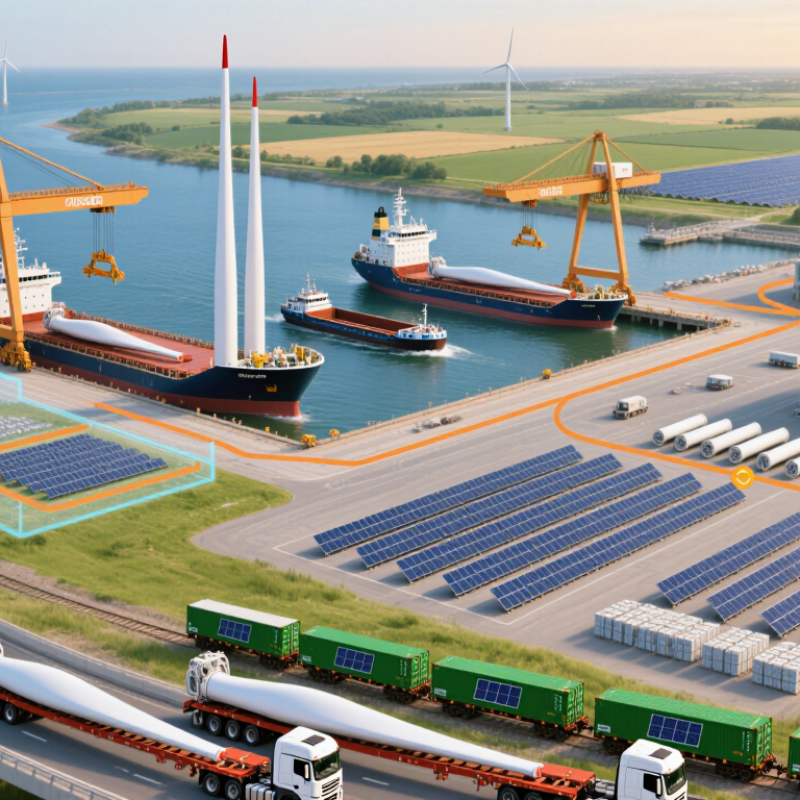
Renewable energy logistics is the planning and movement of equipment, materials, data, and people across clean-energy projects. It covers factories, ports, roads, warehouses, construction sites, and recycling facilities. In 2026, logistics will support more than delivery. It will shape project speed, cost, and resilience.
The International Renewable Energy Agency reported 585 gigawatts of renewable capacity added globally in 2024. Renewable sources represented 92.5% of total new power capacity. The International Energy Agency expects global renewable capacity to grow by 5,500 gigawatts between 2024 and 2030. These figures create intense pressure on logistics networks. A single wind project may require oversized blades, tower sections, cranes, and carefully timed road permits. Solar projects need millions of modules, inverters, cables, and storage units. One delayed component can leave an entire site waiting.
Data-led coordination will become central in 2026. Digital shipment tracking can connect suppliers with port schedules and installation teams. Regional warehouses may reduce long-distance transport risks. Electric trucks and lower-carbon fuels can also cut logistics emissions, although heavy transport remains difficult to decarbonize. The weak point is predictability. Weather, grid approvals, vessel shortages, and changing trade rules can disrupt even well-planned routes. Forecasts may look precise, but field conditions often disagree. Experienced planners will need flexible contracts, alternative suppliers, and visible contingency stock. That discipline may cost more initially. It can prevent far greater losses during construction.
A data-based overview of the infrastructure, transport, storage, and supply-chain priorities shaping renewable energy logistics in 2026.
| Trend | Relevant data point | 2026 logistics implication | Priority logistics KPI | Recommended operational response |
|---|---|---|---|---|
| Rapid renewable-capacity expansion | Global renewable power capacity is expected to increase by approximately 5,500 GW between 2024 and 2030. Solar photovoltaic and wind are expected to provide about 95% of the expansion. | Higher shipment volumes for modules, turbines, inverters, transformers, cables, and balance-of-system equipment, with more simultaneous project deliveries. | On-time-in-full delivery rate; project cargo dwell time; transport capacity secured before construction start. | Use multi-country sourcing, regional consolidation hubs, and early booking for heavy-lift, ocean, rail, and inland transport capacity. |
| Larger and more complex wind components | Modern utility-scale wind projects increasingly use blades exceeding 80 metres and turbine components weighing hundreds of tonnes, creating route and lifting constraints. | Road geometry, bridge limits, port cranes, laydown areas, and police or traffic coordination become critical path activities. | Route-survey completion; abnormal-load permit lead time; lifting-plan compliance; component damage rate. | Complete digital route surveys early and combine road, rail, barge, and port options for oversized components. |
| Battery-energy-storage logistics | Battery storage capacity needs to expand to approximately six times its 2022 level by 2030 in scenarios aligned with stronger renewable integration. | Transport planning must address lithium-battery classification, thermal-runaway risk, emergency response, temperature control, and end-of-life movement. | Regulatory-document accuracy; incident-free transport rate; battery condition at receipt; storage emergency-readiness score. | Use certified dangerous-goods procedures, segregated storage zones, fire-protection controls, and documented chain of custody. |
| Grid-equipment and transmission bottlenecks | Around 80 million kilometres of electricity grids worldwide must be added or refurbished by 2040, while annual grid investment needs to rise to more than US$600 billion by 2030. | Demand will increase for transformers, switchgear, conductors, underground cable, and other high-value equipment with long manufacturing lead times. | Equipment lead-time variance; transformer availability; site-delivery reliability; storage cost per project. | Reserve manufacturing slots, qualify alternative suppliers, and establish buffer inventory for long-lead grid components. |
| Port-centric offshore wind logistics | Offshore projects require specialised ports, heavy-lift facilities, installation vessels, subsea cables, and large staging areas; installation assets are limited and highly scheduled. | Port availability and vessel scheduling can determine construction windows, especially where weather limits offshore work. | Port utilisation; vessel waiting days; weather-related schedule variance; component handling incidents. | Reserve port slots and marine assets early, maintain weather-contingency plans, and use regional pre-assembly where feasible. |
| Critical-mineral traceability and circularity | Clean-energy technologies rely on minerals such as lithium, nickel, cobalt, graphite, copper, and rare earth elements, with supply concentrated in a limited number of regions. | Logistics networks must provide better origin records, customs visibility, material-security planning, and reverse logistics for repair, reuse, and recycling. | Traceability coverage; recycled-material recovery rate; customs clearance time; supply disruption exposure. | Create digital material passports, diversify approved routes, and design collection flows for damaged or retired equipment. |
| Low-carbon freight and logistics reporting | International maritime policy targets net-zero greenhouse-gas emissions from shipping by or around 2050, with 2030 milestones for lower-emission fuels and efficiency. | Renewable-energy projects will increasingly require shipment-level emissions data and lower-carbon transport choices in procurement decisions. | Transport emissions per tonne-kilometre; load factor; empty-mile percentage; share of shipments with verified emissions data. | Prioritise consolidated loads, route optimisation, rail and coastal shipping where practical, and standardised emissions accounting. |
| Digital visibility and predictive logistics | Renewable projects involve numerous suppliers, multimodal movements, permits, weather constraints, and installation interfaces, making real-time status information operationally valuable. | Digital control towers, geofencing, electronic documentation, and predictive alerts will help reduce missed delivery windows and unplanned storage. | Shipment milestone accuracy; exception-resolution time; forecast accuracy; percentage of assets tracked in real time. | Integrate transport, warehouse, weather, permit, and project-schedule data into one exception-management workflow. |
It coordinates equipment, materials, data, and people across factories, ports, roads, warehouses, project sites, and recycling facilities.
Projects need many components delivered on schedule. One delayed inverter, turbine blade, or crane can leave a construction site waiting.
Survey routes for bridge limits, tight turns, port access, and traffic windows. Plan for weather and temporary storage near the site.
Blades can exceed 70 meters. Specialized trailers, route permits, escorts, and clear delivery handovers help prevent disruptions.
They need careful handling, accurate documents, and temperature monitoring. State-of-charge records can support clearer transfers and inspections.
Electric trucks suit predictable routes with overnight charging. Longer trips may use rail, renewable fuels, or shared consolidation hubs.
No. Extra collection trips can offset the savings. Track return distances, repair rates, and fuel use.
Start with one delivery region. Record fuel, distance, load weight, and return rates, then compare results monthly.
Signal gaps and poor handovers create blind spots. Digital tools help, but field conditions can still disagree with the plan.
Renewable energy logistics will become a critical part of the clean energy transition in 2026, connecting the production, storage, and installation of solar panels, wind turbines, batteries, and related equipment. As projects grow in scale and reach more regions, logistics providers will need to coordinate oversized transport, specialized handling, multimodal delivery, and time-sensitive construction schedules. The expansion of energy storage will also create new requirements for secure, temperature-aware, and carefully planned transportation.
Digital platforms will improve visibility across renewable energy supply chains by supporting real-time tracking, demand forecasting, inventory coordination, and risk monitoring. At the same time, companies will adopt low-carbon transport methods, reusable packaging, reverse logistics, and recycling programs to reduce environmental impact. Successful operations will depend on resilient infrastructure, clear regulatory compliance, qualified local partners, and contingency planning for weather, customs, capacity shortages, and geopolitical disruption. Together, these trends will make renewable energy logistics more efficient, transparent, sustainable, and adaptable.
