Precision-calibrated cold storage solutions and automated logistics equipment manufactured to CE, ISO, and international pharmaceutical GDP standards.
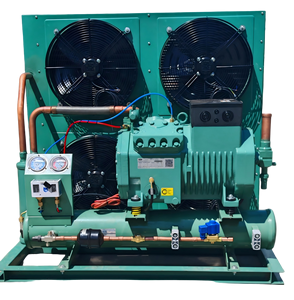
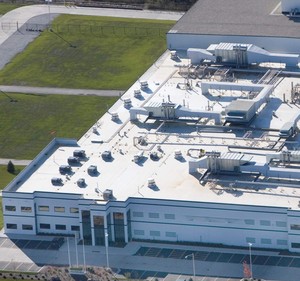
As global cold chain demands expand across temperature-sensitive perishables, life-saving biopharmaceuticals, and high-tech manufacturing, selecting the optimal manufacturing partner in China has evolved beyond basic fabrication metrics. Modern supply chain resilience demands total thermodynamic integrity, carbon-lean refrigeration efficiency, automated material flow, and verifiable end-to-end regulatory adherence. As China’s preeminent cold chain logistics manufacturer, our production clusters integrate heavy industrial structural engineering, multi-stage screw and scroll compressor assembly, automated guided logistics (ASRS/AGV), and IoT digital intelligence.
Whether configuring high-throughput multi-temperature logistics centers, blast-freezing marine installations, or modular last-mile vaccine delivery capsules, our systems are calibrated to mitigate operational disruptions. By pairing robust thermodynamic hardware with intelligent telemetry, we empower food processors, pharmaceutical conglomerates, and intermodal logistics enterprises to eliminate spoilage risks, comply with strict global import frameworks, and drive down thermal degradation overhead.
Utilizing low-GWP natural refrigerants (CO2/NH3) and multi-stage cascade compressors yielding up to 34% energy savings over standard Freon units.
Seamless structural tie-in with 4-way shuttles, high-bay stacking cranes, and automated guided vehicles optimized for sub-zero (-30°C) operations.
Engineered to eliminate bacterial harbor points with continuous dual-loop temperature failsafes meeting stringent WHO and FDA mandates.
Global procurement teams are navigating rapid geopolitical shifts, surging energy costs, and rigorous Environmental, Social, and Governance (ESG) guidelines. Sourcing cold storage infrastructure from China has consequently evolved from transactional unit buying into systemic, lifecycle-driven strategic partnerships. Procurement directors are systematically re-evaluating specifications across three major paradigms:
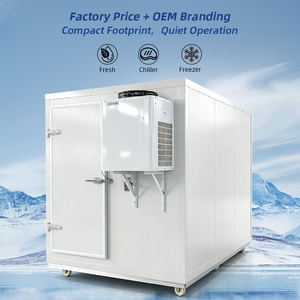
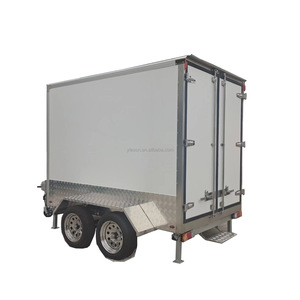
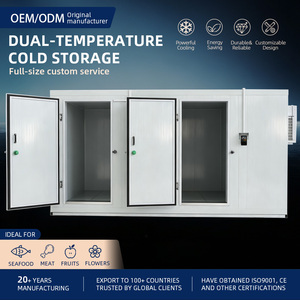
Long construction timelines represent acute market vulnerability. Sourcing practices now heavily favor pre-engineered, modularized cold chain assets—such as dual-temperature mobile units and containerized steel-structure warehouses. These structures are pre-commissioned, wired, and load-tested within our automated Chinese fabrication plants, dropping on-site setup times from 14 months to mere weeks.
With phased regulatory bans on traditional hydrofluorocarbons (HFCs) under the Kigali Amendment, procurement decisions focus aggressively on transcritical CO2 (R744), ammonia (R717), and propane (R290) systems. Forward-looking buyers prioritize manufacturers possessing proven pressure-vessel engineering capacities capable of handling high operating thresholds and delivering ultra-low Global Warming Potential (GWP) metrics without compromising chilling performance.
Human labor in sub-zero freezer environments (-25°C to -40°C) incurs high operational friction, attrition, and safety insurance burdens. Modern procurement frameworks demand cold room designs built from the ground up for robotics—incorporating condensed ceiling clearances, specialized thermal barrier air locks, floor-embedded inductive guidance systems, and MES/WMS software architectures capable of autonomous high-density handling.
The convergence of industrial automation, industrial Internet of Things (IIoT), and cloud telemetry is rewriting cold storage capabilities. As an advanced manufacturer, we incorporate artificial intelligence directly into the mechanical and logistical footprint:
| Technology Vector | Conventional Cold Chain Systems | Next-Gen Engineered Architecture (Our Standard) |
|---|---|---|
| Thermal Regulation | Reactive on/off thermostat cycling (±2.0°C variance) | Variable Frequency Drive (VFD) Inverters + AI predictive loads (±0.2°C tolerance) |
| Refrigerant Loop | R404A / R22 synthetic compounds (High GWP) | Transcritical R744 (CO2) / NH3 low-charge cascade systems |
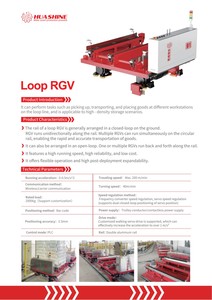
| Internal Logistics | Manual forklift movement; human warehouse labor | Sub-zero rated 4-Way Shuttles, RGV loops, and AGV pallet flow |
| Asset Telemetry | Periodic localized data loggers with manual audit | Continuous cloud-synced IIoT sensors, predictive failure alerts & dynamic ESG carbon auditing |
| Structural Envelope | Basic sandwich polyurethane panels with thermal bridging | High-density PIR/PUR B1 fire-rated panels with vacuum insulation panels (VIP) zero-bridge joints |
By simulating airflow dynamics using computational fluid mechanics (CFD) prior to component fabrication, our engineering team guarantees zero dead zones inside chilled chambers. From pharmaceutical holding facilities demanding precise temperature strata to blast freezers processing hundreds of metric tons of seafood per day, our automated designs maintain uniform thermal envelopes while lowering lifecycle electrical draw.
Inheriting four generations of industrial freight forwarding, global customs expertise, and supply chain management back to 1913, we understand the intermodal realities of international trade better than any traditional equipment assembler.
Our deep regulatory integration, licensed international customs brokerage teams, and global trade accreditations (AEO, C-TPAT, WCA, BIFA, IATA) assure compliant, seamless port-to-door delivery with zero paperwork demurrage or port clearance delays.
Every cold chain installation is supported by our proprietary cloud visibility and remote telemetry platform. Monitor equipment stress, predictive maintenance points, and live temperature parameters across desktop or mobile around the clock.
Trusted by premier multinational enterprises including JDE Peet's, Tesco, Zoomo, and Eaton. Our 77 Net Promoter Score (NPS) and 85% satisfaction rating underline our dedication to precision engineering and transparent project pricing.
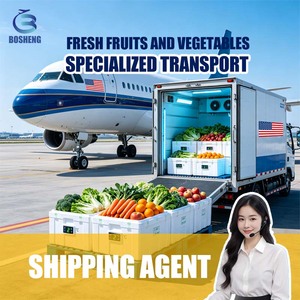
Connecting manufacturing hubs in China across 679 trade lanes. We harmonize sea freight (FCL/LCL), cross-Eurasian rail corridors, air freight charters, and specialized road transport into cohesive, cold-secure transport journeys.
We eliminate hidden costs upfront. From design schematics, thermodynamic calculations, and component sizing to export packing, ocean surcharges, and customs clearances, our quotes are all-inclusive, verified, and cost-predictable.
Essential engineering and procurement considerations addressed by our technical cold chain and global logistics experts.
We utilize continuous double-sided hot-dip galvanized or stainless steel cladding over high-density Polyisocyanurate (PIR) cores (42–45 kg/m³) with tongue-and-groove cam-lock joints and specialized elastomeric gaskets. For extreme cryogenic configurations (-40°C to -86°C), vacuum insulation panels (VIP) are integrated into structural cores to prevent condensation sweating and maintain thermal continuity.
In low-temperature installations (-25°C to -30°C), conventional metals become brittle and common lubricants solidify. Our automated ASRS, 4-way shuttles, and AGVs are constructed with specialized low-temperature alloy steels, synthetic arctic-grade low-viscosity gear lubricants, heated optic-electronic sensor enclosures, and condensation-preventing drive assemblies.
EU imports necessitate CE marking, compliance with the Pressure Equipment Directive (PED 2014/68/EU), the Machinery Directive (2006/42/EC), and F-Gas regulatory alignment. Shipments to North America require ASME Section VIII certification for pressure vessels, UL/CSA electrical control panel assembly ratings, and AHRI-rated heat exchangers. We handle full technical compliance documentation in-house.
Because we operate both manufacturing infrastructure and an international logistics network with AEO status, we avoid third-party forwarding markups. By calculating exact equipment dimensions for high-cube (HC) or flat-rack containers, scheduling inland haulage directly from our factory doors, and handling customs clearance under pre-verified tariff codes, we reduce total landed cost by 12–25%.
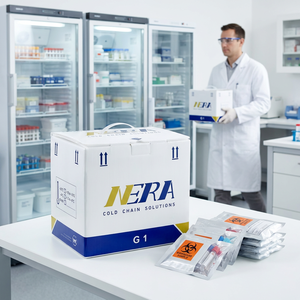
Our life-sciences cold boxes (such as the NERA series) utilize high-performance phase change materials (PCM) paired with secondary active thermoelectric cooling loops. They boast multi-sensor IoT modules transmitting real-time GPS position, internal temperature strata, humidity, shock impact, and door-opening logs to cloud servers with 120-hour backup power.
Custom industrial cooling plants typically require 4 to 6 weeks for thermal engineering design, thermodynamic simulation, and customer approval, followed by 8 to 12 weeks for precision factory manufacturing and pre-assembly testing. Modular units and refrigerated trailers ship in 3 to 4 weeks depending on the configuration.