Global Industrial Whitepaper & Strategic Procurement Framework
China Best Multimodal Transport Services Manufacturer & Factory
Precision Engineering, Integrated Intermodal Freight Corridors (Sea-Rail-Air-Road), Cold Chain Telemetry, and DDP Compliance Architecture Built for Scalable Global Supply Chains
Engineering Resilient Intermodal Supply Chains
Transforming complex transcontinental logistics into deterministic manufacturing pipelines through unified multi-modal operations, end-to-end customs automation, and industrial-grade warehousing.
Modern international manufacturing and procurement operations operate under unprecedented structural pressures: volatile maritime container shipping indices, carbon border adjustment mechanisms (CBAM), regional geopolitical friction across the Red Sea and Eastern Europe, and strict factory just-in-time (JIT) production cycles. A transactional, single-mode freight forwarding model is no longer sufficient. Supply chain leaders require an integrated logistics architecture that combines the capacity economics of maritime shipping, the mid-tier velocity of transcontinental rail freight, the agility of air freight corridors, and the localized precision of final-mile road networks.
With institutional roots tracing back to 1913 through WTA Group's fourth-generation global legacy, our logistics engineering teams synchronize global multi-modal pathways across 679 verified trade lanes in 122 countries. Acting as both an operational orchestrator and an infrastructure manufacturer, we integrate advanced automated storage systems, custom container configurations, Class 9 Hazmat compliance pipelines, and automated customs handoffs directly into the industrial workflow.
Featured Multimodal & Supply Chain Infrastructure Solutions
Explore our core multimodal freight services, specialized containers, storage racking, and turnkey cold chain equipment designed for high-throughput global distribution.
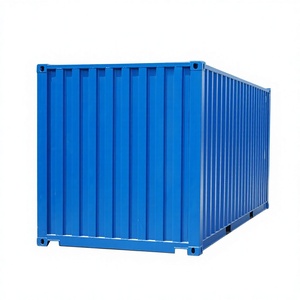
Specialized vehicle racking configurations inside 40ft High Cube containers, optimizing deck utilization for EV and commercial fleet exports across intermodal corridors.
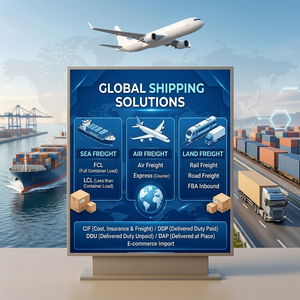
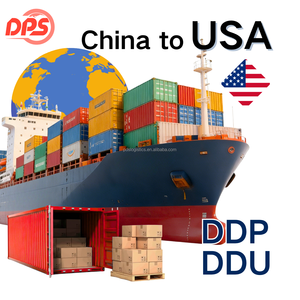
End-to-end bonded handoff, pre-cleared customs, duty-paid inbound logistics, and European distribution network integration for cross-border enterprise sellers.
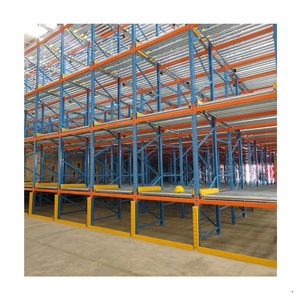
High-density FIFO pallet flow infrastructure for hub-and-spoke cross-dock terminals, minimizing forklift cycle times and reducing storage footprints by 45%.
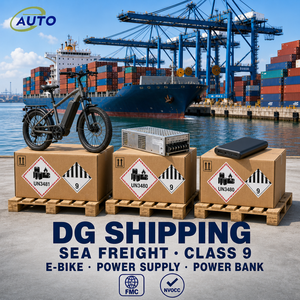
Full regulatory compliance for lithium-ion battery modules, hazardous chemicals, and specialized energy storage systems from factory loading to US door delivery.
Oversized heavy equipment transport integrating Pacific container vessels, coastal inland drayage, and specialized drop-deck road trailers with zero transshipment handling.
Empirical performance metrics across transit velocity, landed cost elasticity, environmental impact, and optimal commodity profiles.
International procurement decisions require rigorous quantification of trade-offs between cash-to-cash conversion cycles, working capital carrying costs, and baseline transport overhead. For example, moving high-value consumer electronics or automotive sub-assemblies exclusively via ocean container shipping (FCL) can result in 35–45 days of tied-up inventory value, while pure air freight incurs unsustainably high freight rates per kilogram. Intermodal rail corridors and hybrid Sea+Air/Sea+Road models provide intermediate cost-velocity ratios that balance transit speed and landed expense.
Logistics Modality
Avg. Transit (China → EU/US)
Relative Freight Cost
Carbon Intensity (g CO2/t-km)
Customs Friction Risk
Optimal Manufacturing Profile
FCL Ocean Shipping
28 – 42 Days
Baseline (1.0x)
8 – 16
Moderate (Port Congestion)
Bulk commodities, heavy machinery, high-volume seasonal stock
Critical prototypes, medical devices, emergency line-down parts
Intermodal Sea + Truck DDP
20 – 26 Days
1.4x – 1.8x
25 – 45
Pre-cleared (Automated Brokerage)
Cross-border e-commerce, consumer durables, Class 9 Hazmat
Strategic Procurement Trends: The 2025–2030 Paradigm Shift
Actionable intelligence for logistics executives adapting to decarbonization mandates, synchromodal dispatching, and nearshoring architectures.
Total Landed Cost Dynamic Indexing
Procurement teams are moving away from fixed annual spot contracts toward dynamic multi-variable rate modeling that factors in demurrage, detention risks, inland handling surcharges, and inventory financing costs in real time.
Synchromodality & Dynamic Re-routing
Next-generation logistics architectures maintain flexible booking protocols, allowing freight to shift mid-journey between ocean, rail, and air modes depending on canal chokepoints, port strikes, and sudden capacity deficits.
ESG Decarbonization & Scope 3 Auditing
With stringent EU CBAM enforcement and US SEC reporting standards, multimodal routing provides verified carbon accounting. Rail-waterway combinations can reduce transport emissions by up to 65% compared to long-haul road freight.
How digital twins, smart sensor telemetry, and automated customs integrations eliminate systemic latency.
The historical friction in China-outbound multimodal logistics occurs at transfer nodes: where containers shift from domestic freight trains to deep-sea container vessels, or from marine terminals to long-haul road transport. Traditional supply chains rely on fragmented email handoffs, manual bills of lading amendments, and retroactive tracking milestones.
Our technological platform addresses this via sensor-level container telemetry. IoT sensors embedded in high-cube dry containers and reefer units stream real-time data on temperature, humidity, shock impact, and geospatial coordinates via satellite uplink. At the administrative layer, our integrated system coordinates automated export declaration filings, Authorised Economic Operator (AEO) clearances, and US C-TPAT security handoffs before the vessel docks. This minimizes dwell times from days to hours.
Why leading industrial manufacturers, retail conglomerates, and technology brands rely on our end-to-end logistics solutions.
Accredited Customs Authority (AEO & C-TPAT)
Licensed in-house customs brokers across primary hubs in China, the United Kingdom, the European Union, and the United States ensure regulatory compliance, lowest tier inspection frequencies, and streamlined duties processing.
Proprietary Cold Chain & Storage Engineering
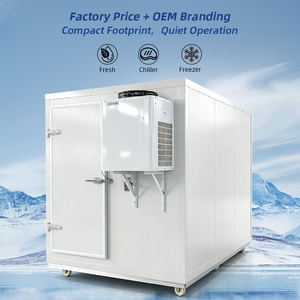
Beyond freight execution, we manufacture industrial warehouse gravity pallet flow racking and automated cold room installations. This equipment pairs bonded warehousing directly with active multimodal transport equipment.
End-to-End Visibility Platform
Every procurement partner receives dedicated access to our centralized visibility platform, enabling live container tracking, automated predictive arrival algorithms, ESG emissions reporting, and consolidated invoice management.
Multimodal Transport Procurement: Technical FAQ
Detailed operational guidance for procurement directors, freight forwarding buyers, and supply chain analysts.
How does intermodal rail freight compare with sea freight for China-Europe routes?
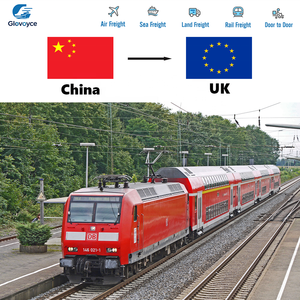
China-Europe Railway Express (CRE) services provide an optimal middle ground between maritime freight and air freight. While ocean shipping requires 28 to 42 days (varying with maritime chokepoints and slow-steaming initiatives), rail freight achieves terminal-to-terminal transit in 14 to 18 days. From a landed cost perspective, rail freight typically costs approximately 50–70% less than air cargo while recovering up to 20 days of working capital inventory latency compared to maritime shipping.
What are the core regulatory requirements for Class 9 Hazmat DDP shipping to the USA?
Class 9 hazardous materials—most commonly lithium-ion batteries, energy storage systems, and specialized chemical components—require UN-certified packaging (e.g., UN 3480 / UN 3481 specifications), valid UN 38.3 test summaries, Material Safety Data Sheets (MSDS), and strict compliance with US Department of Transportation (DOT) 49 CFR regulations. Our DDP service covers dangerous goods declarations, ocean vessel segregation, hazardous drayage chassis handling, and automated customs entry filings.
How do you prevent demurrage, detention, and terminal storage charges on heavy machinery imports?
Port storage, container detention, and demurrage penalties quickly undermine project budgets. We mitigate these risks by negotiating extended free-time agreements (typically 14–21 combined days) directly with ocean carriers. Concurrently, our licensed customs brokers perform pre-clearance filings five days prior to vessel discharge, securing specialized heavy-haul lowboy or drop-deck trailers for immediate pickup upon terminal release.
What role do automated pallet flow systems play in multimodal logistics terminals?
Pallet flow racking uses gravity-driven roller lanes to maintain a First-In, First-Out (FIFO) material stream. In intermodal cross-dock environments, this eliminates idle forklift travel, streamlines cargo handoffs between inbound containers and outbound trucks, and maximizes vertical facility space. This design lowers operating expenses per pallet by 30–45% compared to standard static racking.
How is temperature integrity verified throughout multimodal cold chain transit?
We deploy active refrigerated high-cube containers equipped with multi-redundant power supplies (gensets for rail and road segments, marine terminal reefer plugs at sea) integrated with cloud-connected IoT telemetry probes. These record and transmit internal air temperatures, core cargo probe levels, door opening occurrences, and relative humidity. Any temperature excursion triggers automated alerts to our regional response team.
Can international procurement teams consolidate multi-factory component suppliers under one multimodal bill of lading?
Yes. Our Buyer's Consolidation (FCL/LCL) architecture gathers loose parts and sub-assemblies from multiple manufacturing facilities across mainland China into our central bonded staging facilities. Goods are inspected, palletized, custom-crated, and stuffed into dedicated container units, moving under a unified Multimodal Negotiable Bill of Lading to simplify customs processing and reduce destination port fees.
Transform Your Global Freight Architecture
Connect directly with our engineering and forwarding specialists to analyze your trade corridors, audit landed freight costs, and deploy reliable multimodal logistics solutions.