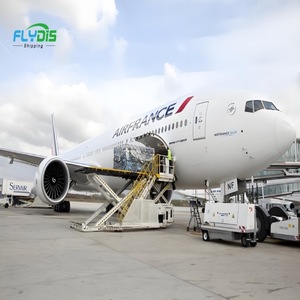
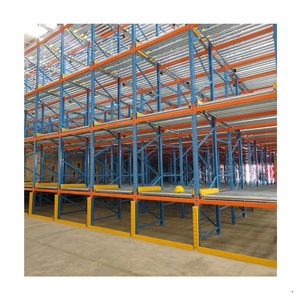
Explore our specialized cargo configurations, ranging from industrial-grade automated warehouse infrastructure and oversized steel structures to DG-certified hazardous materials and multi-modal breakbulk solutions.

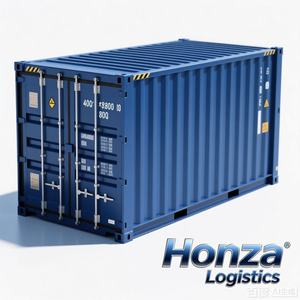
Moving Out of Gauge (OOG) machinery requires more than space booking. It demands route bathymetry surveys, dynamic sea-fastening calculations, and synchronized customs brokerage.
Our naval architects perform 3D friction simulation, turnbuckle tensile grading, and load-spreading calculations using FEA analysis. Every project complies directly with IMO/ILO/UNECE Code of Practice for Packing of Cargo Transport Units (CTU Code).
Direct contractual slot allocations across major ocean alliances guarantee flat rack (FR), open top (OT), and platform equipment availability at core China gateways (Shanghai, Ningbo, Qingdao, Shenzhen) even during high-demand congestion cycles.
Through proprietary wharf-side management, we mitigate unexpected lost-slot charges (dead freight) and secure extended 14 to 21-day origin/destination free-time windows for container devanning and out-of-gauge road transport.
Avoid border seizures and misdeclaration penalties. Our in-house licensed customs brokers audit complex machinery disassembly schemas, complete dual-use export verifications, and cross-reference multi-jurisdictional HS Code classifications.
Continuous tri-axial impact monitoring (G-force), tilt surveillance, temperature, and relative humidity logging are accessible via our enterprise digital visibility platform, providing immutable logistics data for high-value capital assets.
We execute physical bridge-load assessments, toll-gate height clearance surveys, overhead power-line lift permits, and police escort coordination across all Chinese manufacturing hubs directly to heavy-lift berths.
Out of Gauge (OOG) shipping describes freight whose outer dimensions exceed the internal envelope of standard dry-van ocean containers (such as standard 20ft, 40ft, or 40ft High Cube containers). While standard commodities move seamlessly across standardized global conveyor systems, moving breakbulk, over-dimensional power transformers, petrochemical pressure vessels, and large-scale manufacturing infrastructure requires structural engineering, international trade compliance, and multi-modal freight expertise.
China remains the undisputed epicenter of international infrastructure, industrial tooling, and mechanical equipment manufacturing. However, procurement directors and logistics executives often struggle with unexpected dead-freight invoices, terminal refusals, structural shift damages at sea, and severe port storage fines. WTA Group eliminates these risks through engineered logistics methodologies, bringing fourth-generation supply chain certainty to complex project logistics.
A successful OOG supply chain depends on selecting the right equipment. Misclassifying an oversized piece of cargo can lead to major route delays, carrier rejections, or excessive dead-freight expenses:
Procurement teams managing multi-million-dollar CAPEX equipment can no longer rely on traditional booking models. Forward-thinking global supply chains are adapting to several key shifts:
Project cargo logistics is rapidly adopting new compliance standards. First, maritime decarbonization under the EU Emissions Trading System (ETS) and IMO CII (Carbon Intensity Indicator) regulations is changing route planning. Heavy-lift forwarders must provide audited CO2e metrics for project transport paths, favoring newer dual-fuel breakbulk vessels and electrified rail links over inefficient long-haul trucking.
Second, physical surveys are being supplemented with digital proof of condition. High-resolution LiDAR clearance scans of transport corridors, dynamic port crane simulations, and blockchain-verified load distribution calculations now validate transport viability before cargo leaves the factory floor. This level of technical oversight protects high-value industrial shipments against cargo damage and claim disputes.
Practical guidance from licensed master mariners, customs brokers, and project cargo specialists.
A: In-Gauge cargo fits completely within the standard dimensions of a specialized container (Open Top or Flat Rack) without extending past the corner posts or upper rails. Out-of-Gauge (OOG) extends beyond the container's physical profile in length (Over Length), width (Over Width), or height (Over Height), requiring special carrier stowage plans and usually incurring lost-slot surcharges.
A: On a container vessel, containers are slotted in a 3D grid. If an OOG piece on a 40ft Flat Rack is over-width on both sides, the container positions directly to its left and right cannot be used. If it is over-height, containers cannot be stacked directly above it. Carriers bill for these "lost slots" based on prevailing spot or contract container rates on that voyage.
A: Marine insurance underwriters typically require a formal Lashing & Securing Certificate issued by an accredited marine surveyor (e.g., following IMO/ILO/UNECE guidelines). Documentation must include certified proof of wire rope tensile strength, turnbuckle ratings, dunnage wood heat-treatment marks (ISPM 15 compliance), and dynamic friction/center-of-gravity engineering schematics.
A: Yes. For super-heavy components manufactured in inland industrial hubs like Wuhan, Chongqing, or Hefei, roll-on/roll-off (Ro-Ro) or heavy-deck river barges along the Yangtze River are often preferred over highway transit. Barges bypass highway bridge limits, toll gates, and urban bottlenecks, bringing cargo directly to deep-water ocean berths in Shanghai or Ningbo.