

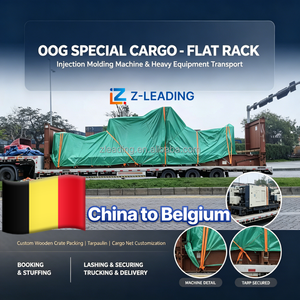
From mission-critical chemical totes and dynamic dimensioning-weighing-scanning (DWS) machinery to project-grade breakbulk charters and battery-compliant express conduits, examine our 8 primary operational products.

Air cargo logistics within China's primary manufacturing hubs has evolved far beyond booking simple belly-hold space. Modern global supply chain directors require tightly orchestrated pre-carriage ground fleets, automated sortation hubs, dedicated BSA (Block Space Agreements) allocations, and compliant dangerous goods repackaging operations.
Maximising volumetric utilization inside PMC, PAG, and AKE containers reduces billable chargeable weight (CW). Through dynamic 3D dimensioning at origin consolidation hubs across Shenzhen (SZX), Shanghai (PVG), and Zhengzhou (CGO), high-density hardware shipments are interleaved with volumetric e-commerce parcels to achieve exact 1:6 volumetric-to-weight equilibrium.
Navigating civil aviation safety protocols requires strict technical compliance. Air shipments of pure lithium-ion cells require UN38.3 test summaries, drop-test certified outer packaging, thermal containment buffering, and certified safe air transport certificates issued by CIQ and civil aviation testing institutes, guaranteeing immediate tarmac green-channel acceptance without offloading.
Proprietary milestone tracking integrated into global carrier EDI backbones provides predictive deviation detection. Real-time temperature, atmospheric barometric pressure, and geofencing telemetry eliminate black-box transit blind spots, empowering logistics teams to act preemptively on mechanical diversions or hub decongestion backlogs before service levels drop.
Operating with an unmatched heritage tracing back to 1913, our integrated customs, freight, and supply chain infrastructure mitigates systemic risk across volatile international trade lanes.
Active direct and intermodal trade corridors spanning European, Trans-Pacific, Australasian, and Middle Eastern gateways with guaranteed Block Space Agreements (BSA) during peak seasons.
Licensed internal customs brokerage infrastructure providing compliant import/export classifications, pre-clearance filings, tariff engineering, and minimal examination intervention rates.
Every account enjoys complete end-to-end milestone transparency, carbon reporting (ESG Scope 3 audits), automated commercial invoice archiving, and real-time flight telemetry at no extra cost.
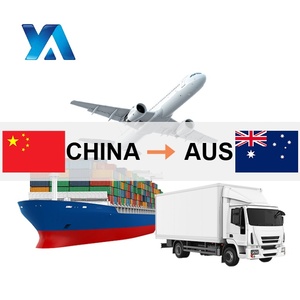
Seamless handovers between high-frequency sea transit (Matson CLX/MAX), China-Europe Rail Express block trains, bonded cross-border road trucking, and scheduled airport freighter flights.
Transparent pricing schedules that specify air fuel surcharges (FSC), security charges (SCC), terminal handling fees (THC), and documentation costs upfront to eliminate surprise detention or handover penalties.
Direct domestic factory liaison desks in Shanghai, Shenzhen, Guangzhou, Ningbo, and Hong Kong ensure proactive factory cargo collection, packing inspection, and immediate customs release.
Geopolitical realignment, carbon taxes, and e-commerce air-capacity constraints are reshaping international sourcing. Procurement officers must evaluate these three macro shifts when designing their contract playbooks.
The traditional model of fixed 6-month air freight tender rates has largely broken down under volatile aviation turbine fuel markets and regional airspace re-routings. Leading global procurement teams are shifting to hybrid contracts: locking 60% of forecast base volume under seasonal Block Space Agreements (BSA) with index-pegged bunker adjustment factors, while leaving 40% open to spot allocations to capitalise on post-peak softening.
With EU CBAM legislation and stringent corporate Scope 3 carbon mandates taking effect, air freight's carbon penalty is under increasing boardroom scrutiny. Buyers are turning to Sea-Air combined routings (e.g., ocean freight to Dubai Jebel Ali or Singapore, followed by high-priority freighter legs into Frankfurt or Chicago), slashing carbon emissions by 45% while recovering over 18 days compared to pure ocean journeys.
Rather than shipping manufactured goods to centralized domestic export consolidation hubs, global brands are establishing air freight consolidation cells right inside specialized bonded manufacturing parks. Through automated barcode scanning, DWS capture, and direct airline palletization at the factory gate, goods clear customs electronically and transfer straight to tarmac ramps, cutting total lead time by 36 to 48 hours.
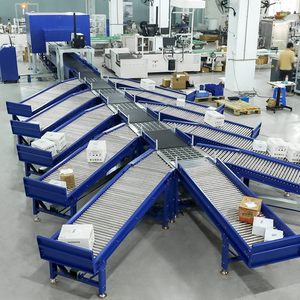
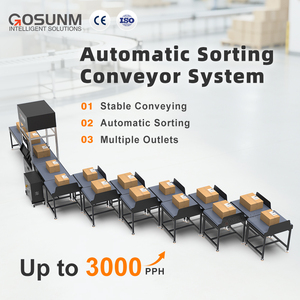
Modern logistics machinery is undergoing a structural transformation from passive mechanical conveying to smart, vision-guided, autonomous sorting ecosystems.
Next-generation parcel induction systems utilize deep-learning camera arrays capable of reading distorted 1D/2D barcodes, optical character codes (OCR), and complex irregular volumetric contours at line speeds exceeding 2.5 meters per second. This prevents revenue leakage caused by manual weight declarations and protects against airline volumetric charge discrepancies.
High-value biopharma, live cell active ingredients, and delicate seafood supply chains have driven a major shift away from simple dry ice solutions toward reusable VIP (Vacuum Insulated Panel) containers paired with phase-change materials. These active cold-chain systems maintain precise thermal boundaries (-20°C to +4°C) for over 120 hours without requiring external power during tarmac transfers.
Warehousing facilities are shifting away from high-maintenance pneumatic pushers in favor of brushless DC motor-driven narrow-belt diverters and modular cross-belt sorting loops. Capable of handling mixed SKU payloads—from paper-thin envelopes to 35kg rugged totes—these units feature automated fault bypass logic that keeps sorting lines running at an exceptional 99.8% operational uptime.
Clear, technical answers to common queries regarding air freight contracts, customs clearance protocols, and cargo handling operations.
Air cargo billing is calculated using Chargeable Weight (CW), which is the greater of actual Gross Weight (GW) and Volumetric Weight (VW). The International Air Transport Association (IATA) sets the standard volumetric ratio at 1:6000 (1 cubic meter = 167 kilograms; or Length × Width × Height in cm / 6000).
To reduce charges on low-density cargo, our consolidation teams apply compression banding, optimize master carton sizes to eliminate headspace, or pack dense components (such as tooling or fasteners) together with lightweight items on the same pallet to bring the overall ratio close to the 1:6 mark.
Exporting lithium batteries (UN3480 for standalone batteries, UN3481 packed with or contained in equipment) requires three essential documents under CAAC and IATA Dangerous Goods Regulations (DGR):
1. UN38.3 Test Summary Report verifying altitude simulation, thermal test, vibration, shock, external short circuit, and impact resilience.
2. Dangerous Goods Air Transport Condition Appraisal Report issued by accredited Chinese institutes such as DGM or PONY.
3. Manufacturer MSDS / SDS and certified drop-test outer packaging documentation bearing the appropriate Class 9 lithium battery hazard labels and Cargo Aircraft Only (CAO) markings.
A Block Space Agreement (BSA) is a contract between a freight forwarder and an airline reserving guaranteed weight and volume on specific scheduled flights throughout a set period (quarterly or annually). Even during severe peak-season backlogs, BSA cargo enjoys priority uplift protection.
Spot market bookings, by contrast, secure capacity based on dynamic daily supply and demand. While spot rates can be economical during soft market conditions, shippers run the risk of cargo offloading ("bumping") and steep price spikes whenever global airline capacity tightens.
Transporting high-density liquid solutions (like 28%-32% Liquid UAN) in 1000L composite IBC containers requires specialized containment engineering. Because liquid cargo shifts during shunting and vessel transit, containers must be secured with high-tensile composite polyester strapping, dunnage air cushions, and anti-slip rubber floor matting rated for international maritime transport.
For intermodal handovers, every container undergoes valve torque verification, pressure-relief cap inspections, and weight balancing within ISO container payload limits to protect both ship crews and downstream handling teams.
Clearance delays on heavy industrial machinery typically arise from three issues: mismatched Harmonized System (HS) code classifications, incorrect valuation of bundled auxiliary components, and non-compliant solid wood packing materials (SWPM).
Our customs brokers prevent these holdups by pre-classifying technical equipment under precise subheadings, providing advance technical component breakdowns, and ensuring all crating carries certified ISPM-15 heat-treatment stamps before departure, allowing immediate green-channel processing upon port arrival.
Connect directly with our international logistics specialists to review lane costs, plan complex cargo movements, or set up automated warehouse sorting systems.
Get a Quote