Xingyao DG Cargo Hazmat Certified Air Express Door to Door Shipping China to USA UK Europe DDP Dangerous Goods Forwarder
UN Compliance: Class 9 / Hazmat
3-5 Days Air

Direct manufacturing equipment components, warehouse machinery, and priority customs-cleared corridors connecting China's industrial manufacturing hubs to Western ports.
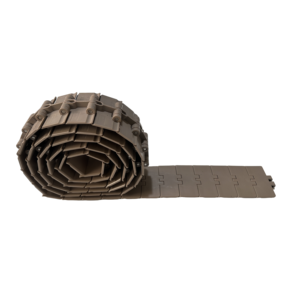
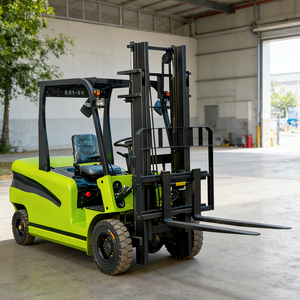
Moving industrial equipment from Chinese coastal industrial belts (Zhejiang, Jiangsu, Shandong, and Guangdong) requires a radically higher operational tolerance than conventional consumer cargo. Equipment such as heavy machine tools, laser cutting arrays, injection molds, industrial conveyor assemblies, and battery-driven electric forklifts involve unique weight distributions, fragile CNC electronics, and complex dangerous goods documentation under IMO and ICAO guidelines. As modern manufacturing relies on synchronized supply chains, equipment delays can halt entire capital investment schedules.
To eliminate capital drag, international exporters and B2B buyers must navigate structural hurdles including Out of Gauge (OOG) containerization, Breakbulk rigging, and stringent Verified Gross Mass (VGM) declarations under SOLAS conventions. Furthermore, cargo containing embedded lithium power packs, high-pressure hydraulics, or industrial magnetic fields triggers specific compliance audits. Choosing a certified logistics partner who provides factory pickup, heavy-duty seaworthy crating, direct drayage, and end-to-end bonded customs clearance ensures your machinery is operational immediately upon arrival.
By leveraging structured Incoterms—moving from risk-heavy FOB origin contracts toward highly controlled DDP (Delivered Duty Paid) and DAP arrangements—engineering firms and procurement managers mitigate unforeseen terminal handling surcharges (THC), demurrage accruals, and sudden customs documentation recalculations.
How progressive procurement teams are restructuring their China sourcing operations to protect working capital and guarantee delivery timelines.
Global procurement teams are mandating 3-axis shock, humidity, and tilt telematics placed directly on CNC machinery beds. Real-time data streams alert logistics managers of dropped containers or ocean salt-fog ingress prior to uncrating at destination plants.
Moving away from standard single-use wooden pallets, exporters are adopting vacuum barrier foil wrapping combined with nitrogen flushing for bare-metal machine parts, neutralizing oxidation risks throughout extended 35-day maritime transits.
Industrial buyers are avoiding fluctuating spot freight markets by locking annual multimodal service contracts that fold carrier space commitments, export export-tax rebates, and destination customs surety bonds into predictable unit costs.
Key macro-environmental developments driving systemic changes across China-origin heavy equipment transport.
With electric material handling units rapidly displacing diesel equipment, exporters must strictly satisfy UN38.3 testing standards and maintain Class 9 maritime MSDS certifications to prevent vessel rejection and terminal penalties.
Corporate reporting regulations (CSRD and SEC mandates) demand granular Scope 3 freight emissions accounting. Forwarders now offer route-optimized intermodal rail-waterways that slash freight carbon footprints by up to 40% compared to expedited air transit.
Regulatory scrutiny around Dual-Use technologies, Harmonized Tariff Schedule (HTS) precision, and trade remedy duties is managed via automated digital validation tools, eliminating clearance bottlenecks at European and American gateway ports.
From foundational maritime routes charted in 1913 by Ernest Sommer to our fourth-generation global forwarding network, WTA delivers complete reliability for heavy industry.
On-the-ground offices across China since 2006 oversee factory pre-inspections, specialized heavy lashing, and direct Ningbo, Shanghai, Qingdao, and Shenzhen port handovers.
Holding premier Authorised Economic Operator (AEO) and C-TPAT credentials, our customs teams clear complex machinery consignments swiftly without expensive 3rd-party handoffs.
Complimentary enterprise-grade tracking delivers live GPS positions, proactive delay predictions, carbon tracking, and integrated digital commercial documentation under one login.
.png)
.png)
.png)
.png)
.png)
Clear, expert guidance addressing international customs, packing rules, transit options, and cost structures.
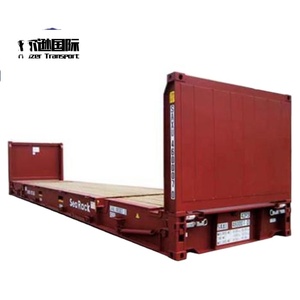
For large machinery shipments, Full Container Load (FCL) utilizing standard 40-foot High Cube (40HQ) containers offers the lowest cost per cubic meter. If dimensions exceed container door heights (over 2.58m) or widths (over 2.34m), Flat Rack (FR) or Open Top (OT) specialized equipment is deployed. For self-propelled machinery like electric forklifts or tractors, Roll-on/Roll-off (RoRo) services eliminate container staging and crane lift fees.
Equipment containing integrated batteries (e.g., electric pallet trucks and aerial work platforms) falls under UN 3171 (Battery-powered equipment) or UN 3481 (Lithium-ion batteries contained in equipment). Exporters must provide an official UN38.3 test summary report, genuine Material Safety Data Sheets (MSDS), and sea-transport certified seaworthy packaging declarations to pass Chinese maritime transport safety inspections.
Under FOB terms, the importer inherits freight volatility, unexpected destination port storage, demurrage, chassis splits, and customs clearance charges. With DDP provided by WTA Group, the forwarder assumes complete responsibility for origin pickup, ocean/air charter, import duties, VAT/GST payment, and direct site delivery via hydraulic liftgate trucks. This delivers a single transparent quote with zero hidden surprise charges.
All solid wood crating and dunnage must comply strictly with ISPM-15 heat-treatment standards bearing the IPPC stamp to pass quarantine inspections in the US, Europe, and Australia. In addition, internal mechanical surfaces must be coated with VCI (Vapor Corrosion Inhibitor) barrier films and moisture-absorbing desiccant packs, and bolted to structural steel sleds to prevent shifting during rough sea crossings.
The China-Europe Railway Express route reduces door-to-door transit to 16-22 days, compared to 35-45 days via traditional deep-sea ocean routes around the Cape of Good Hope. Rail freight costs up to 60% less than air cargo and provides a secure, low-vibration transit environment well-suited for high-precision CNC equipment and automation components.