Global Trade Architecture: Strategic Trends in China Wholesale Freight Procurement (2025–2030)
The international procurement landscape for enterprise importers sourcing from Chinese manufacturing hubs is witnessing a paradigm shift. Navigating maritime capacity volatility, evolving geopolitical trade agreements, and shifting tariff frameworks requires supply chain managers to abandon transactional booking tactics in favor of structured, predictive logistics partnerships. As a premier wholesale freight forwarder and global exporter, we analyze the critical dynamics shaping transpacific, Asia-Europe, and emerging corridor supply chains.
1. Algorithmic Multimodal Redirection (Sea-Rail-Air Blends)
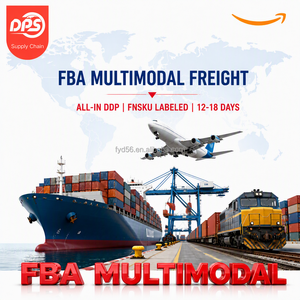
Traditional single-mode ocean freight is increasingly prone to chokepoint delays, port congestion, and seasonal rate spikes. Progressive importers now structure dynamic modal splits. By combining ocean freight from Ningbo, Shanghai, or Shenzhen into transshipment hubs with expedited rail connectivity (such as the China-Europe Railway Express) or sea-air bridges via the Middle East (Dubai/Jebel Ali), enterprise buyers reduce end-to-end lead times by up to 18 to 22 days compared to standard ocean loops via the Cape of Good Hope, while retaining a cost profile 60% lower than pure air freight.
2. Scope 3 Decarbonization & EU CBAM Regulatory Mandates
Corporate sustainability directives—including the European Union's Carbon Border Adjustment Mechanism (CBAM) and Corporate Sustainability Due Diligence Directive (CSDDD)—now demand granular, shipment-level carbon accountability. Forward-looking procurement directors require freight forwarders capable of calculating real-time carbon equivalent (CO₂e) emissions based on Clean Cargo Working Group (CCWG) frameworks. Optimizing vessel allocations to dual-fuel (LNG/Methanol) container vessels and implementing localized consolidation reduces Scope 3 intensity before cargo leaves Chinese coastal waters.
Strategic Enterprise Advisory: De Minimis Shifts & Bulk DDP Resurgence
With global customs authorities in the US and Europe phasing out or tightening low-value de minimis thresholds, cross-border e-commerce brands and wholesale distributors are rapidly pivoting from fragmented direct-to-consumer postal parcels to palletized wholesale FCL ocean consolidation paired with domestic bonded fulfillment. Consolidating shipments at Chinese origin FTZs lowers freight cost per cubic meter by up to 45%.
3. Origin-Side Quality Control & Bonded Value-Added Services (VAS)
Leading wholesale buyers are shifting secondary operations back to the point of origin. Utilizing Chinese bonded logistics parks (such as Qianhai, Waigaoqiao, and Beilun) allows international enterprises to conduct multi-supplier SKU consolidation, automated quality assurance inspections, barcoding, and retail-ready packaging prior to export. This completely eliminates expensive domestic handling, repacking fees, and returns within high-cost destination warehouses in North America and Western Europe.
Engineered Logistics Excellence: Why Global Buyers Partner with Our Network
Selecting an international freight forwarder from China is a high-stakes decision directly influencing inventory turnover, landed margins, and brand reputation. WTA Group delivers over a century of proven maritime expertise, tracing back to our founding in 1913. Blending historic trade lane authority with state-of-the-art logistics technology, we maintain specialized operations across the UK, USA, China, and the UAE, servicing over 6,000 global enterprise clients across 679 trade lanes.
Origin Strength Across All Core Chinese Economic Zones
Logistical failures typically originate at the first mile. Our dedicated teams in Shenzhen, Ningbo, Shanghai, Qingdao, Tianjin, and Xiamen coordinate directly with your factory suppliers in their native language and local time zone. We oversee domestic transport, verify export licensing, conduct stuffing supervisions, and secure direct vessel allocations through contracted carrier allotments with top global container lines and air freighters.
Tier-1 Carrier Contracts & Transparent Surcharge Shielding
Many wholesale importers fall victim to low initial freight quotes only to face extortionate destination terminal handling charges (DTHC), documentation fees, and predatory demurrage billings. We maintain direct service contract agreements (SC) with premier alliances (2M, Ocean Alliance, THE Alliance), delivering transparent, all-in quotes. Our logistics architects structure upfront agreements on container free-time allowances (extending detention/demurrage free time to 14–21 days), protecting buyers from costly port congestion penalties.
Accredited Global Regulatory Compliance (AEO & C-TPAT)
Our operational subsidiaries hold the highest global security and customs brokerage credentials, including Authorised Economic Operator (AEO) status and Customs-Trade Partnership Against Terrorism (C-TPAT) validation. Shipments routed through our customs architecture benefit from significantly lower physical inspection rates, green-lane documentary clearance, priority processing during port bottlenecks, and direct electronic interface with US CBP (AMS/ISF), UK HMRC (CDS), and European customs portals.
Procurement Decision Matrix: Selecting the Optimal China Export Mode
Balance freight expenditure against transit velocity and inventory carrying costs across core international shipping options:
| Mode of Transport |
Transit Range (China to US/EU) |
Cost Index |
Carbon Footprint |
Ideal Cargo Types |
| Ocean FCL (Full Container) |
24 – 38 Days |
Lowest ($) |
Lowest (10-15g CO₂/t-km) |
Bulk industrial goods, consumer goods, raw materials |
| Ocean LCL (Consolidation) |
28 – 42 Days |
Economical ($$) |
Low (12-18g CO₂/t-km) |
Smaller consignments (1 – 15 CBM), test batches |
| Eurasia Rail Express |
14 – 20 Days |
Moderate ($$$) |
Low-Medium (20-30g CO₂/t-km) |
Automotive assemblies, electronics, seasonal retail |
| Standard Air Freight |
4 – 7 Days |
High ($$$$) |
Highest (500+ g CO₂/t-km) |
High-value electronics, urgent samples, pharmaceuticals |
| Air DDP Priority |
3 – 5 Days |
Premium ($$$$$) |
Highest |
Critical stockouts, launch items, oversized high-tech |
What are the key differences between FOB and EXW terms when purchasing from Chinese factories?
+
Under EXW (Ex Works), the foreign buyer assumes all financial liability and risk from the factory door, including Chinese inland trucking, export export customs declarations, port terminal charges, and export licensing. Under FOB (Free On Board), the Chinese factory is legally responsible for inland transit to the designated port, export documentation, and local port handling fees up until the container clears the ship's rail. We generally advise international enterprise buyers to purchase under FOB terms to prevent factories from passing hidden domestic handling expenses onto the buyer, or under FCA terms if utilizing specialized origin consolidation warehouses.
How do you handle Class 9 dangerous goods, such as lithium-ion batteries, ex-China?
+
Handling Class 9 Dangerous Goods (UN3480 for bulk lithium batteries, UN3481 for batteries contained in or packed with equipment) requires rigorous compliance protocols. We conduct origin audits verifying UN38.3 test summaries, Material Safety Data Sheets (MSDS), and Dangerous Goods declaration certifications from accredited Chinese testing bodies. Cargo must be packaged in UN-certified outer packaging displaying standardized hazard labels and Watt-hour ratings. Our certified dangerous goods handling teams coordinate with maritime carriers and civil aviation authorities to secure maritime DG approvals and chartered airfreight allocations.
What strategies effectively mitigate container demurrage and detention charges?
+
Demurrage (charges inside the port terminal) and detention (charges for holding the container equipment outside the port) escalate rapidly. Our mitigation strategy centers on three elements: First, we negotiate extended free-time agreements directly with vessel lines, securing 14 to 21 combined free days rather than the industry-standard 3 to 5 days. Second, our visibility platform automates customs pre-clearance using 5-day pre-arrival manifests (ISF/AMS filings for the US, CDS for the UK). Third, our localized drayage network pre-schedules chassis allocations to pull containers immediately upon vessel discharge.
How does origin consolidation in a Chinese Free Trade Zone (FTZ) reduce landed costs?
+
Purchasing from multiple suppliers across China often results in expensive, fragmented LCL shipments. By routing multi-vendor factory outputs into our central bonded FTZ facilities (in Shenzhen, Ningbo, or Shanghai), goods are received, inspected, palletized, and consolidated into single FCL containers. This eliminates individual destination LCL de-consolidation fees, simplifies customs filings into a unified commercial invoice, enables immediate Chinese VAT export refunds for suppliers upon entry into the bonded zone, and maximizes container volumetric utilization.
What documents are legally mandatory for commercial exports from China to Western markets?
+
Compliant commercial export requires: 1) Commercial Invoice stating detailed product descriptions, 6-digit Harmonized Tariff Schedule (HTS) codes, currency, and Incoterms; 2) Packing List specifying net/gross weights, package count, and cube dimensions per carton; 3) Clean Bill of Lading (B/L) or Sea Waybill / Air Waybill; 4) Certificate of Origin (COO) or Form A/RCEP documentation for preferential tariff validation; and 5) Commodity inspection certificates (CIQ) or export licenses where applicable for regulated categories like electronics, medical devices, or food-contact materials.
How does your digital visibility platform differ from standard carrier tracking?
+
Standard carrier track-and-trace systems only update static milestones (such as vessel departure and arrival). Our proprietary supply chain visibility platform integrates live AIS vessel telemetry, automated terminal operating system (TOS) EDI feeds, and predictive machine-learning models. It accurately forecasts transit anomalies, monitors temperature and humidity fluctuations inside containers via IoT transponders, archives all clearance paperwork in a secure digital vault, and generates granular Scope 3 carbon expenditure reports across your entire enterprise freight portfolio.