ISO 9001 & AEO Certified Logistics Architecture

Custom OEM Marine Freight Logistics Factory & Exporters

Architecting resilient intermodal sea-freight corridors, dangerous goods compliance, and integrated end-to-end container logistics for original equipment manufacturers and procurement directors worldwide.

Enterprise Fleet & Logistics Assets

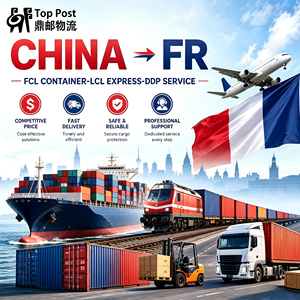
Featured Multimodal Transport & Storage Solutions

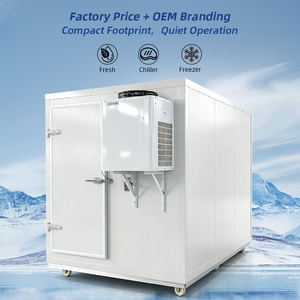
Factory-direct OEM consolidation, specialized hazmat shipping, temperature-regulated cold chain hubs, and heavy material handling hardware optimized for international supply routes.
Technical White Paper & Operations Manual

Engineering Global Ocean Logistics for OEM Manufacturers & Exporters

In modern international trade, purchasing transportation capacity on the spot market is no longer sufficient for complex manufacturing pipelines. For high-volume Original Equipment Manufacturers (OEM), contract assembly plants, and multinational Tier-1 distributors, maritime freight logistics serves as an active extension of the factory floor. When raw components, custom tooling, lithium battery power packs, or delicate sub-assemblies travel over 8,000 nautical miles, any breakdown in documentation, packaging structural integrity, carrier handling, or customs brokerage results in catastrophic line stoppages and downstream financial liquidated damages.

A true Custom OEM Marine Freight Logistics Factory & Exporter integrates factory-floor packing systems, specialized intermodal container equipment, real-time telemetry, and certified customs compliance frameworks into a synchronized freight corridor. Rather than treating logistics as a post-manufacturing transactional handoff, strategic procurement teams configure multimodal logistics networks at the product design stage. This ensures volumetric cubic meter (CBM) container optimization, adherence to International Maritime Dangerous Goods (IMDG) packing codes, cold-chain temperature validation, and proactive demurrage mitigation across origin and destination ports.

"The modern standard of OEM shipping efficiency relies not merely on sea transit speed, but on eliminating regulatory, documentation, and interface friction points across origin bonded zones, marine terminals, and automated destination customs clearance portals."

Through our legacy network built over 110 years of international trade execution, we connect deep-water maritime routes, Eurasia rail terminals, and bonded warehouse processing centers. Our infrastructure delivers end-to-end predictability for over 6,000 industrial clients navigating 679 high-density trade corridors across Europe, North America, Southeast Asia, and the Middle East.

110+ Years Industry Legacy (Est. 1913)
6,000+ Global Enterprise Clients
679 Active International Trade Lanes
122 Sovereign Nations Serviced
Enterprise Core Competence

Why Tier-1 Manufacturers Partner With Our Freight Factory

A foundation built on certified trade security compliance, deep-tier carrier contracts, proprietary tracking infrastructure, and specialized material handling capabilities.

Dual AEO & C-TPAT Certification

Holding Authorized Economic Operator (AEO) status in the UK and European Union alongside validated C-TPAT credentials enables priority physical inspection, expedited customs clearance, and reduced documentation audits in transatlantic and Asian import hubs.

Real-Time Visibility & Predictive IoT

Our cloud-native tracking telemetry integrates directly with vessel AIS transponders, port terminal operating systems (TOS), and container sensor beacons to anticipate route delays, track temperature logs, and automate invoice matching without human intervention.

Dangerous Goods (DG) Hazmat Licensing

Dedicated IMDG and IATA-certified dangerous goods specialists handle Class 2 to Class 9 consignments, including lithium-ion batteries, industrial solvents, chemical coatings, and pressurized systems with UN-specification steel/fiber drums and hazardous stowage declarations.

Factory-Integrated Bonded Warehousing

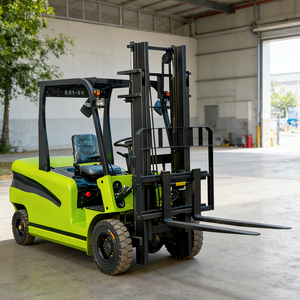
Operating state-of-the-art consolidation hubs at key export coastal gateways featuring electric forklifts, container flatbed stuffing docks, automated shrink packaging lines, and cold room zones for consolidated vendor freight and cross-docking.

Tier-1 Ocean Carrier Alliances

Direct service contracts with the world's leading ocean liner alliances guarantee equipment availability (20GP, 40GP, 40HQ, 45HQ, Open Top, Flat Rack, and Reefer) during peak seasons while eliminating arbitrary carrier rollings and exorbitant Peak Season Surcharges (PSS).

All-Inclusive Transparent DDP Brokerage

Eliminating hidden origin fees, port handling markups, and unexpected destination invoices. We calculate exact customs tariffs, antidumping duties, VAT/GST liabilities, and terminal haulage up front so that landed costs match procurement financial targets precisely.

Market Intelligence & Sourcing Outlook

Future Procurement Trends in OEM Maritime Logistics

How macroeconomic supply chain reorganizations, regional regulatory changes, and sustainability requirements are altering commercial procurement behaviors through 2030.

1. Modular Nearshoring & "China+1" Port Hedging

Global supply chain directors are no longer routing 100% of OEM outputs through a single mega-port. Procurement frameworks now deploy dual-origin feeder routing connecting secondary Chinese coastal centers (Ningbo, Qingdao, Xiamen) alongside Vietnam, Thailand, and Malaysia to mitigate regional bottlenecks and trade sanctions.

2. Decarbonization & EU ETS / IMO Net-Zero Compliance

With maritime transport now incorporated into the EU Emissions Trading System (EU ETS) and IMO CII carbon ratings enforced, maritime contracts require granular Scope 3 carbon reporting per container-mile. B2B contracts increasingly favor LNG, methanol-fueled, and slow-steaming eco-vessels to minimize landed carbon taxes.

3. Shift from FOB to Digital Factory DDP Contracts

Traditional FOB contracts transfer enormous risk and administrative overhead to overseas buyers. Global procurement teams are moving toward comprehensive factory-door DDP (Delivered Duty Paid), transferring transit insurance, customs tariff clearance, and demurrage risks entirely to integrated 4PL freight specialists.

4. Algorithmic Predictive Slot Reservation

Machine-learning demand forecasting integrated with enterprise ERP systems enables predictive booking 6 to 8 weeks ahead of factory production completion. This shifts enterprise shippers from volatile spot-market volatility into stable index-linked space allotments with zero-roll guarantees.

Strategic Decision Framework

Multimodal Transport Mode Comparison: Asia to European & North American Corridors

Comparative analysis evaluating financial landed costs, velocity, carbon footprint, and operational risk metrics across international freight shipping options.

Logistics Mode Average Transit Time Landed Cost Index Carbon Footprint (gCO2/ton-km) Hazmat Suitability Ideal Industrial Cargo Profile
FCL Ocean Freight (Full Container Load) 28 – 38 Days Lowest (1.0x Baseline) 10 – 15 (Lowest) Class 2, 3, 4, 5, 6, 8, 9 (All Approved) Heavy manufacturing components, bulk industrial machinery, OEM assemblies, high-volume consumer goods.
LCL Ocean Freight (Consolidated Container) 32 – 45 Days Economical (1.3x – 1.8x) 12 – 18 (Low) Restricted (Limited DG Classes) Sub-assembly components (1–15 CBM), test batches, secondary replacement parts, mid-volume replenishment.
China-Europe Railway Express (Rail Freight) 14 – 18 Days Moderate (2.5x – 3.2x) 20 – 35 (Low-Moderate) Highly Strict (No DG Batteries) Automotive electronics, aerospace parts, seasonal fashion, high-capital engineering systems needing mid-urgency transit.
Standard Air Cargo Logistics 4 – 7 Days High (6.0x – 10.0x) 500 – 650 (Extremely High) Strict PI965-PI970 Regulated Mission-critical production line repair components, prototype samples, high-value semiconductors, medical devices.
Expedited DDP Sea-Air Hybrid 12 – 16 Days Balanced (3.5x – 4.5x) 180 – 240 (Moderate) Conditionally Approved High-turnover consumer electronics, seasonal product launches, rapid inventory re-balancing between bonded plants.
Procurement Knowledge Base

Frequently Asked Technical & Procurement Inquiries

Direct, authoritative answers addressing compliance, operational timelines, hazardous packaging protocols, and tariff management.

What documentation is required to ship Class 9 dangerous goods (e.g., Lithium-Ion Battery OEM products) via ocean freight?
Under the International Maritime Dangerous Goods (IMDG) Code, shippers must provide four critical documentation sets prior to carrier booking confirmation: 1. A valid Safety Data Sheet (SDS) adhering to the 16-section GHS revision format, dated within the last 12-24 months; 2. UN38.3 Test Report verifying that the cells/batteries have successfully undergone thermal, vibration, shock, external short circuit, impact, overcharge, and forced discharge testing; 3. Dangerous Goods Packaging Certificate (UN Container Performance Test Result) proving that outer packaging complies with Packing Instruction P903, P908, or P910; and 4. A signed Multimodal Dangerous Goods Declaration (MDGD) detailing proper shipping name (PSN), UN Number (e.g., UN3480 or UN3481), hazard class, packing group, and 24-hour emergency contact information.
How does WTA's AEO-certified customs brokerage eliminate destination clearance delays in the UK and European Union?
Authorised Economic Operator (AEO-F: Customs Simplifications and Security) status represents the gold standard in customs compliance recognised by HMRC and EU customs directorates. Because our compliance auditing, financial solvency, and physical terminal handling systems are pre-vetted by customs authorities, consignments consigned through our brokerage qualify for: (a) lower risk scores within Automated Customs Systems (CHIEF/CDS and ATLAS); (b) significantly reduced rates of invasive physical document inspections; (c) priority treatment if selected for examination; and (d) simplified procedures such as Entry in the Declarant's Records (EIDR) and CFSP authorizations, ensuring maritime containers move directly from the quay onto road chassis without waiting for commercial release orders.
What measures are taken to prevent demurrage, detention, and port storage charges on high-volume OEM shipments?
Demurrage and detention quietly erode procurement margins. We mitigate these risks using a four-tier operational protocol: First, our global volume carrier service contracts automatically negotiate 14 to 21 extended combined demurrage/detention free days at destination ports, as opposed to standard carrier allowances of only 4 to 7 days. Second, all Bill of Lading documentation, commercial invoices, and packing lists undergo origin pre-clearance auditing 72 hours before vessel arrival. Third, drayage haulage is pre-dispatched 5 days in advance using scheduled container chassis slots. Fourth, our visibility telemetry sends automated alert notifications when containers approach 50% and 75% of allowable free time, guaranteeing empty container turn-in well before penalty windows trigger.
How does your DDP (Delivered Duty Paid) service structure handle VAT/GST deferment and duty classification?
Under our end-to-end OEM DDP structure, we serve as the customs intermediary or leverage our established fiscal representation network in the target country. Our in-house licensed tariff specialists evaluate your technical drawings and bills of materials (BOM) to assign precise 10-digit Harmonized System (HS) codes, preventing both costly tariff overpayments and punitive misclassification fines. In jurisdictions such as the UK and across the European Union (e.g., Postponed VAT Accounting in the UK and Article 23 import VAT deferment in the Netherlands), we structure import documentation so that import VAT is accounted for on periodic VAT returns rather than paid as upfront cash at the quay, dramatically preserving your operational cash flow.
What temperature, humidity, and vibration controls are implemented for industrial reefer and cold-chain cargo?
For temperature-sensitive industrial adhesives, high-precision resins, food-grade ingredients, and biochemical compounds, we utilize advanced automated refrigerated containers (Reefers) equipped with micro-processor temperature logging (+/- 0.1°C precision across a operating range of -35°C to +30°C). Units feature active Controlled Atmosphere (CA) technology to regulate oxygen and CO2 percentages, alongside dual-stage independent IoT data-loggers that transmit continuous temperature, internal relative humidity (RH), shock, and geolocation telemetry directly to our cloud dashboard. If any deviation occurs while crossing oceanic regions, automated alerts trigger shipboard technician intervention.
Can your factory handle oversized, out-of-gauge (OOG) machinery and container transport flatbeds?
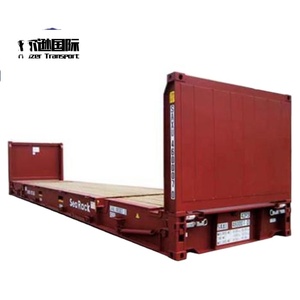
Yes. We design and operate specialized intermodal hardware including heavy-duty flatbed transport racks, flat racks (FR), open tops (OT), and platform equipment engineered for oversized industrial machinery, stamped molds, stamping presses, and plant structures. Our structural engineers compute center of gravity (CoG), bridge bearing loads, and ocean transit wave shock parameters to configure multi-point certified chain lashing, steel cable turnbuckles, and marine-grade anti-corrosion barrier packaging (VCI shrink film with heavy desiccants) compliant with CSS (Cargo Stowage and Securing) Code standards.
What is the difference in carbon accounting between ocean freight and the China-Europe Railway Express?
Modern container ships (18,000–24,000 TEU capacity) represent the lowest carbon intensity freight mode in existence, emitting approximately 10 to 15 grams of CO2 equivalent per ton-kilometer (gCO2e/t-km). The China-Europe Railway Express emits between 20 to 35 gCO2e/t-km—roughly double that of modern maritime transport, yet still roughly 95% lower than commercial air freight (which averages 500 to 650 gCO2e/t-km). For procurement teams working toward certified SBTi (Science Based Targets initiative) Net-Zero frameworks, ocean freight remains the definitive baseline for massive volume carbon efficiency, with rail offering a responsible intermediary bridge for expedited supply schedules.
How does your cloud visibility platform predict maritime delays before carriers issue schedule updates?
Carriers typically issue schedule adjustment notices only after a vessel misses its designated berthing window or leaves a port late. Our proprietary platform ingests real-time raw Automatic Identification System (AIS) satellite data, terminal anchorage queue lengths, weather routing models, and historical port congestion indices. By calculating vessel approach velocity against current port turn-around times, our machine-learning algorithms identify delays up to 7 to 10 days before commercial liner notification, giving procurement managers actionable lead time to adjust assembly line schedules or divert priority stock via air or rail bridges.
What are the standard Incoterm recommendations for international buyers sourcing OEM parts from China?
For buyers sourcing from multiple OEM factories, we recommend either FCA (Free Carrier - Named Origin Warehouse) or DDP (Delivered Duty Paid - Buyer's Facility). Purchasing under traditional FOB (Free On Board) forces buyers to absorb unknown carrier terminal markups, documentation charges, and port fees controlled by the supplier's designated local agent. Under FCA, the buyer controls the carrier selection, consolidation schedule, and routing from the moment cargo reaches our regional bonded hub. Under comprehensive DDP engineered by our forwarding group, the entire logistics, transit risk, maritime freight, customs clearance, and inland trucking are bundled into a transparent, single-invoice landed cost.
How does the onboarding and technical integration process work for a new OEM manufacturing account?
Onboarding follows a rigorous three-phase deployment plan: Phase 1: Compliance & Tariff Audit (Days 1–7): Analysis of all product lines, HS code classification validation, dangerous goods categorization, and Incoterm review. Phase 2: Systems Integration (Days 8–14): Direct API/EDI integration between your ERP/WMS system and our visibility portal for automated purchase order (PO) generation, milestone tracking, and document archiving. Phase 3: Operational Launch & Carrier Allocation (Days 15+): Establishing dedicated customer service desks, routing guides, contract lane allocation with preferential carrier slot protection, and real-time dashboard activation for key stakeholders.
Practical Cost Control Protocols

Best Practices for Surcharge Elimination in Ocean Forwarding

Standard Operating Procedures developed over 110 years of maritime forwarding to protect procurement budgets against volatile market surcharges.

Pre-Peak Season Space Locking

Booking factory allocation slots 4 to 6 weeks in advance of traditional maritime peak windows (Golden Week, Q4 holiday rushes, and Chinese New Year) eliminates exposure to sudden Peak Season Surcharges (PSS) and carrier spot-market premium premiums.

Automated Weight (VGM) Verification

Submitting Verified Gross Mass (VGM) via calibrated scale data during factory stuffing prevents costly marine terminal re-weighing penalties, container roll-over fees, and safety-related documentation amendment holds.

Itemized All-In Contract Quotations

Requiring Bunker Adjustment Factors (BAF), Currency Adjustment Factors (CAF), Terminal Handling Charges (THC), and documentation costs to be itemized and fixed within contract service agreements ensures complete financial transparency.
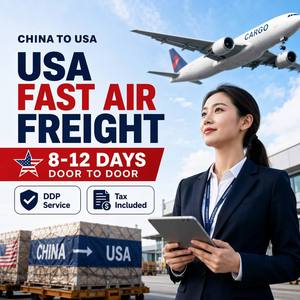
Scale Your OEM Maritime Supply Chain with Confidence

Consult with our licensed customs brokers and maritime logistics engineers to audit your existing trade lanes, optimize container CBM utilization, and secure priority space allotments across global ocean routes.