
Precision-engineered handling systems, certified hazmat air express corridors, and heavy intermodal links customized to protect time-critical and temperature-sensitive high-value shipments.




The international transport of perishable inventory—encompassing premium foodstuffs, active biopharmaceuticals, clinical biologics, chilled agro-commodities, and chemical reagents—operates under thermodynamic zero-tolerance tolerances. Unlike generic freight brokerage, custom OEM perishable logistics involves the manufacturing and deployment of tailor-made containment, pre-conditioned active phase change materials (PCMs), dynamic IoT telemetry, and pre-cleared regulatory green-channels.
Every phase of perishable supply chain engineering demands an unbroken thermal profile. A single degree of thermal deviation (temperature excursion) can trigger irreversible enzymatic spoilage, active pharmaceutical ingredient (API) denaturation, or outright rejection at port-of-entry quarantine checkpoints. By synthesizing proprietary multi-barrier insulated shippers, dynamic cryogenic solutions, and direct pre-booked reefer capacity, WTA mitigates the hidden risks of global cold-chain transit.
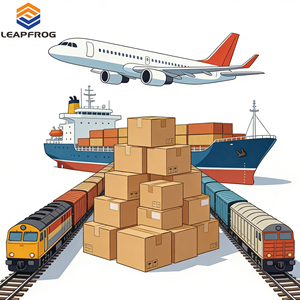
A rigorous empirical comparison of transit speed, cost structure, continuous cold integrity, and carbon footprint across modern multimodal freight modalities.
| Transport Modality | Thermal Integrity Index | Average Transit Duration | Payload / Tare Efficiency | Regulatory Risk Exposure | Best Applied Cargo Classes |
|---|---|---|---|---|---|
| Direct Air Freight Charter / Express | Ultra-High Active ULD RKN/RAP | 1 – 3 Days Intercontinental | Strict Volumetric Pricing; High Tare | Minimal dwell; rapid tarmac handover required | Clinical cell therapies, fresh truffles, ultra-perishable pharmaceuticals, emergency vaccines |
| Ocean Reefer (CA Controlled Atmosphere) | Stable Microprocessor continuous loop | 18 – 35 Days Global Port-to-Port | Optimal Cost per CBM; Maximum Payload | Port dwell & demurrage risks require proactive clearance | Bulk citrus, avocado, stone fruit, frozen proteins, bulk wine, temperature-sensitive confections |
| Eurasia Intermodal Reefer Rail | High Autonomous Diesel-Electric Genset | 14 – 18 Days Door-to-Door | Balanced economics; 40-50% savings vs air | Border gauge changeover stations; track monitoring | High-end packaged consumer foods, dairy derivatives, intermediate bulk pharmaceutical precursors |
| Cross-Border Temperature-Controlled Road (FTL) | High Multi-temp zone refrigerated trailer | 1 – 5 Days Continental | Direct point-to-point; immediate load/offload | Driver hour compliance, border border-post inspections | Fresh meat, chilled dairy, fresh produce, regional retail replenishment, bonded pharma distribution |
Strategic shifts in how global procurement leaders, enterprise manufacturers, and supply chain architects source, contract, and monitor temperature-sensitive freight.
Procurement teams are moving away from raw spot-rate calculations. Contracts now demand comprehensive Total Cost of Degradation metrics, incorporating product respiration decay, shelf-life erosion at retail, and insurance risk profiles into carrier awards.
Rather than reactive alert tickets, 2025+ procurement specifications mandate real-time API feeds that analyze weather anomalies, port labor congestion, and reefer compressor micro-vibrations to trigger automated secondary route switches.
Strict European and North American EPR (Extended Producer Responsibility) regulations are forcing an industry transition from single-use EPS (expanded polystyrene) to reusable, bio-phase change Vacuum Insulated Panel (VIP) return networks.
The Food Safety Modernization Act Section 204 mandates granular Critical Tracking Events (CTEs) and Key Data Elements (KDEs) across the entire supply chain, making automated lot-level data capture an absolute prerequisite for global vendor selection.
Corporate ESG disclosures now measure the heavy auxiliary diesel consumption of active refrigeration units. Enterprise contracts increasingly demand alternative bio-LNG haulage, electric reefers with solar assist, and verified modal shift strategies.
Decoupled freight forwarding and third-party customs clearance create dangerous dwell times at border inspection posts. Buyers now consolidate contracts exclusively with forwarders possessing in-house AEO/C-TPAT licensed customs authority.
Founded in 1913 by Ernest Sommer, WTA combines four generations of freight engineering with an advanced real-time digital visibility ecosystem.
Navigating geopolitical shifts, economic cycles, and logistics transformations since 1913. Our fourth-generation family forwarder framework pairs institutional trust with agile modern tech.
Included free for every customer: real-time GPS tracking, predictive delay modeling, automated ESG carbon calculations, and continuous temperature sensor aggregation on web and mobile.
In-house licensed customs teams in Manchester, Atlanta, Shanghai, and Dubai navigate perishable tariff codes, veterinary health certificates, and border control formalities without third-party delay.
Over 85% of our 6,000+ active enterprise clients rate our freight precision at 8/10 or higher. Trusted by global brands like JDE Peet's, Tesco, and Eaton for their most delicate shipments.
With wholly owned hubs across the UK, USA, China, and the UAE (situated 30 minutes from Jebel Ali Port), our dedicated local operators supervise ramp, cold-storage, and vessel operations directly.
Demurrage, detention, peak season surcharges, and origin terminal fees quietly erode margins. WTA audits every lane upfront, issuing all-in, predictable cost structures buyers can rely on.
Standard refrigerated 3PL logistics generally relies on generic reefer equipment set to a requested nominal temperature. Custom OEM perishable logistics operates at an engineering level: it designs and qualifies specific thermal packaging configurations, formulates tailored phase change materials (PCMs) to withstand route-specific ambient spikes, coordinates specialized precooling protocols prior to stuffing, and deploys calibrated multi-sensor IoT telemetry. Furthermore, OEM solutions incorporate lane-specific risk mitigation, such as pre-arranging tarmac priority, dedicated reefer plug-in guarantees at intermediate transshipment terminals, and specialized customs green-lanes to eliminate dwell times.
Perishable agricultural commodities and fresh perishables continue to respire after harvest, taking in oxygen (O2) and producing carbon dioxide (CO2) and ethylene gas, which accelerates ripening and cellular breakdown. Controlled Atmosphere reefers actively regulate interior gas concentrations—typically lowering O2 to 2–5% and balancing CO2 between 3–5%, with nitrogen gas making up the remainder. This dynamic gas modulation puts perishable cellular respiration into a state of 'hibernation,' substantially retarding ripening, preventing flesh softening, and extending commercial shelf life by 200% to 300% compared to conventional refrigerated ocean carriage.
Importing and exporting perishable inventory demands strict compliance across multiple regulatory frameworks. Core documentation includes: Phytosanitary Certificates (for plants/produce) or Veterinary Health Certificates (for animal proteins/dairy) issued by national agricultural authorities; detailed Commercial Invoices and Packing Lists indicating precise scientific classification and batch numbers; Certificate of Analysis (CoA); and exact HS Code harmonization. In the USA, compliance with FDA FSMA Prior Notice and FSMA 204 traceability rules is required. In Europe, entry through designated Border Control Posts (BCPs) with pre-lodged CHED (Common Health Entry Document) declarations via TRACES-NT is mandatory. WTA's in-house licensed customs brokers manage these filings before freight arrival.
Every temperature-critical shipment managed by WTA is integrated into our digital visibility architecture. Active IoT sensor beacons transmit real-time telemetry—measuring core container temperature, ambient humidity, barometric pressure, shock, and battery life. If an excursion threshold is approached (e.g., reefer unit loss of power at an ocean terminal or tarmac delay during an air freight transit), our 24/7 Global Control Tower triggers automated alarm protocols. Ground teams intervene directly to reconnect power, replenish dry ice or gel packs, or move cargo into emergency airport cold rooms (15-25°C, 2-8°C, or -20°C) before cargo degradation occurs.
Active thermal packaging refers to powered mechanical refrigeration systems or compressor units (such as Envirotainer or CSafe RKN/RAP containers). They offer virtually unlimited duration as long as power or charging is maintained, making them ideal for high-volume, extremely high-value biologicals. Passive thermal packaging utilizes vacuum insulated panels (VIP) paired with phase change materials (water, paraffin, or salt-hydrates) and requires no external power source. Passive systems are engineered for qualified hold times of 72 to 144 hours. Choosing between them depends on lane transit reliability, volumetric weight costs, freight modal choice, and the value density of the perishable cargo.
Refrigerated containers (reefers) and insulated passive shippers are designed to maintain cargo temperature, not to extract field heat or bulk warmth from improperly conditioned goods. If perishable inventory is loaded without thorough forced-air, hydro-cooling, or vacuum pre-cooling to target core transit temperature, the trapped heat creates microclimatic hotspots, condensation, and rapid bacterial/fungal proliferation. Our standard OEM operating procedures require verified pre-cooling sign-offs and pulp-temperature validation at origin packing facilities prior to container stuffing.
Eliminate temperature excursions, streamline border inspections, and access real-time lane telemetry. Connect with WTA Group's cold-chain engineering specialists for comprehensive lane audits and tailored OEM logistics frameworks.
Get a Quote