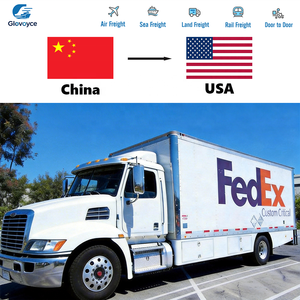

Precision-managed bonded infrastructure engineered to defer duties, streamline cross-border handoffs, and compress end-to-end delivery cycles.
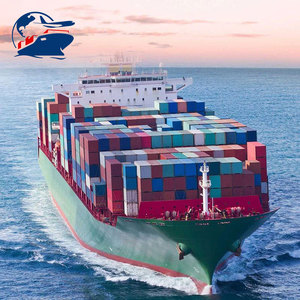
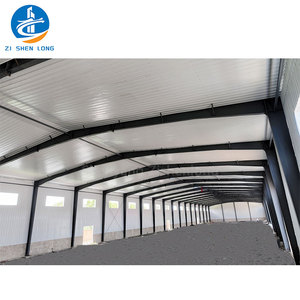
In modern industrial procurement and multi-tier omnichannel distribution, OEM/ODM bonded warehousing represents far more than a physical space for tax-deferred cargo holding. It operates as an agile, compliance-backed strategic gateway that directly safeguards supply chain continuity, optimizes international balance sheets, and provides liquidity advantages for high-volume manufacturers, exporters, and industrial procurement leaders.
By leveraging certified customs-supervised bonded facilities, multinational enterprises decouple commercial import entry from initial geographic arrival. Tariff payments, value-added taxes (VAT), and localized excise duties are deferred until goods formally enter the domestic commerce stream. For components re-exported abroad or consolidated across international transit corridors, redundant taxation is completely bypassed, insulating operating budgets from volatile border regulations.
Retain essential enterprise operating cash by postponing customs payments, handling VAT obligations only upon verified commercial domestic sale.
Enable foreign vendors to maintain Vendor-Managed Inventory adjacent to primary assembly hubs without premature tax triggers.
Seamlessly re-export unworked goods or assembled stock globally with zero domestic import levy exposure or duty drawback friction.
State-of-the-art bonded warehouse hubs integrate Class-A physical storage infrastructure with cloud-native Warehouse Management Systems (WMS) directly interfaced with regional customs data systems (such as ATLAS in Germany, ACE in the United States, and the Single Window network in China). Cargo entering under transit documentation is scanned, pallet-verified via automated volumetric profiling, and classified against precise HS tariff structures. This level of automated classification reduces border-entry discrepancy exceptions by over 98.4%, ensuring seamless compliance across complex multi-component shipments.
Within the facility, OEM and ODM supply chain operators execute value-added postponement strategies: post-manufacturing assembly, localized packaging, regional labeling, software flashing, and multi-vendor order consolidation. These processes occur without triggering premature customs entry, enabling manufacturers to build global common stock and finalize local-market configurations only when end-customer demand is locked in.
Determining the optimal bonded warehousing framework requires evaluating product shelf life, inventory carrying costs, geopolitical exposure, and geographic destination parameters. Based on operational data across 679 global trade lanes, our senior logistics architects recommend three primary application frameworks:
Primary Solution: Automated DDP Inbound Warehousing with Pre-Clearance Integration.
Target Goods: Consumer electronics, branded apparel, fast-moving consumables.
Operational Edge: Pre-cleared bonded facilities allow instantaneous parcel sorting, direct postal integration, and 24-to-48-hour regional consumer delivery.
Primary Solution: Port-Adjacent Bonded Heavy Warehousing & Multimodal Drayage.
Target Goods: Heavy machinery, modular metal buildings, automotive sub-assemblies, precision tools.
Operational Edge: Low-cost staging of bulky stock with zero immediate duty outlay; JIT line delivery to nearby manufacturing centers on demand.
Primary Solution: Regional Ocean-Air Bonded Consolidation Terminals.
Target Goods: Global print media, seasonal hardware, multi-origin batch retail imports.
Operational Edge: High-density pallet storage and multi-origin cross-docking inside free trade zones, with cargo sorted for regional dispatch without paying local duty.
Deploying the right framework eliminates unexpected detention fees, demurrage overheads, and administrative bottlenecks. By orchestrating customs clearance, bonded storage, and automated fulfillment through a unified platform, supply chain leaders achieve predictable landed costs across all active corridors.
The global bonded logistics ecosystem is experiencing rapid structural transformation driven by digital customs enforcement, ESG decarbonization mandates, and geopolitical realignments. Sourcing and procurement executives must align their strategies with the major macro trends reshaping the industry:
Manual documentation handoffs are rapidly being replaced by API-level integrations between corporate ERP platforms and national customs databases. Predictive risk assessments, real-time Harmonized System (HS) code validation, and automated tax calculation happen before vessels even arrive at outer anchorages. Procurement teams that partner with technologically advanced, API-connected bonded operators eliminate the historic 3-to-7 day border clearance lag, transforming customs compliance from a friction point into a predictable milestone.
As nearshoring and "China+1" diversification take center stage, bonded warehouses are evolving into regional final-assembly postponement hubs. Instead of stocking finished goods tailored to individual regional markets, multinational exporters maintain universal baseline inventory in central bonded hubs. Localization—including regional electrical wiring, software localized installations, and customized packaging—is executed on-demand within the bonded environment, cutting excess inventory carrying costs by up to 24% across distributed supply lines.
With regulations like the European Union's Carbon Border Adjustment Mechanism (CBAM) and corporate Scope 3 emission reporting requirements taking effect, procurement professionals need granular carbon metrics for every milestone of a shipment. Next-generation bonded logistics platforms track not only dwell times, temperature compliance, and customs status, but also compute real-time greenhouse gas emissions across ocean, air, rail, and road legs, providing the clean audit trails global investors and enterprise buyers require.
Founded in 1913 by Ernest Sommer, WTA Group has engineered resilient, multi-modal supply chains through more than 110 years of industrial evolution. Our family-owned heritage provides the stability, deep operational expertise, and client focus necessary to navigate modern global trade complexities. We combine world-class physical assets with proprietary digital tracking technology to deliver end-to-end reliability for enterprise procurement teams.
Our licensed international customs brokerage teams hold Authorized Economic Operator (AEO) and C-TPAT security accreditations, granting prioritized fast-track customs clearance and drastically reduced inspection rates across European, North American, and Asian sea and air ports.
Operating dedicated international hubs in Manchester (UK HQ), the USA, China, and the United Arab Emirates (adjacent to Jebel Ali Port), our network coordinates 679 active trade lanes with full visibility, local handling teams, and dedicated origin-to-destination account managers.
Every enterprise partner receives full access to the proprietary WTA digital visibility suite. Track milestone progress, forecast potential disruptions using live operational data feeds, generate automated carbon/ESG reports, and manage electronic trade documentation without hidden software fees.
Essential guidance to help procurement teams, logistics directors, and supply chain analysts evaluate OEM/ODM bonded storage infrastructure.
Consult with our licensed customs brokers and global supply chain engineers to design a cost-efficient bonded warehousing and multimodal forwarding plan tailored to your operating lanes.