
Top China Domestic Freight Forwarding Factories & Supplier

Architecting Precision Multimodal Corridors, Bonded Hub Consolidations, and Compliant Export Logistics Across China's Tier-1 Industrial Belts

Verified Fleet & Freight Infrastructure

High-Priority Domestic & Cross-Border Supply Chain Portfolios

Direct from origin consolidators: Factory-to-port multimodal haulage, heavy-machinery transfers, reefers, and customs-bonded execution.
Comprehensive Procurement Whitepaper

Engineering China Domestic Freight Forwarding: Operational Excellence, Inland Feeder Networks, and Cross-Border Interoperability

Modern global commerce depends substantially upon the structural efficiency of China's internal arterial distribution systems. When procurement officers, supply chain architects, and enterprise brand owners evaluate a top China domestic freight forwarding factory & supplier, they are not merely contracting a fleet of line-haul trucks. They are acquiring integrated custody management across the Pearl River Delta (PRD), Yangtze River Delta (YRD), Bohai Economic Rim, and inland industrial manufacturing corridors such as Chengdu-Chongqing and Wuhan. Without robust domestic feeder integration, container repositioning strategies, bonded warehouse aggregation, and licensed preliminary customs classifications, international freight contracts inevitably suffer from terminal congestion, roll-overs, demurrage leaks, and administrative non-compliance.

Executive Takeaway for Global Sourcing Executives Domestic hauling within China constitutes up to 34% of preventable transit delays and 28% of unexpected surcharge escalations. Securing a forwarder with domestic asset governance (feeder vessels, bonded cross-docking facilities, Class-9 hazardous storage, and regional drayage fleets) converts high-risk fragmented ex-factory movements into predictable, continuous pipeline flow.

1. Anatomical Breakdown of China Domestic Arterial Freight Modes

Executing ex-factory collections across interior production hubs requires precision coordination among distinct modal infrastructures. An enterprise logistics partner balances modal economies against delivery commitments:

  • Inland Barge Feeder Networks (Yangtze & Pearl Rivers): Serving inland manufacturing powerhouses from Chongqing, Wuhan, and Jiujiang down to Shanghai, or from Foshan and Zhongshan to Nansha/Hong Kong. Feeder barge shipping offers the lowest carbon footprint and per-TEU operational expenditure, though requiring active water-level risk management and slot forecasting during seasonal low-water windows.
  • Express Drayage & High-Frequency FTL Trucking: Linking manufacturing hubs directly to primary marine terminals (e.g., Ningbo-Zhoushan, Yantian, Qingdao, and Shanghai Yangshan). Premium services such as Matson-dedicated expedited container drayage ensure exact gate-in cut-off compliance, sub-24-hour factory collections, and guaranteed cross-dock transfers.
  • Cross-Border Intermodal Rail (CRE - China-Europe Railway Express & CRRC Corridors): Operating out of Xi'an, Zhengzhou, Chengdu, and Yiwu, providing accelerated overland alternatives linking mainland factories with European and Central Asian logistics platforms in 12 to 18 days, effectively mitigating deep-sea maritime choke points.
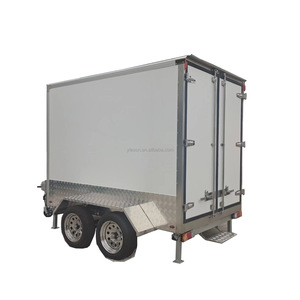
  • Refrigerated & Temperature-Controlled Distribution: Specialised mobile reefer trailers and cold rooms engineered for fresh agricultural commodities, pharmaceutical precursors, and specialty fine chemicals that necessitate consistent -25°C to +4°C continuous environmental stability.
Transit Mode Typical Lead Time (Interior to Port) Cost Efficiency (Per Ton-KM) Customs Risk Tolerance Target Commodity Matrix
Direct Inland Drayage (FTL/LTL) 12 – 36 Hours Medium to High Immediate Border Dispatch Consumer Electronics, Apparel, Matson US-Express, Urgent Spares
River Barge Consolidation 4 – 9 Days Ultra-Low Optimization Bonded Port Transfer Buffer Bulk Raw Materials, Heavy Machinery, Metal Coils, Consumer Goods
CRE Intermodal Rail 2 – 4 Days (Domestic segment) Balanced Modal Curve Inland Railway Clearance Automotive Components, Solar PV Modules, Industrial Conveyors
Dedicated Reefer Fleets 14 – 48 Hours Premium Controlled Phytosanitary & Cold Check Fresh Foodstuffs, Bio-tech, Active Battery Chemicals, Resins

2. Regulatory Compliance: DG Handling, Customs Brokerage, and Bonded Consolidation

A critical differentiator of first-tier Chinese forwarding suppliers lies in their statutory licensing and Dangerous Goods (DG) compliance capabilities. The transport of sensitive cargo—including UN3480/UN3481 lithium-ion battery packs, industrial chemical liquids, fine organic powders, and agricultural conveyor systems—demands rigorous packaging certifications (UN-rated boxes), Maritime Safety Administration (MSA) filings, and Hazardous Package Certificates (危包证, Weibaozheng).

Working alongside accredited customs brokerage units allows global buyers to leverage bonded warehousing (保税仓) setups. In this structure, goods from multiple domestic vendors are consolidated under bonded status, allowing export VAT refunds (出口退税) to be triggered immediately upon warehouse entry, while ocean containers are loaded with optimal volumetric efficiency (95%+ cube utilization), slashing unnecessary shipping container counts.

Verified Institutional Capabilities

Why Tier-1 Importers Trust Our China Domestic & Global Arteries

Combining over a century of multimodal pedigree with boots-on-the-ground operational control across China's industrial nerve centers.

Global Support Icon
6,000+

Global Clients Serviced

Delivering dedicated supply chain governance for enterprise leaders including JDE Peet's, Tesco, Zoomo, and Eaton with end-to-end operational visibility.

Licensed Customs Brokers
AEO & C-TPAT

Licensed Customs Dominance

Dual-accredited status enables accelerated green-lane customs clearances, minimized border inspection interventions, and prioritized origin-to-destination transit.

Extensive Network
679

Active Global Trade Corridors

Direct allocations on all major maritime lines, CRE block trains, and domestic feeder arteries connecting China's heartland with Europe, North America, and APAC.

Visibility Platform
24/7 Live

Predictive Visibility Tech

Proprietary real-time cargo monitoring tracking GPS telemetry, container temperature curves, customs milestones, and automated predictive delay models.

International Presence
110+ Years

Multimodal Heritage (Since 1913)

Fourth-generation corporate stability combining deep-rooted Western freight security standards with local mainland operational execution since 2006.

Customer Satisfaction
77 NPS

Top-Tier Industry Satisfaction

Over 85% of global procurement teams assess our logistics accuracy at 8/10 or higher, bolstered by proactive demurrage mitigation and transparent quotes.

Supply Chain Outlook 2025–2030

Emerging Procurement Trends in China Freight Forwarding

How forward-thinking procurement directors are re-engineering ex-factory pickups to counteract geopolitical, environmental, and cost volatility.

🌐

1. Near-Factory Bonded Micro-Hubs

Rather than trucking raw, unconsolidated freight thousands of kilometers to primary ports, procurement protocols increasingly utilize near-source bonded cross-docking facilities. This minimizes inland container dwell charges and standardizes export documentation at the provincial level.

🌱

2. ESG-Compliant Green Transit Mandates

With corporate Scope 3 emissions reporting becoming mandatory across the EU (CSRD) and North America, multinational shippers are migrating domestic cargo from long-distance diesel trucks to electric short-sea river barges and electrified China-Europe rail pathways.

⚡

3. Algorithmic Predictive Surcharge Avoidance

By leveraging dynamic API feeds connecting ocean terminals, weather forecasts, and inland gate-in queues, AI-driven freight scheduling systems actively circumvent terminal demurrage, peak season surcharges (PSS), and blank sailing consequences before cargo leaves the factory.

Procurement Knowledge Base

Frequently Asked Questions on China Domestic Forwarding

Addressing the technical, customs, and operational complexities encountered during inland China origin procurement.

What is the difference between FOB, EXW, and FCA when sourcing from Chinese factories?
Under EXW (Ex Works), the overseas buyer assumes total financial liability and logistical responsibility the moment goods are ready at the factory floor, including Chinese domestic drayage, export declaration, and terminal handling. Under FOB (Free On Board), the seller pays for internal trucking to the nominated sea vessel and handles local customs export clearance. However, forward-thinking buyers frequently select FCA (Free Carrier) at an inland warehouse or port hub; this gives the international buyer control over carrier selection, consolidates multiple suppliers into single containers, and eliminates hidden factory markups on local trucking.
How can shippers avoid demurrage, detention, and terminal storage fees in major Chinese ports?
Demurrage and detention commonly stem from missing export paperwork, late dangerous goods declarations, or mismatched container weight records (VGM). To eliminate these expenses: (1) Ensure your forwarder negotiates 14 to 21 free demurrage/detention days at destination; (2) Pre-clear customs paperwork before trucking arrives at the port; and (3) Use container tracking telemetry to coordinate gate-in timing strictly within the carrier's designated early-return window (typically 3 to 5 days prior to vessel departure).
What specific documentation is required to ship lithium batteries and sensitive chemicals from China?
Exporting batteries, liquids, and fine powders requires complete compliance validation: (1) UN38.3 test summary reports and MSDS (Material Safety Data Sheets); (2) Certified Dangerous Goods Packaging Certificates (Weibaozheng); (3) Safe Transport Conditions Appraisals issued by recognized institutes (such as DGM or Shanghai Chemical Industry Institute); and (4) Proper exterior carton labeling adhering to Class 9 hazmat standards. Unlicensed attempts to ship sensitive items through standard lines risk severe cargo confiscation and customs blacklisting.
When does inland rail or river barge become more economical than direct trucking?
As a broad operational metric, if cargo origin is over 600 kilometers inland (e.g., Sichuan, Hubei, Hunan provinces) and shipment volume exceeds 4 standard FCLs with non-critical delivery deadlines, barge feeder navigation down the Yangtze River offers up to a 45% reduction in domestic haulage costs. Conversely, for high-value machinery or electronics where factory-to-ship cycles must occur within 48 hours, direct FTL highway drayage remains the indispensable modality.
How does a bonded warehouse facility accelerate export VAT refunds in China?
When cargo enters a comprehensive bonded zone (综合保税区), it is legally classified as having crossed the national customs border. This allows domestic Chinese suppliers to register the customs export declaration immediately and claim their 13% export VAT refund weeks before the actual ship sails. This arrangement improves factory cash flows, incentivizes suppliers to offer sharper procurement rates, and allows overseas buyers to conduct quality inspections and multi-vendor packing safely within a duty-deferred zone.

Streamline Your China Logistics Architecture Today

Eliminate unexpected surcharges, accelerate inland dispatch, and connect your tier-1 manufacturing hubs with seamless global delivery conduits. Connect with our dedicated forwarding engineering desk for lane analysis, modal modeling, and transparent quotes.

Contact Us