
Combining primary cargo insurance underwriting with advanced cold chain monitoring, automated sorting, bonded warehousing, and global multimodal transportation networks.
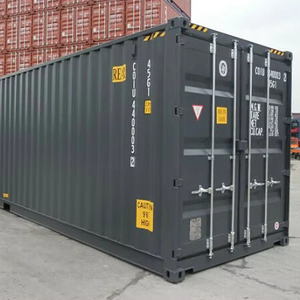
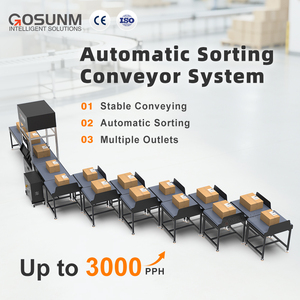

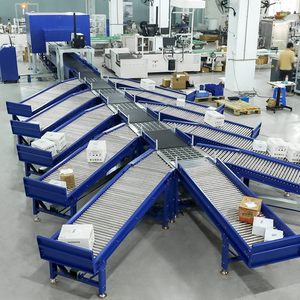
Combining century-old underwriting heritage with modern Lloyd’s syndicates and institutional risk engineering across cross-border transit nodes.
We underwrite non-recourse, "All-Risks" marine contracts adhering strictly to LMA/IUA standards, insuring against General Average, jettison, pilferage, and total constructive loss without intermediary delay.
Leveraging continuous shock, tilt, atmospheric moisture, and temperature logging sensors across high-cube and refrigerated reefers, converting insurance from reactive adjudication to real-time incident mitigation.
Fully certified as an Authorized Economic Operator with validated customs brokerage teams in Manchester, Chicago, Shanghai, and Dubai, preventing prolonged port detention and secondary cargo abandonment claims.
A granular analytical breakdown designed for Chief Procurement Officers, Supply Chain Controllers, and Corporate Risk Managers.
A pervasive vulnerability in international supply chain management is the conflation of Carrier Liability with Comprehensive All-Risks Cargo Insurance. Under standard conventions—including the Hague-Visby Rules for ocean transit, Montreal Convention 1999 for international air cargo, and the CMR Convention for European road haulage—carrier liability is not absolute indemnification. Carriers operate under statutory exclusions including "Acts of God", perils of the sea, inherent vice of goods, strikes, riots, and unpreventable geopolitical events.
Furthermore, carrier payouts are bounded by arbitrary weight matrices (e.g., 2 SDRs per kilogram under Hague-Visby or 22 SDRs under Montreal), leading to recoveries that consistently represent less than 5% of commercial invoice value for electronics, precision machine tooling, pharmaceuticals, or luxury retail cargo.
| Risk Vector & Legal Parameter | Standard Carrier Liability (Hague-Visby / CMR) | WTA Underwritten All-Risks Policy (ICC 'A') |
|---|---|---|
| Statutory Payout Ceilings | Limited to 2 SDR per kg (~$2.60/kg) or package limit | 110% CIF Value (Full invoice + freight + 10% expected margin) |
| General Average Liability | Shipper is legally liable for vessel salvage contributions | Full indemnity; underwriter issues Average Guarantee bonds |
| Burden of Proof | Shipper must prove carrier negligence or proximate fault | Loss verified via survey report; proof of carrier fault not required |
| Concealed Damages & Moisture | Routinely denied under "seal intact" or "sweat/condensation" clauses | Comprehensive coverage including moisture, rust, and thermal variances |
| Average Claims Resolution Window | 9 to 18 months via complex maritime dispute arbitration | 14 to 21 business days via streamlined digital claim portal |
Anticipate structural industry transformations driven by algorithmic actuarial models, parametric contracts, and ESG-aligned supply corridors.
Transitioning from manual loss surveys to automated, oracle-verified triggers. Parametric policies execute automatic liquid settlements the instant ocean transit delays exceed contract parameters or cold-chain temperature thresholds are breached.
Static annual declarations are being superseded by real-time voyage pricing engines. Machine learning algorithms dynamically calibrate insurance premiums based on live meteorological data, Red Sea corridor rerouting, and port congestion indices.
Global procurement teams are shifting decisively from CIF/CIP arrangements managed by overseas factories to buyer-controlled FCA/FOB terms, reclaiming visibility over policy wording, deductibles, and direct loss compensation.
Essential guidance compiled by WTA Group's senior marine claims adjusters and licensed customs compliance directors.
Institute Cargo Clauses (C) represents minimum baseline cover, strictly indemnifying catastrophic events like vessel stranding, fire, or explosion. ICC (B) adds limited hazards like earthquakes, washing overboard, and water infiltration. ICC (A) is comprehensive "All-Risks" cover, indemnifying all physical loss or damage from external causes, subject only to explicitly listed exclusions like wilful misconduct, ordinary leakage, or inherent vice.
Under maritime law (York-Antwerp Rules), if a vessel sacrifices cargo or incurs salvage expenses to preserve the joint maritime venture during an emergency, all cargo owners must contribute proportionately to financial losses. Without primary marine cargo insurance, ocean lines retain statutory maritime liens over your container, refusing cargo release until substantial cash deposits or bank guarantees are provided.
Yes. WTA's unified multi-modal underwriting protects cargo during ocean transit, during bonded customs staging in origin ports, and within Class-A automated distribution centers. Our bonded status ensures that duty and import VAT are not assessed on goods declared as constructive total losses during transit.
The global trade standard is 110% of the CIF (Cost, Insurance, and Freight) value. The additional 10% buffers the importer against anticipated overhead, customs re-filing expenses, administrative disruption, and projected retail markup that would have been captured upon delivery.