Tier-1 Global Logistics Whitepaper & Strategic Sourcing

Top Trusted Global Cargo Shipping Factories & Suppliers

Comprehensive Procurement Intelligence: Strategic Freight Consolidation, Door-to-Door DDP Compliance, Multimodal Infrastructure, and Algorithmic Supply Chain Architecture.

Enterprise Procurement Catalog

Engineered Freight Modes & Specialized Logistics Infrastructure

Direct factory-level routing, end-to-end drayage, high-density bulk storage equipment, and turnkey cross-border DDP systems vetted for reliability, duty optimization, and tariff stability.
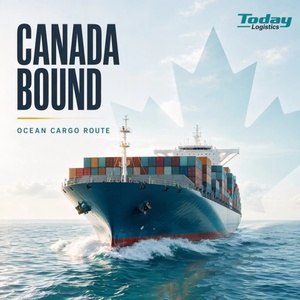
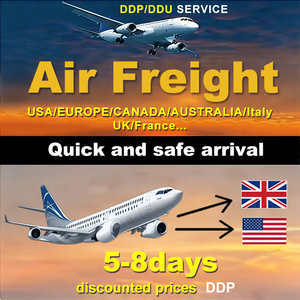
China to Canada FCL LCL Ocean Freight Forwarder Local Truck Distribution
Trans-Pacific Ocean Corridor

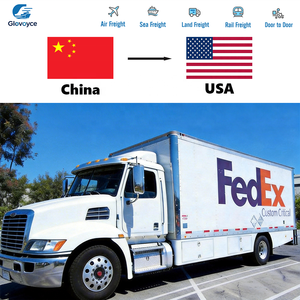
China to Canada FCL LCL Ocean Freight Forwarder Local Truck Distribution Service Customs Clearance Services Container Drayage

  • Vancouver & Prince Rupert Express Gates
  • Intermodal Drayage to Toronto & Montreal
  • Automated CBSA CARM Compliance Handling
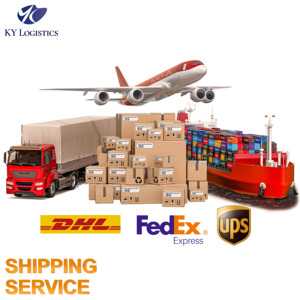
Delivery Door to Door DDP Sea Air Express Shipping
Turnkey Multimodal DDP

Delivery Door to Door DDP Sea+Air Express Shipping to USA Canada EU Logistics Company in China Services Freight Forwarder

  • Duties, Tariffs & Port Storage Pre-Paid
  • Direct Amazon FBA & 3PL Fulfillment Hubs
  • Zero Hidden Terminal Handling Charges
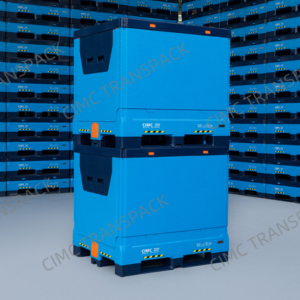
CIMC 1000 Liter Plastic IBC Tank For Chemical Storage
Bulk Cargo Asset Management

CIMC 1000 Liter Plastic IBC Tank For Chemical Storage Durable Foldable Intermediate Bulk Container For Liquids

  • UN Certified Packaging Group II & III Liquids
  • Foldable 3:1 Reverse Logistics Footprint
  • High-Density Polyethylene & Galvanized Cage
Air Sea DDP LCL International Logistics Service
Consolidated Air & Ocean

Cheapest Air Sea DDP LCL International Logistics Service Top 10 China to USA UK Canada Express Freight Forwarder Shipping

  • Weekly Fixed Consolidation Departures
  • Algorithmic Volumetric Weight CBM Packing
  • Full Doorstep Courier Handover (UPS/FedEx)
Saudi Customs Approved Door-to-Door Shipping Service
Middle East Regional Corridor

Saudi Customs Approved Door-to-Door Shipping Service China DDP Air Freight LCL Sea Consolidation Solutions Express LCL Product

  • SABER Platform & SASO Clearance Pre-Approval
  • Direct Inflow to Jeddah & Dammam Seaports
  • Bonded Linehaul into Riyadh Metro Warehouses
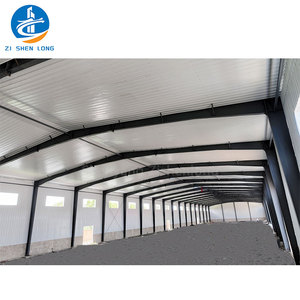
Prefabricated Steel Structure Industrial Warehouse Building
Industrial Logistics Infrastructure

Hot Selling Prefabricated Steel Structure Warehouse Factory Modular Metal Frame Industrial Building Customization

  • High-Yield Q355B Structural Heavy Beams
  • Rapid On-Site Assembly Modular Framing
  • Complete Port-to-Site Breakbulk Stowing
Dependable Metal CNC Outsourcing Partnerships
Precision Engineering Sourcing

Strengthen Your Global Supply Chain With Dependable Metal Cnc Outsourcing Partnerships

  • ISO 9001:2015 Precision Machined Tolerance
  • Aerospace & Automotive Component Supply
  • Integrated Air Freight Kanban Dispatch
Secure DE Express Automated Customs Clearance DDP
European Union Gateway

Secure Express to DE Automated Customs Clearance & Bonded Warehouse Door-to-Door DDP

  • German Bonded Hubs (Hamburg / Frankfurt)
  • Automated ATLAS Clearance & Import VAT (EU)
  • Seamless Last-Mile Road Haulage Delivery
Centennial Operational Heritage

Industrial Supply Chain Architecture Founded in 1913

Over 110 years of freight forwarding mastery, customs governance, and high-frequency trade-lane management. Headquartered in Manchester, UK, our network links global manufacturers with key consumer markets.

110+
Years of Operating Legacy (Est. 1913)
6,000+
Global Enterprise Importers Supported
122
Sovereign Nations Covered by Service
679
Active Deep-Sea & Intermodal Corridors

Tier-1 Regulatory Accreditations (AEO & C-TPAT)

Our operations are fully certified under Authorised Economic Operator (AEO-F) standards in Europe and Customs-Trade Partnership Against Terrorism (C-TPAT) in the United States. This confers green-lane status, dramatically reducing customs physical examination ratios from the standard 6.8% to under 0.9% across transatlantic and transpacific ports.

Proprietary Visibility Platform & Predictive AI

Logistics decision-makers gain free, real-time access to the WTA visibility engine. By pulling live telemetry from vessel transponders, satellite AIS systems, terminal EDI gates, and customs databases, our predictive delay engine identifies blank sailings, port congestion spikes, and railhead dwell times up to 14 days before schedule disruption.

Direct International Presence & Specialized Teams

Unlike software-only brokers who outsource local execution, we maintain established brick-and-mortar hubs across Manchester, London, Chicago, Shanghai, Shenzhen, Hong Kong, and Dubai (Jebel Ali Free Zone). Specialized in-house desks handle manufacturing, publishing, automotive parts, and high-stakes cold-chain logistics.

Procurement Strategy & Decision Matrix

Evaluating Cargo Velocity, Carbon Intensity, and Unit Economics

International freight procurement requires optimizing trade-offs between inventory holding costs, route volatility, customs risks, and landed unit costs. The following operational matrix outlines modal metrics for international procurement directors.

Transport Mode Typical Asia–Europe Transit Cost Factor (CBM / Kg) CO2e Footprint (g/tonne-km) Primary Industrial Use-Case Risk Management Focus
Ocean Freight (FCL) 28 – 38 Days (Port-to-Port) Baseline (1x) 8 – 15 g Bulk manufacturing, FMCG, retail inventory replenishment Detention/demurrage fees, blank sailings, Suez/Panama routing
Ocean Freight (LCL) 32 – 44 Days (Door-to-Door) Economic (1.4x) 12 – 18 g Sub-container batches, seasonal samples, pilot production CFS consolidation delays, co-loader customs holds, stuffing damage
Intermodal Rail Freight 14 – 18 Days (Hub-to-Hub) Moderate (2.8x) 18 – 30 g Automotive components, industrial machinery, high-value electronics Border gauge exchanges, geopolitical transit permits, winter frost
Air Freight (Standard) 3 – 6 Days (Airport-to-Airport) High (6.5x – 10x) 480 – 650 g Aerospace AOG parts, medical diagnostics, unexpected stockouts Volumetric dimensional weight penalties, peak fuel surcharges
Door-to-Door DDP Air/Sea 10 – 25 Days (Turnkey) All-Inclusive Fixed Variable by leg Cross-border e-commerce, Amazon FBA, factory direct procurement HS Code classification misdeclaration, indirect VAT reclamation

Mitigating Demurrage, Detention, and Terminal Surcharges

Over 23% of total ocean logistics expenditure for enterprise shippers stems from unexpected accessorial charges. Demurrage (quay storage charges) and Detention (per diem equipment fees) mount rapidly when customs holds occur. WTA engineers pre-clearance documents while containers are still on the water, securing extended 14-to-21-day free-time agreements directly with premier ocean alliances (2M, Ocean Alliance, THE Alliance).

Harmonized Tariff Optimization & Rules of Origin

Navigating Section 301 tariffs in the US, EU CBAM (Carbon Border Adjustment Mechanism), and UK Trade Remedies requires forensic customs engineering. Our in-house licensed customs brokers conduct systematic tariff engineering reviews, identifying legitimate tariff classification engineering opportunities and duty drawback programs that routinely capture between 4% and 11% in direct landed cost savings.

Industry Foresight (2025–2030)

Macro Developments Reshaping Global Cargo Procurement

Technological transformations, geopolitical realignments, and strict environmental mandates are fundamentally altering international freight contracts. Forward-thinking procurement teams must adapt to four structural vectors.

01

Algorithmic Contract Dynamic Indexing

Fixed 12-month ocean contracts are yielding to hybrid index-linked procurement structures. Shippers correlate base rates with the Shanghai Containerized Freight Index (SCFI) or Drewry World Container Index (WCI), coupled with automated corridor capacity hedging to eliminate supplier roll-over defaults during peak shipping cycles.

02

Decarbonization & EU ETS / IMO Scope 3

With the European Union Emissions Trading System (EU ETS) encompassing maritime shipping and IMO 2030 carbon intensity targets taking effect, cargo owners face mandatory Scope 3 emissions reporting. Advanced routing strategies utilize alternative-fuel green corridors (bio-methanol, LNG) to avoid punitive carbon taxation.

03

Nearshoring & Multi-Hub Distributed Buffers

The shift from single-origin "Just-in-Time" to distributed "Just-in-Case" manufacturing has accelerated bonded warehouse deployments in Southeast Asia, Central Europe, and Mexico. Combining modular steel warehouses with local CNC machining operations creates regional agility while preserving low component manufacturing costs.

04

Fully Automated Customs Telemetry

Paper documentation is being eliminated across all major customs jurisdictions. Canada's CARM, the EU's ICS2 (Import Control System 2), and the US ACE platform mandate direct machine-to-machine data streaming. Suppliers without integrated EDI/API capabilities face extended clearance quarantines and mandatory physical reviews.

Enterprise Validation

Specialized Logistics Across High-Complexity Verticals

From multinational beverage giants to high-precision engineering plants, our tailored transport programs minimize cycle times, eliminate unexpected demurrage, and maintain audited cargo integrity.

FMCG & Retail Import Supply Chains

Serving major global brands such as JDE Peet's, Tesco, and Silver Spoon, WTA manages high-volume FMCG movements across volatile marine corridors. Our supply chain engineers execute origin consolidation programs that maximize container cubic space utilization to >96%, directly reducing ocean freight cost per packaged SKU.

Industrial Manufacturing & Engineering

Supporting industrial leaders like Eaton and Brian James Trailers, our manufacturing desks align maritime arrivals with production schedules. By synchronizing heavy breakbulk, modular structural steel, and precision CNC components, assembly lines avoid expensive work stoppages while cutting standing warehouse buffer inventory.

Chemical, Liquid & Specialized Bulk Materials

Transporting specialty chemicals, industrial oils, and food ingredients demands rigorous containment protocols. By deploying heavy-duty, UN-certified CIMC 1000L foldable IBC containers alongside dedicated flexitank programs, shippers achieve safe product containment while eliminating non-returnable packaging waste.

Enterprise Procurement FAQ

Frequently Asked Questions on Global Cargo Shipping

Operational insights compiled by our senior logistics directors, licensed customs brokers, and international supply chain consultants.

What are the legal and financial distinctions between DDP and CIF/FOB terms?
Under FOB (Free on Board), the buyer assumes all transportation risks and costs once cargo crosses the ship's rail at origin, leaving the buyer responsible for freight procurement, destination terminal handling, and import customs entry. Under CIF (Cost, Insurance, Freight), the seller pays for ocean freight to the arrival port, but risk transfers to the buyer at loading; CIF often leaves buyers exposed to high destination terminal and deconsolidation fees charged by unfamiliar handling agents. Under DDP (Delivered Duty Paid), the seller or forwarder manages the entire logistics chain from end to end—absorbing freight costs, export/import clearance, customs tariffs, VAT/GST payments, and domestic delivery to the consignee's warehouse door. DDP provides procurement teams with fixed, landed cost predictability, removing the operational burden of foreign regulatory compliance.
How do tier-1 forwarders manage sudden ocean carrier blank sailings and equipment shortages?
Blank sailings (canceled voyages) and equipment shortages are mitigated through multi-carrier service contracts across differing ocean shipping alliances. Rather than relying on a single carrier relationship, WTA balances cargo allocations across several global carriers. Furthermore, our visibility software continuously monitors blank sailing notices across transpacific, transatlantic, and Asia-Europe lanes. If an alliance cancels a scheduled departure, bookings are automatically rerouted through secondary feeder ports or alternative rail/intermodal corridors before the origin terminal suffers container gridlock.
What documentation is required for compliant customs entry in the United States, EU, and Canada?
Compliant customs clearance requires a standardized core set of international documents: an accurate Commercial Invoice (listing full buyer/seller information, Incoterms, currency, item descriptions, and 6- to 10-digit HS Codes), a Packing List (itemizing gross/net weights, dimensions, and container numbers), and the Master/House Bill of Lading (B/L) or Air Waybill (AWB). Beyond these fundamentals, regional mandates require:
  • United States: Importer Security Filing (ISF 10+2) submitted at least 24 hours prior to origin vessel loading, plus continuous customs bond coverage.
  • European Union: Safety & Security ENS filing via ICS2, a valid EORI number, and compliance verification with the EU Carbon Border Adjustment Mechanism (CBAM).
  • Canada: Registration within the CBSA Assessment and Revenue Management (CARM) digital portal, linking the importer's Business Number with delegated customs brokerage authority.
When does shipping via Foldable Intermediate Bulk Containers (IBCs) become more economical than using standard drums?
A single 1,000-liter IBC tank replaces five 200-liter (55-gallon) industrial steel or plastic drums. In terms of freight geometry, four standard drums fit on one wooden pallet, occupying the exact same volumetric floor space as a single 1,000L IBC tank. As a result, using an IBC increases liquid capacity per pallet footprint from 800 liters to 1,000 liters—delivering an immediate 25% payload improvement inside a standard 20ft or 40ft maritime container. Foldable IBC systems (like the CIMC 1000L model) offer an additional return-logistics benefit: they collapse to a 3:1 ratio when empty, reducing reverse repositioning costs by up to 66% compared to rigid steel packaging.
How does the WTA Visibility Engine predict transit delays before port arrival?
The platform combines multi-source satellite AIS ship-tracking data with live port terminal API feeds, historical channel congestion metrics, and meteorological tracking models. When a container vessel is forced to lower cruising speed due to weather, or when deep-sea anchorage wait times at gateway hubs like Rotterdam, Felixstowe, or Los Angeles increase, our delay algorithm updates the Estimated Time of Delivery (ETD/ETA). This predictive alert is issued directly to logistics teams days in advance, allowing dispatchers to reschedule downstream container haulage, adjust warehouse shifts, and protect on-time retail delivery windows.
How are Peak Season Surcharges (PSS) and General Rate Increases (GRI) calculated?
General Rate Increases (GRI) are base freight rate adjustments implemented simultaneously by ocean carrier alliances when consumer demand outstrips available vessel slot capacity. They are typically filed with regulatory bodies (such as the US Federal Maritime Commission) 30 days before taking effect on the 1st or 15th of the month. Peak Season Surcharges (PSS) are additional surcharges introduced during high-volume shipping cycles (notably pre-Q4 holiday retail surges from August to October, and the pre-Chinese New Year factory shipping push from December to February). To insulate enterprise shippers from these volatile add-on costs, WTA negotiates fixed tiered collar agreements, volume-indexed rate protection clauses, and dedicated capacity guarantees that cap exposure to abrupt rate adjustments.
Direct Cargo Engineering & Rate Analysis

Ready to Optimize Your Global Freight Architecture?

Connect directly with our senior freight forwarding directors, licensed customs brokers, and multimodal logistics specialists. Receive a line-item cargo audit, duty-mitigation strategy, and fixed door-to-door freight quotation.