Pre-engineered heavy machinery, fast-track container slots, and certified electrical infrastructure engineered to accelerate European EPC timelines.


Portugal stands at the vanguard of the European Union’s decarbonization pathway. Supported by the updated Plano Nacional de Energia e Clima (PNEC 2030), the nation has accelerated its renewable targets, committing to producing over 85% of its total electricity from renewable sources by 2030. For international EPC contractors, developers, and balance-of-plant (BoP) manufacturers, this ambitious transition necessitates a fundamental shift in supply chain architecture. Sourcing heavy capital equipment—such as multi-megawatt central inverters, crystalline bifacial photovoltaic modules, lithium iron phosphate (LiFePO4) battery energy storage systems (BESS), and structural pre-engineered buildings—requires not merely standard forwarding, but specialized, CE-certified logistics execution.
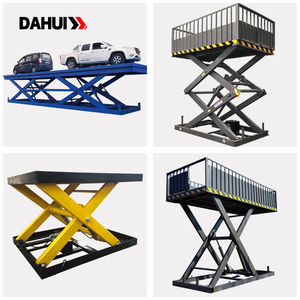
Logistical operations targeting the Portuguese market must traverse strict regulatory gateways overseen by the Direção-Geral de Energia e Geologia (DGEG), the Autoridade Tributária e Aduaneira (Portuguese Tax and Customs Authority), and relevant port administrations. Compliance with European Harmonized Standards is non-negotiable. Industrial lifting equipment—such as the Fixed Hydraulic Scissor Cargo Lift—must adhere to the Machinery Directive 2006/42/EC and EN ISO 12100, while pre-engineered logistics depots require full certification under EN 1090-1 and EN 1090-2 (Execution of Steel Structures). Navigating these multi-layered mandates demands an integrated approach that harmonizes international freight consolidation, ocean carriage, customs brokerage, and specialized road transport.
Within the European single market, CE marking is not an aesthetic emblem; it represents statutory proof that an industrial product satisfies essential European Union health, safety, and environmental protection directives. When staging clean energy project assets within Portugal, items imported without rigorous Declaration of Conformity (DoC) paperwork, complete technical construction files, and verified European Authorized Representative (EAR) designations face severe administrative friction. Customs officials at the primary container gateways of Sines and Leixões are empowered to detain non-compliant shipments, exposing EPC stakeholders to punishing demurrage, quay rent, and project commission liquidated damages (LDs).
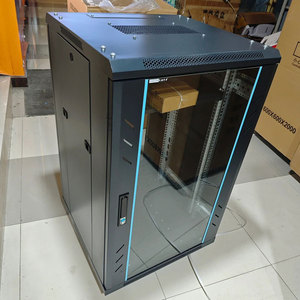
By coupling CE-certified equipment—including verified SCADA flat-pack server cabinets (IEC 60297 compliant) and high-load hydraulic cargo platform systems—with authorized AEO logistics channels, renewable developers safeguard their critical delivery schedules against costly administrative bottlenecks.
How specialized logistics, warehousing, and lifting technologies deploy across the country's most active generation zones.
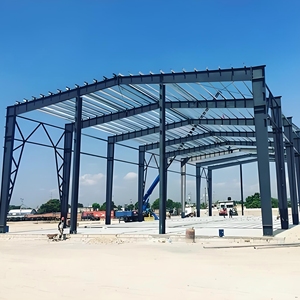
Portugal’s southern plains, notably around Ferreira do Alentejo, Moura, and Ourique, feature Europe’s highest solar irradiance levels. These utility installations require thousands of containers transporting bifacial PV modules, tracking systems, and central transformation skids. Large-span PEB Steel Warehouses act as localized buffer yards, shielding moisture-sensitive microinverters and switchgear from high ambient summer heat prior to field mounting.
Building on the pioneering WindFloat Atlantic project off the coast of Viana do Castelo, Northern Portugal is a global testbed for deep-water floating foundations. Marshalling ports demand heavy cargo transshipment equipment. Heavy-duty Stationary Scissor Lifts and specialized low-bed modular trailers facilitate the offloading, pre-assembly, and testing of nacelle components and specialized anchoring systems along narrow quayside corridors.
As the national transmission system operator (Rede Elétrica Nacional - REN) integrates variable generation, Battery Energy Storage Systems (BESS) are mandatory. These units involve Class 9 Dangerous Goods (UN 3480). Logistics managers rely on temperature-controlled Eurasian rail corridors and maritime routes, alongside compact 18U/24U Flat-Pack Metal Server Cabinets to securely house digital SCADA telemetry, fire suppression, and battery management nodes on-site.
The Port of Sines is Portugal's strategic Atlantic maritime engine. Sines is developing into a premier Green Hydrogen Valley, with electrolyzer manufacturing and synthetic fuel export facilities. Handling over-dimensional cargo (OOG), electrolyzer stacks, and high-pressure storage vessels requires dedicated container drayage, customs clearance bonded status, and synchronized direct-to-trailer discharge operations.
Key technological, regulatory, and infrastructural shifts shaping balance-of-plant procurement through 2030.
The modernization of the Sines-Badajoz-Madrid rail freight corridor is transforming Iberian inland connections. Moving solar panels and inverters from Portuguese deep-water ports via electric rail drastically shrinks Scope 3 logistics carbon footprints while saving up to 40% in inland transit costs compared to conventional diesel trucking fleets.
With the full implementation of the European Carbon Border Adjustment Mechanism (CBAM), importers of structural steel warehouses, transformer aluminum, and mounting structures must provide certified emissions accounting. Supply chain forwarders with integrated ESG monitoring platforms allow developers to track embedded transport emissions from origin factory to the Portuguese job site.
Liquid-cooled battery enclosures require rigorous thermal profiling, ADR transport licensing, and hazard staging. Specialized forwarding providers are deploying dedicated safety frameworks, including inert atmosphere container monitoring and remote cellular shock-detection systems, to guarantee lithium-ion cell integrity throughout oceanic passage.
Founded in 1913 by Ernest Sommer, WTA Group has grown across four generations of family ownership into a world-class international freight forwarder. We combine the agility of modern AI-driven predictive supply chain visibility with over 110 years of institutional forwarding expertise. Serving more than 6,000 customers across 122 nations, we eliminate the costly friction and opacity common in international renewable infrastructure projects.
Practical answers to technical customs, transportation, and certification queries encountered by regional EPC engineers.
To clear industrial capital machinery (e.g., stationary hydraulic lifts, substation power converters, or motorized tracking systems) through Sines or Leixões, Portuguese Customs requires: (1) An official EU Declaration of Conformity (DoC) referencing applicable Directives (such as 2006/42/EC Machinery Directive, 2014/30/EU EMC Directive, and 2014/35/EU Low Voltage Directive); (2) Affixed CE marking with clear technical rating plates; (3) The Commercial Invoice with appropriate Portuguese TARIC/HS classification; (4) Packing List specifying net/gross weights and unit serial numbers; (5) An Portuguese or English language operating and maintenance manual; and (6) The Bill of Lading (B/L) issued under compliant Incoterms (typically DDP, DAP, or CIF).
The choice between Sines and Leixões depends primarily on cargo footprint and inland project geography. Port of Sines (Terminal XXI) offers deep-water access (-17.5m draft), accommodating ultra-large container vessels (ULCV) with direct trans-oceanic services. It is the premier gateway for Alentejo and Algarve solar farms, as well as project cargo destined for southern and central Portugal, offering ample heavy-lift quay space and direct highway/rail connectivity. Port of Leixões (Porto) is optimized for northern projects, including onshore wind repowering in Serra da Estrela or offshore floating staging in Viana do Castelo, but operates within tighter urban berth constraints requiring tighter scheduling for over-dimensional road haulage escorts.
Lithium-ion based BESS enclosures and battery modules are classified as Dangerous Goods under UN 3480 (Class 9 Miscellaneous Dangerous Substances). Transport through Portugal must adhere strictly to the European Agreement Concerning the International Carriage of Dangerous Goods by Road (ADR). Key protocols include: certification of containers to UN 38.3 testing standards; pairing vehicles with ADR-certified drivers carrying orange hazard plates; providing an active Safety Data Sheet (SDS); maintaining specialized lithium fire suppression readiness; and coordinating with local transport regulators (IMT - Instituto da Mobilidade e dos Transportes) for routed highway authorization, especially during summer forest fire risk seasons.
Yes. When procuring large-span PEB steel warehouse plants for solar inverter staging or wind maintenance depots in Portugal, the structural design must be engineered to European standards (Eurocodes). Specifically, Eurocode 1 (Actions on structures - EN 1991-1-4 for wind actions) accounts for Atlantic coastal wind speeds up to 30 m/s (Zone 1/2 in Portugal), while Eurocode 8 (EN 1998 for earthquake resistance) accounts for seismic coefficients, particularly crucial across Southern Portugal and the Lisbon metropolitan fault lines. The factory fabrication must carry CE certification according to EN 1090-1 Execution Class 2 (EXC2) or Class 3 (EXC3).
Unplanned port storage, demurrage, and detention represent significant financial risks for renewable energy supply chains. WTA mitigates these exposures through a structured four-pillar approach: (1) Pre-clearing customs paperwork via direct EDI linkage with Portuguese Customs before the vessel berths; (2) Pre-negotiating extended free-time agreements (typically 14 to 21 days combined) with shipping ocean carriers at origin; (3) Synchronizing port terminal collection appointments with verified on-site project offloading schedules; and (4) Utilizing intermediate bonded holding yards outside high-cost port perimeters when project installations experience unpredicted weather or grid-connection delays.
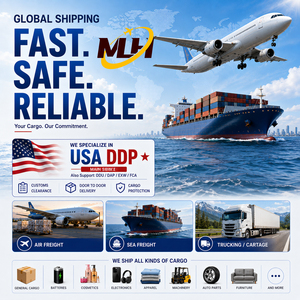
Consult with our licensed European freight forwarders and project cargo engineers. We tailor bespoke, CE-compliant shipping, heavy drayage, and fast-track customs strategies designed around your technical timelines and commercial budgets.