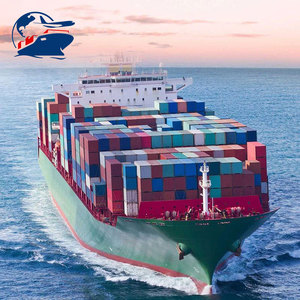
Combining heavy-lift vessel chartering capabilities with specialized storage systems, dangerous goods handling, and multimodal transit networks linking major Chinese industrial export centers to Nordic seaports.
The commercial sea corridor between the People's Republic of China and the Republic of Finland forms one of the most technologically demanding supply chains in global logistics. Unlike conventional liner container movements, vessel chartering between East Asian manufacturing epicenters—such as Tianjin, Qingdao, Shanghai, Ningbo-Zhoushan, and Guangzhou—and Finnish ports demands granular nautical engineering, deep regulatory familiarity with Baltic coastal navigation, and strict compliance with the Finnish Transport and Communications Agency (Traficom). As Nordic infrastructure accelerates its green energy transition, battery manufacturing capabilities, and advanced industrial retrofits, heavy capital equipment cannot be accommodated within standard twenty-foot or forty-foot container profiles.
Vessel chartering provides Finnish industrial procurement managers, engineering EPCMs (Engineering, Procurement, and Construction Management), and heavy machinery exporters with unconstrained stowage geometry, bespoke routing flexibility, and absolute control over discharge milestones. By securing specialized bulk tonnage, geared multipurpose vessels (MPVs), roll-on/roll-off (RoRo) heavy-lift ships, or open-hatch breakbulk carriers, consignees bypass the transshipment congestion characteristic of North Sea hubs like Rotterdam and Hamburg. Direct charter fixtures into Finnish deepwater facilities ensure uninterrupted delivery schedules while radically reducing cargo handling points, eliminating transshipment damage risks, and locking in predictable maritime transport expenditures under clearly defined charterparty legal terms.
Maritime access to Finnish seaports located in the Gulf of Bothnia and the Gulf of Finland is governed by harsh sub-zero conditions and annual sea-ice formations between December and May. Standard international tonnage lacking structural ice reinforcement cannot legally or safely navigate Finnish waters once ice restrictions are enforced by Traficom.
Our vessel chartering services systematically match the cargo geometry with vessels classed under the Finnish-Swedish Ice Class rules (Ice Class 1A Super, 1A, 1B, and 1C). This ensures that structural hull plate thickness, forward propeller nozzle protection, main engine output margins, and winterized sea-chest piping meet rigorous safety protocols, preventing costly laytime stoppages while awaiting state icebreaker escort from Finnish icebreakers like the Otso or Polaris.
Precision chartering solutions mapped to regional industrial ecosystems across Southern, Western, and Northern Finland.
Finland's aggressive wind power expansion along the Ostrobothnia coastline requires specialized heavy-lift geared vessels (lifting capacities from 250 MT to 800+ MT). We charter ships equipped to transport 80+ meter turbine blades, nacelles, and tower sections from China straight to discharge quays at Port of Pori (Tahkoluoto) and Port of Kokkola, utilizing customized tandem deck cranes and engineered sea-fastening calculations.
Modern Finnish biorefineries and pulp mills require immense industrial autoclaves, evaporators, digesters, and chemical recovery boilers. We engineer part-cargo and full-charter solutions connecting fabrication yards in Jiangsu and Shandong directly to Port of Rauma and Port of HaminaKotka, guaranteeing zero transshipment handling and immediate quayside access to Finnish highway networks.
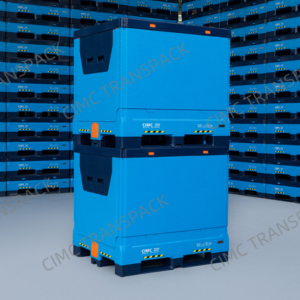
Supplying Finland’s emerging European battery corridor (Harjavalta, Vaasa, Kotka). We charter specialized bulk and dry-cargo tonnage carrying specialized industrial chemicals, precursor equipment, mining crushers, and containerized IBC chemical systems, navigating strict environmental and dangerous goods requirements (IMDG/ADR) with licensed AEO customs oversight.
A rigorous maritime contractual review to align risk allocations, laytime exposure, and vessel suitability for Baltic voyages.
| Chartering Modality | Primary Application Profile | Laytime & Demurrage Allocation | Fuel (Bunker) & EU ETS Liability | Ice Surcharges & Icebreaker Delays | Suitability For Finland |
|---|---|---|---|---|---|
| Full Voyage Charter (GENCON) | Full shiploads of bulk mineral, wind energy components, or heavy modular breakbulk. | Charterer pays agreed demurrage if loading/discharging exceeds allowed laytime hours. | Shipowner absorbs all bunker costs, canal tolls, and baseline EU ETS emission surcharges. | Governed by BIMCO General Ice Clause; owner covers vessel risks outside port safety limits. | Optimal for Large Capex |
| Time Charter (NYPE / SUPPLYTIME) | Ongoing corporate project flows requiring exclusive commercial fleet command over several months. | No laytime calculations; Charterer pays continuous daily hire rate regardless of port idle time. | Charterer pays for all bunkers (VLSFO, MGO, Bio-fuels) and EU ETS maritime allowances. | Charterer bears the cost of waiting time for icebreaker convoys and extreme weather halts. | Best for Multi-Port EPC |
| Part Charter / Space Fixture | High-volume out-of-gauge machines (500–5,000 CBM) sharing deck or under-deck space. | Liner terms or fixed loading/discharging windows without heavy demurrage exposure. | Owner incorporates all propulsion fuel, EU ETS, and canal transits into single lump-sum freight. | Owner balances scheduling risks; risk of deviation to other regional ports during ice season. | Cost-Efficient Medium Vol |
| Semi-Submersible / Heavy Lift | Super-heavy project cargo (>600 MT), offshore substations, and marine dredgers. | Strict specialized laytime terms; highly specialized ballast water loading and sea-fastening protocols. | Lump-sum contract terms with clear fuel adjustment formulas (BAF) tied to bunker index. | Strict seasonal transit windows; operations usually scheduled between May and November in Baltic. | Project-Critical Fixture |
The European Union’s maritime environmental regulations have transformed the economics of ocean transportation into Nordic waters. Since January 2024, the maritime shipping sector is incorporated into the EU Emissions Trading System (EU ETS), requiring shipping companies to surrender emission allowances (EUAs) for 40% of verified emissions in 2024, rising to 70% in 2025 and 100% by 2026 for voyages within the EU, and 50% of emissions for voyages between China and EU destinations such as Finland.
Furthermore, the Baltic Sea is a strictly monitored Sulfur Emission Control Area (SECA), mandating a maximum fuel sulfur content of 0.10% (mass/mass), which necessitates either low-sulfur marine gas oil (MGO), certified bio-bunkers, or exhaust gas cleaning systems (scrubbers). Starting in 2025, the FuelEU Maritime regulation enforces limits on the greenhouse gas intensity of energy used on-board. Our vessel chartering engineering team mitigates these cost pressures by utilizing modern, low-emission eco-vessels, providing buyers with precise carbon accounting via our integrated proprietary Visibility Platform, and optimizing voyage speed to minimize bunker burn across the North Sea-Baltic transit.
Founded in 1913 by Ernest Sommer and operating today as an agile, fourth-generation international freight enterprise, we bring over a century of maritime problem-solving to Chinese vessel chartering. While transactional forwarders scramble during unexpected port delays or equipment shortages, our infrastructure delivers resilience:
.png)
.png)
.png)
.png)
.png)
Clear, authoritative answers addressing Finnish maritime law, ice dues, customs compliance, and port handling.
In Finland, fairway dues (Väylämaksu) are levied by Finnish Customs (Tulli) on merchant vessels entering Finnish territorial waters from abroad. The due is calculated based on the vessel’s certified net tonnage (NT) and its Finnish-Swedish Ice Class designation. Vessels with higher ice classifications (such as Ice Class 1A Super and 1A) pay significantly lower unit dues per net ton compared to vessels with lower or non-ice-strengthened hull ratings (Ice Class II or III). When we charter tonnage for Finnish destinations, we factor the vessel’s ice class into the total landed voyage cost calculations, ensuring you avoid punitive tariff premiums charged against substandard tonnage during the winter navigation tariff period.
Standard ocean voyage duration for a geared multipurpose dry cargo vessel or heavy-lift ship operating from East China ports (such as Shanghai, Ningbo, or Qingdao) to Southern Finnish ports (Vuosaari/Helsinki, HaminaKotka) or Western ports (Rauma, Pori) ranges between 32 to 42 days, depending on whether the route proceeds via the Suez Canal or the Cape of Good Hope. Unlike container feeder routes that require transshipment and dwell time at central European hubs, direct charter voyages proceed directly through the Danish Straits (The Great Belt or The Sound) into the Baltic Sea, eliminating intermediate discharge delays and cargo re-handling.
Under standard BIMCO charter contracts (such as GENCON 1994 or 2022 with the General Ice Clause for Voyage Charter Parties), the master has clearly outlined rights and responsibilities if a port of call is ice-bound. If a Finnish port becomes inaccessible due to sudden ice formation and the vessel cannot enter without risking structural damage or being trapped, the charterer is contacted to nominate an accessible alternative safe port (such as Turku or Hanko) where ice conditions remain manageable. If no nomination is made within the contractually stipulated notice period, the master may discharge the cargo at the nearest safe port for charterer’s account, protecting both parties against catastrophic open-ended laytime disputes.
Yes. As an Authorised Economic Operator (AEO) certified logistics enterprise, we coordinate electronic pre-arrival declarations through the Finnish Customs (Tulli) electronic declaration service (UTU). The vessel’s manifest, dangerous goods notifications, and entry summary declarations (ENS) are filed prior to arrival in Finnish territorial waters. This enables immediate discharge authorization upon berthing, permitting high-value machinery or heavy-lift project modules to be loaded straight from ship tackle onto waiting heavy transport multi-axle trailers without terminal demurrage or quayside bonded delays.
While major terminals such as Port of Helsinki (Vuosaari) and HaminaKotka maintain heavy mobile harbour cranes and STS infrastructure, specialized regional ports (such as Kaskinen, Kokkola, or Pietarsaari) often have limited shore crane lifting capacities. Geared multipurpose vessels fitted with single heavy-lift deck cranes (150 MT to 450 MT) or tandem combinable cranes (delivering up to 700–900 MT lift capacity) operate self-sufficiently without reliance on expensive shore-side crane rentals, substantially lowering total port expenses and increasing port selection flexibility across the entire Finnish coastline.
Under EU Directive 2023/959, the primary entity legally responsible for surrendering European Union Allowances (EUAs) to the administering member state is the registered shipowner or the Document of Compliance (DoC) holder (ISM manager). In voyage charters and part-cargo fixtures, the ETS cost is passed through to the cargo owner as an explicit, transparent maritime ETS surcharge or bundled into the all-inclusive freight rate. In Time Charters, the commercial charterer typically supplies the necessary EUAs directly or reimburses the owner based on verified fuel consumption data monitored under the MRV (Monitoring, Reporting, and Verification) system.
Connect immediately with our senior maritime chartering brokers and breakbulk engineers for custom voyage estimates, tonnage availability, and Baltic ice routing analysis.