
Engineered to international ISO/AS standards, each industrial asset is directly synchronized with real-time digital tracking and preferential customs brokerage across Sino-Thai transit routes.

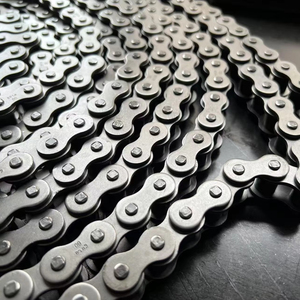

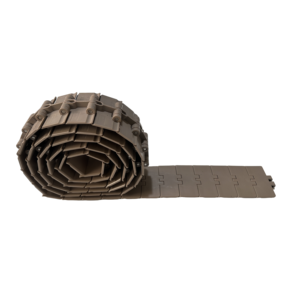
Thailand's transformative economic agenda, spearheaded by the Eastern Economic Corridor (EEC)—spanning Chachoengsao, Chonburi, and Rayong provinces—demands unprecedented supply chain resilience, mechanical component longevity, and rapid freight synchronization. As global manufacturers realign under the "China + 1" framework, Tier-1 and Tier-2 suppliers operating across industrial centers such as Amata City, Map Ta Phut, and Laem Chabang require mission-critical components that withstand regional tropical operating environments while fitting lean Just-In-Time (JIT) production rhythms.
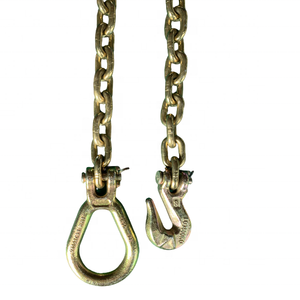
Our heavy-duty foundry OEM forged alloy chains and AS Standard G70 transport chains provide essential load containment and material transfer capabilities for heavy metal casting plants, break-bulk logistics providers at Laem Chabang Deep Sea Port, and offshore oil exploration platforms in the Gulf of Thailand. In automotive assembly clusters, where high precision and dynamic tensile integrity are non-negotiable, our tailored metal CNC machining services supply custom robotic end-effectors and tooling dies, substantially minimizing machine downtime.
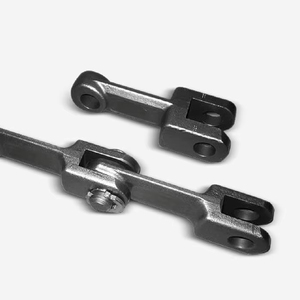
Concurrently, Thailand’s powerhouse agro-industrial and food processing domains—encompassing sugar milling in Nakhon Ratchasima, cassava processing in Rayong, and international beverage bottling facilities near Bangkok—depend entirely on specialized conveyor mechanics. The application of 820S-K400 flat-top tabletop thermoplastic chains ensures ultra-low friction coefficients, zero contamination, and chemical resistance during acidic washdowns, directly augmenting line speeds and throughput compliance under international HACCP and GMP certifications.
Feeding Eastern Seaboard assembly hubs with custom CNC components, heat-treated transmission chains, and automated warehousing systems compatible with next-gen EV platforms.
Providing agricultural machinery operators with 12A-1 high-tensile roller chains engineered to resist extreme particulate abrasiveness, monsoonal humidity, and non-stop seasonal cycles.
Deploying food-grade POM tabletop chains and waterproof 304/316 stainless steel linkages configured for hygienic beverage packaging, canning, and aseptic conveyor lines.
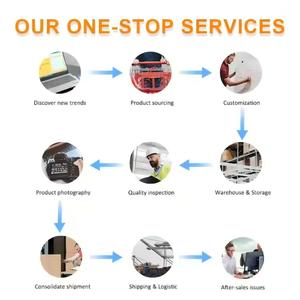
The logistics and sourcing ecosystem connecting Chinese industrial manufacturing centers to Bangkok and regional provinces is undergoing a profound paradigm shift. Procurement executives are moving away from traditional fragmented freight forwarding toward unified end-to-end supply chain orchestration. Four macroeconomic vectors define this transformation:
1. Multimodal Rail-Sea Integration: The operationalization of the Pan-Asia Railway network (Kunming–Vientiane segment) paired with enhanced cross-border trucking corridors via Mohan–Boten to Chiang Rai and the deep-water maritime routes from Shanghai, Ningbo, and Shenzhen to Laem Chabang has collapsed lead times. Urgent industrial spares now travel overland in just 4 to 6 days, while high-volume maritime container freight maintains a reliable 8 to 12-day turnaround window.
2. Capitalizing on RCEP and ACFTA Form E: With the implementation of the Regional Comprehensive Economic Partnership (RCEP) alongside the long-standing ASEAN-China Free Trade Area, tariff schedules for certified Chinese mechanical chains, raw forgings, and fabricated metals have fallen toward 0%. Maximizing these advantages requires strict compliance with origin criteria, seamless digital customs documentation, and HS code classification precision to completely bypass import tariff bottlenecks.
3. Real-Time Telematics & Risk Mitigation: In a region prone to monsoon-related port congestions and sudden border chokepoints, supply chain visibility platforms provide proactive delay forecasting, dynamic container rerouting, and end-to-end carbon auditing. This ensures Thai enterprise buyers protect operating margins and run uninterrupted assembly operations.
| Transport Mode | Avg. Transit Time | Tariff Advantage (Form E) | Primary Cargo Suitability | Reliability Index |
|---|---|---|---|---|
| Direct Ocean Freight (FCL/LCL) | 8 - 12 Calendar Days | Zero-tariff eligibility under preferential HS codes | Bulk forged conveyor chains, heavy steel coils, raw casting assets | 98.4% On-Time Port Discharge |
| Cross-Border Multimodal Roadway | 4 - 6 Calendar Days | Accelerated overland border clearance | High-precision CNC tooling, urgent plant replacement spares | 96.2% Route Predictability |
| Express Air Freight Consolidation | 24 - 48 Hours | Standard customs clearance at Suvarnabhumi (BKK) | Mission-critical electronics, samples, medical instrumentation | 99.6% Express Delivery |
Founded in 1913 by Ernest Sommer, our organization provides end-to-end manufacturing oversight, digital supply visibility, and licensed global brokerage trusted across 122 countries.
Operate with complete regulatory confidence. Fully backed by AEO (Authorised Economic Operator), C-TPAT, IATA, WCA, and BIFA accreditations, delivering audit-proof clearance at all international ports.
Empower your procurement staff with our 24/7 real-time visibility platform. Predict delays from live marine and overland telemetry feeds, download carbon ESG metrics, and manage customs billing in one dashboard.
Eliminate unexpected terminal surprises. We provide upfront, fully unbundled quotations covering origin trucking, Terminal Handling Charges (THC), ocean freight, Form E processing, and local Thai cartage.
Essential guidance on custom specifications, bilateral customs compliance, lead-time control, and port handling.
All manufactured industrial chains, forged hardware, and CNC parts exported by our facilities include certified ASEAN-China Free Trade Certificates of Origin (Form E) issued directly by the China Council for the Promotion of International Trade (CCPIT). When declared via Thailand Customs' e-Customs paperless clearance system under the corresponding HS code, import customs duty is eliminated or drastically reduced to 0-5%, leaving only the standard local 7% VAT payable.
For containerized ocean freight (FCL and LCL), Laem Chabang Deep Sea Port (THLCH) is the primary maritime hub for EEC facilities in Chonburi and Rayong, while Bangkok Port (PAT/Klong Toey - THBKK) handles direct inland consignments. Overland express cargo enters through Chiang Khong or Mukdahan border stations. Air shipments transit via Suvarnabhumi Airport (BKK), backed by our licensed on-site customs clearance teams.
Yes. We produce engineered roller chains, forged drop linkages, and CNC parts according to ISO, DIN, ANSI, and BS standards. Custom pitch dimensions, metallurgy selections (such as 40Mn, 40Cr, 304, or 316 stainless steel), specialized heat treatments (carburizing, nitriding, induction quenching), and custom CAD/SolidWorks drawings are meticulously prototyped and verified prior to bulk factory production.
From final factory inspection in our manufacturing centers, ocean freight to Laem Chabang requires 8 to 12 calendar days, including container stuffing and customs export declarations. Regional clearance and final container haulage to your factory dock in Chonburi or Rayong are typically completed within 24 to 48 hours following vessel discharge. Overland road express requires only 4 to 6 days.
To withstand intense maritime humidity and tropical transit conditions across the South China Sea, our export goods receive multi-stage corrosion protection: deep anti-rust oil immersion, airtight VCI (Vapor Corrosion Inhibitor) poly-bag sealing, industrial desiccant insertions, and vacuum foil wraps enclosed in heat-treated, ISPM-15 compliant seaworthy wooden cases.
Every industrial production run is issued an authoritative Mill Test Certificate (MTC) according to EN 10204 3.1, confirming chemical composition analysis (spectrometry) and mechanical properties (tensile strength, yield point, Rockwell/Vickers hardness, impact testing). Third-party inspections via SGS, TÜV, or Bureau Veritas can be fully coordinated prior to container loading.