
Integrating direct multi-modal rail contracts, bonded heavy-haul truck transfers, rapid cross-dock sorting systems, and DDP customs compliance across Greater Chicago and Midwest distribution corridors.
Engineering granular logistics control from Chinese manufacturing clusters to Chicago Class I rail terminals, bypassing West Coast choke points and minimizing dwell times.
Chicago reigns as North America’s undisputed inland intermodal freight capital. Handling over 25% of all United States freight rail traffic and nearly 50% of all intermodal container handoffs, the Chicagoland nexus—anchored by monumental facilities like CenterPoint Intermodal Center (Elwood and Joliet), BNSF Logistics Park Chicago (LPC), Union Pacific Global IV, and CSX Bedford Park—serves as the primary engine driving Midwest industrial commerce. For procurement directors, corporate supply chain engineers, and freight buyers sourcing components, raw materials, industrial machinery, and consumer finished goods from Ningbo, Shanghai, Shenzhen, and Qingdao, navigating the China-to-Chicago intermodal pipeline demands rigorous technical execution.
Core Supply Chain Takeaway: Traditional port-to-port ocean bills of lading leave Chicago importers exposed to crippling West Coast terminal demurrage, variable chassis shortages, and disjointed inland carriage. Intermodal Point Intermodal (IPI) and Reverse IPI (RIPI) routing under single-operator DDP terms compress transit variability by up to 14 days while eliminating unanticipated detention penalties.
Freight moving from Chinese production centers into Illinois and the broader Midwest typically navigates one of two foundational routing architectures: Interior Point Intermodal (IPI) rail-direct carriage, or Pacific Gateway transloading into 53-foot domestic dry vans. Choosing between these paradigms requires analyzing volume elasticity, cargo fragility, packaging cubic density, and seasonal rail ramp congestion.
Under an IPI arrangement, international ISO marine containers (40-foot High-Cube and 20-foot standard) are discharged at gateway ocean ports such as Los Angeles/Long Beach (PSW), Seattle/Tacoma (PNW), or Prince Rupert, immediately wheeled to on-dock rail facilities, and loaded onto double-stack railcars destined for Chicago rail yards without ever breaking bulk. This preserves structural containment, significantly mitigates pilferage or cargo rehandling damage, and provides unified customs clearance inland under Customs Form 7512 (Immediate Transportation - IT) bonds.
Conversely, the Transload Architecture transfers cargo at port-adjacent container freight stations (CFS) from three 40HQ marine containers into two 53-foot domestic intermodal trailers or over-the-road (OTR) dry vans. For lightweight, voluminous cargo like consumer electronics, plastic products, and knocked-down furniture, this yields an immediate 33% reduction in inland rail haulage units. However, for specialized industrial machinery, automotive sub-assemblies, and precision components, re-handling introduces physical risk. Our dedicated Chicago operations engineering team evaluates density metrics and terminal dwell statistics to assign every shipment to its mathematically optimal freight vector.
| Routing Vector | Port of Discharge (POD) | Inland Intermodal Mode | Typical Transit (Days) | Cost Index | Risk & Dwell Exposure |
|---|---|---|---|---|---|
| PSW Express Rail (IPI) | Los Angeles / Long Beach | BNSF / UP Double-Stack | 18 – 23 Days | Moderate | Low-to-Medium; vulnerable to Southern California terminal spikes. |
| PNW Bypass Route | Tacoma / Seattle / Prince Rupert | BNSF / CN Direct Double-Stack | 16 – 20 Days | Cost-Efficient | Lowest West Coast dwell; rapid on-dock rail interchange. |
| All-Water Rail Reverse IPI | New York / Norfolk / Savannah | CSX / Norfolk Southern Inbound | 28 – 35 Days | Lowest Carbon | Bypasses West Coast labor cycles; subject to Panama Canal capacity. |
| Expedited Ocean-Air Hybrid | Incheon / Anchorage Sea-Air | Air Charter to O'Hare (ORD) | 6 – 9 Days | Premium | Ultra-low disruption; ideal for plant-down automotive tooling. |
| West Coast Transload 3-to-2 | Long Beach Gateway Hub | 53-Foot Domestic Intermodal | 22 – 26 Days | Lowest Per-CBM | Higher handling touchpoints; demands rigorous warehouse supervision. |
A persistent vulnerability for Chicago procurement personnel is confusing ocean carrier detention with rail ramp storage. When an IPI container arrives at LPC Joliet, UP Global IV, or Bedford Park, the ocean carrier's contractual terminal free time does not govern rail yard dwell. Class I railroads strictly enforce rail demurrage policies, commonly offering as little as 24 to 48 hours of free time once the container is ground-mounted or mounted on chassis before assessing punitive daily penalties ranging from $150 to over $450 per calendar day.
Because Midwest regional drayage fleets routinely face chassis deficits (specifically 40-foot gooseneck and specialized tri-axle chassis for heavy project cargo), uncoordinated imports frequently trigger catastrophic secondary storage invoices. WTA overcomes this bottleneck by operating an owned and contracted private chassis pool within the Chicago metro grid, alongside real-time EDI integrations that ping our dispatch team minutes before a train is segmented and unloaded, securing pickup appointments the instant boxes become available.
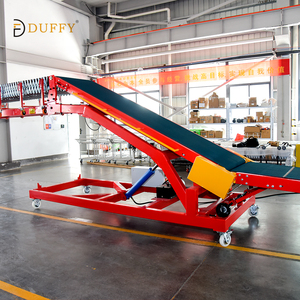
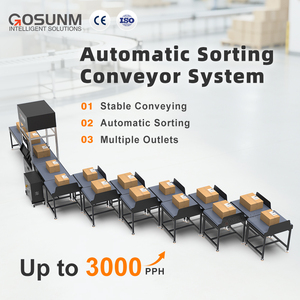
Modern intermodal supply chain resilience relies heavily on terminal and warehouse material handling efficiency. Once containers clear Chicago rail terminals and reach regional transload warehouses along the I-55, I-80, and I-94 logistic spines, manual container destuffing creates an acute throughput ceiling. The integration of high-flexibility container unloading conveyors—such as Duffy quick-conversion expanding conveyors and high-speed automatic optical parcel sorters—slashes truck turn times from 4.5 hours down to 42 minutes.
This automated interface between intermodal container drayage and regional distribution networks allows Chicago distributors to cross-dock high-velocity e-commerce and retail freight onto final-mile delivery vans or domestic trailers without intermediate storage overhead, transforming static distribution nodes into dynamic flow-through velocity centers.
Precision engineering tailored to specific industrial ecosystems across Illinois, Indiana, Wisconsin, and the broader manufacturing heartland.
Connecting manufacturing clusters in Waukegan, Rockford, and the Indiana border directly with Chinese component factories. Leveraging dedicated IPI rail slots into UP Global IV with bonded direct truck drayage guarantees predictable replenishment schedules for continuous production lines.
Navigating Illinois Department of Transportation (IDOT) axle weight restrictions. Our heavy machinery DDP service utilizes engineered tri-axle chassis fleets stationed at CenterPoint Intermodal Center to safely dray 40-foot containers loaded up to 48,000 lbs directly to Midwest assembly plants.
Eliminating warehouse bottlenecking for high-cube 40HQ import containers destined for major retail chains and e-commerce distribution centers along the I-80 corridor. Integrated telescopic conveyors facilitate 40-minute de-vanning directly to outbound regional LTL trailers.
When manufacturing schedules fluctuate, our hybrid sea-air architecture reroutes critical components through expedited West Coast gateways into Chicago O'Hare bonded air freight stations, guaranteeing inventory delivery within 72 hours of ocean vessel discharge.
Strategic positioning within Chicago’s Foreign Trade Zone #22 enables our clients to defer Customs duty and Section 301 tariffs on Chinese imports until sub-assemblies leave the manufacturing floor for domestic commerce, dramatically optimizing operational cash flow.
Serving industrial clients manufacturing between China, the American Midwest, and Mexican assembly nodes. Intermodal freight arriving in Chicago is processed under C-TPAT protocols and redirected via Canadian National or Union Pacific direct rail corridors into Monterrey and Bajío.
Critical regulatory, technological, and infrastructure shifts redefining inland container economics over the next 3 to 5 years.
Enterprise procurement teams across Illinois are increasingly constrained by Scope 3 greenhouse gas reporting standards. With intermodal rail transportation emitting up to 75% fewer greenhouse gases per ton-mile compared with conventional long-haul trucking, migrating China-to-Midwest inland freight from direct OTR highway carriage to double-stack electrified or high-efficiency diesel rail corridors provides instant carbon mitigation verified within our proprietary ESG visibility engine.
Historically, rail ramp operations have suffered from data latency: shipping lines provided an estimated arrival date at port, but inland rail arrival remained an informational blind spot. Advanced logistics networks now leverage predictive satellite IoT sensors, machine-learning rail switch models, and direct Class I track-level telemetry. Importers receive accurate delivery estimates accurate to a two-hour window, bypassing rail congestion spikes before rail cars even depart West Coast transfer stations.
The traditional "chassis pool" structure that long disrupted Chicago operations—forcing truckers to bobtail between storage yards, equipment maintenance pools, and rail ramps—is undergoing rapid consolidation. Intermodal operators maintain private, dedicated high-spec radial chassis assets adjacent to Joliet and Bedford Park, eliminating equipment dependency bottlenecks and preventing costly split-stop drayage charges.
Founded in 1913 by Ernest Sommer, WTA Group has evolved across four generations of family-owned leadership into an elite global logistics enterprise. We combine the institutional wisdom of centurial forwarders with modern digital intelligence, managing over 6,000 global corporate importers across 122 countries and 679 active trade lanes.
Our dedicated operations in the United States, United Kingdom, China, and the United Arab Emirates provide unbroken chain-of-custody control from the Chinese factory floor to the Chicago rail destination ramp. Backed by full Authorized Economic Operator (AEO) status, IATA certification, and Tier-3 C-TPAT supply chain security compliance, we ensure that every customs entry, tariff schedule classification, and intermodal transport leg adheres to the strictest global regulatory mandates.
Essential technical answers for logistics directors, procurement buyers, and supply chain managers operating in the Midwest.
Direct ocean transit from Shanghai, Ningbo, or Shenzhen to Pacific Northwest (PNW) ports (e.g., Tacoma or Prince Rupert) followed by direct Class I rail bridge (BNSF or CN) averages 16 to 20 calendar days to Chicago rail ramps (UP Global IV or LPC Joliet). Routing via Pacific Southwest (PSW) gateways into Los Angeles/Long Beach typically requires 18 to 23 days depending on terminal discharge speed. All-water routes to East Coast ports (Norfolk or Savannah) with reverse-rail inland into Chicago require 28 to 35 days but bypass West Coast rail congestion during seasonal peaks.
Chicago rail ramps typically offer only 24 to 48 hours of free time once a container is mounted. WTA mitigates storage liability by utilizing direct EDI milestone integration with BNSF, Union Pacific, CSX, and Norfolk Southern. We dispatch pre-cleared, radio-frequency-equipped drayage tractors before train arrival, drawing on our private chassis depot in Joliet to extract containers immediately, avoiding the steep $150 to $450 daily rail storage fees common across unmanaged freight forwarders.
Yes. WTA is an authorized and licensed U.S. Customs Broker. Under our Delivery Duty Paid (DDP) solutions, we manage all international shipping, marine insurance, continuous import bonds, and CBP entry processing (Customs Entry 7501). We ensure exact Harmonized Tariff Schedule (HTS) classification to minimize exposure under U.S. Section 301 tariffs on Chinese goods, handling all duty and anti-dumping fees upfront so shipments arrive at your Midwest facility fully cleared without unexpected administrative invoices.
A transload model is recommended when your cargo is lightweight, high-volume (bulky furniture, apparel, lifestyle retail, plastic components), and non-fragile. Three 40HQ marine containers can be consolidated into two 53-foot domestic intermodal trailers at port gateways, saving up to 25% on inland rail carriage per cubic meter. However, if your cargo consists of heavy industrial machinery, high-value electronics, precision automotive parts, or excise-controlled goods, retaining intact IPI marine containers prevents re-handling damage, maintains seal integrity, and lowers physical risk.
Standard Illinois road limits restrict gross vehicle weight (GVW) to 80,000 lbs, which usually caps ocean container contents around 44,000 lbs (20,000 kg) on standard tandem-axle chassis. For dense manufacturing machinery, raw steel, or high-volume liquid freight, WTA provides specialized tri-axle chassis and IDOT overweight corridor permits, allowing single-container cargo capacities of up to 48,000–52,000 lbs to legally move from Joliet and Elwood yards across local highway systems without offloading.
Every WTA customer receives complementary, enterprise-level access to the WTA Visibility Platform. Accessible via web browser and mobile app, our platform provides real-time GPS vessel tracking, train milestone telemetry across Class I railroads, predictive AI delay warnings, automated invoice and customs document storage, and comprehensive ESG Scope 3 greenhouse gas reporting to support institutional sustainability audits.
Request an engineered route audit, all-inclusive DDP lane rate comparison, or discuss tailored equipment availability with our international logistics specialists.