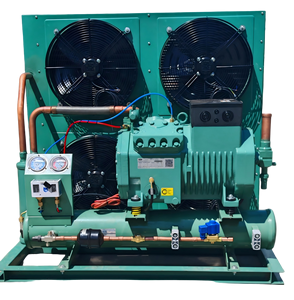
Heavy Industrial Refrigeration

Engineered to satisfy Washington State Clean Buildings Performance Standard (CBPS) and Puget Sound seismic requirements, our factory-direct refrigeration systems and turnkey storage solutions bridge the gap between heavy production and seamless international trade.

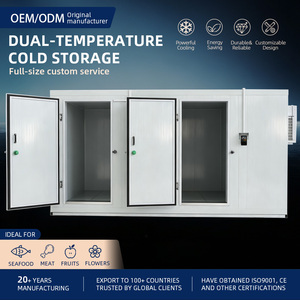
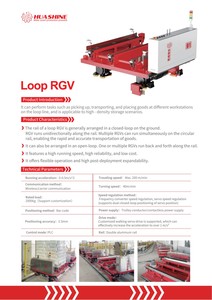
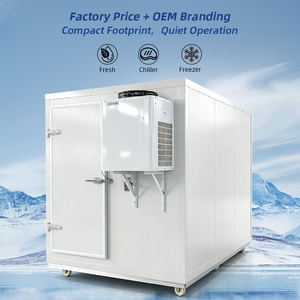
The Seattle metropolitan economic ecosystem presents unique physical and regulatory dynamics: high-throughput maritime seafood operations at Terminal 91 and Terminal 18, agricultural consolidation from Eastern Washington valleys, and ultra-sensitive biotechnology supply lines in King County.
Seafood processing fleets returning from Alaska via the Puget Sound require rapid, blast-freezing capabilities (-35°C to -45°C) before transfer to maritime reefer containers or air cargo at Sea-Tac International Airport.
The Kent Valley and Sumner/Puyallup submarkets serve as the central consolidation node for Washington State tree fruits (apples, cherries, pears) moving toward export docks.
Seattle’s rapid rise as a biomedical research capital mandates strict current Good Distribution Practice (cGDP) compliant infrastructure maintaining -80°C to +4°C continuously.
Operating cold storage facilities in Western Washington requires overcoming two simultaneous constraints: high coastal ambient humidity (causing evaporator icing and thermal cycling) and aggressive regulatory decarbonization mandates enforced under the Washington Clean Buildings Act (HB 1257).
Our manufacturing protocols utilize high-density injected polyisocyanurate (PIR) cores with thermal conductivity values below 0.022 W/m·K, paired with cam-lock tongue-and-groove joints to eliminate thermal bridging. Furthermore, our refrigeration systems feature Variable Frequency Drive (VFD) screw compressors and hot-gas defrost circuits designed to reduce parasitic electrical draw by up to 34% compared with standard electric defrost cycles.
Analyze how our manufactured storage and logistics configurations correspond to regional freight demands, thermal criteria, and local building statutes.
| Architecture Type | Operating Range | Refrigerant Profile | Target Local Application | Regulatory Alignment |
|---|---|---|---|---|
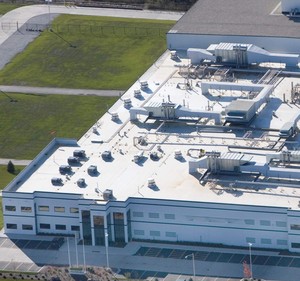
| HUASHINE High-Bay ASRS | -25°C to -30°C Deep Freeze | Transcritical CO2 (R-744) / NH3 (R-717) | Kent Valley regional fulfillment, import/export pallet aggregation | CBPS Benchmark Tier 1 |
| Multi-Temperature Steel Warehouse | Tri-Zone (-20°C / +4°C / Ambient) | Low-GWP HFO / Secondary Glycol Loop | Puget Sound wholesale grocers, food service distribution | WSEC-C Compliant |
| Industrial Blast Chillers | -40°C Rapid Freezing | Dual-stage reciprocating or screw compressors | Fishermen’s Terminal, Seattle waterfront processing | USFDA Seafood HACCP |
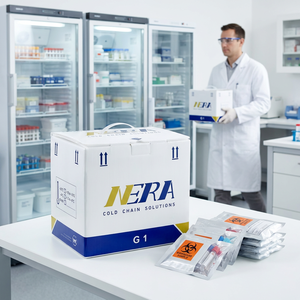
| NERA Last-Mile Parcel Pods | -80°C Cryo / 2°C to 8°C Chilled | Phase Change Material (PCM) Passive Core | Bothell & SLU clinical diagnostics, biotech labs | cGDP / WHO PQS |
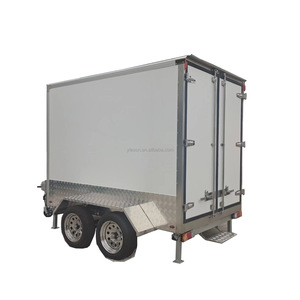
| Dual-Zone Mobile Chiller Trailers | -18°C Chilled & +2°C Fresh | R-452A / R-454A Zero ODP | Pike Place market provisioning, seasonal fruit transit | DOT / WA State Patrol Certified |
Anticipate the macro-economic and structural changes defining temperature-controlled logistics throughout King, Pierce, and Snohomish counties.
With industrial land availability in close proximity to the Port of Seattle constrained by geographical boundaries (Puget Sound, Lake Washington, and the Cascades), logistics real estate has become exceptionally expensive. Manufacturers are pivoting from horizontal floor-stacked warehouses to automated high-bay ASRS systems that achieve 30+ meter heights on compact footprints, quintupling cubic storage efficiency while reducing roof thermal leakage surface areas.
The Washington Department of Ecology and the Northwest Clean Air Agency have targeted internal-combustion Transport Refrigeration Units (TRUs). The future of regional drayage hinges on fully electric shore-power connection infrastructure at maritime terminals and solar-assisted, battery-integrated mobile refrigeration trailers that ensure continuous temperature management during port dwell times without burning diesel.
Supply chains connecting the Pacific Rim cannot tolerate data blackouts. Contemporary procurement mandates IoT-enabled monitoring units integrated into the WTA digital visibility platform. Using live telemetry, operations teams predict compressor mechanical failure, calculate shelf-life degradation using kinetic temperature algorithms, and automatically produce tamper-proof ESG carbon reports for export authorities.
Combining heavy refrigeration manufacturing engineering with over a century of international multimodal transportation authority.
Founded by Ernest Sommer in 1913, WTA Group has grown into an internationally accredited supply chain powerhouse. We blend four generations of logistical wisdom with advanced thermodynamic manufacturing, mitigating unpredictable port surcharges, demurrage costs, and cold chain transfer risks.
With wholly-owned strategic offices across the United States, United Kingdom, China, and the United Arab Emirates, we maintain boots-on-the-ground control across 679 active trade lanes. Our in-house licensed customs brokerage teams boast AEO and C-TPAT security certifications for frictionless entry through US West Coast gateways.
Every equipment deployment and freight contract is backed by our customer visibility platform. Seattle operations managers can track container coordinates, monitor internal cargo thermal sensors in real time, forecast potential transit disruptions through AI data feeds, and reconcile trade compliance documentation from a unified dashboard.
Direct answers for project engineers, procurement managers, and logistics directors evaluating cold chain investments in the Puget Sound territory.
Our turnkey warehouses and retrofits utilize high-efficiency semi-hermetic or screw compressors running on variable frequency drives (VFDs), waste heat recovery systems for underfloor frost protection, and ultra-high R-value thermal sandwich wall panels (R-50+). These designs keep Energy Use Intensity (EUI) comfortably below the statutory thresholds prescribed by the Department of Commerce for warehouse classifications.
The Seattle Department of Construction and Inspections (SDCI) enforces the International Building Code (IBC) amended with rigorous local seismic amendments. All our high-bay automated storage (ASRS) and cold storage structural racks are engineered according to ASCE 7-22 parameters, incorporating custom anchor engineering, heavy-gauge structural columns, and base isolation fixtures designed specifically for Seattle’s Seismic Design Category D/E zones.
Yes. Our mobile refrigeration trailers and dual-zone pods feature continuous NIST-traceable multi-point data loggers with cellular/GPS integration. They maintain strict -25°C to -30°C holding environments with microsecond defrost cycle recovery, meeting all FDA Food Safety Modernization Act (FSMA) Sanitary Transportation requirements and Hazard Analysis Critical Control Point (HACCP) regulations for fresh and frozen catch.
For standard prefabricated steel building frameworks paired with PIR panels and modular condensing units, manufacturing lead times range between 8 to 12 weeks. Complete turnkey automation projects involving 4-way shuttles, ASRS stacker cranes, and custom MES orchestration software generally take 20 to 28 weeks from initial engineering drawing approval to site delivery at the Port of Seattle or Tacoma.
Absolutely. We construct systems prioritizing natural refrigerants such as Carbon Dioxide (R-744) and Ammonia (R-717), along with next-generation Low-GWP hydrofluoroolefins (HFOs) such as R-454A and R-454C. These fluids ensure that your enterprise remains entirely unaffected by federal Hydrofluorocarbon (HFC) phase-down allocation caps and upcoming state prohibitions on high-GWP refrigerants.
With our in-house, licensed customs brokerage team holding premier AEO and C-TPAT authorizations, we facilitate electronic customs declarations prior to oceanic vessel arrival at NWSA container terminals. This eliminates unnecessary container dwell time, prevents destination demurrage charges, and verifies accurate Harmonized Tariff Schedule (HTS) classification for complex automation equipment.
Whether you require dockside blast freezing systems for Alaskan wild catch, high-density automated racking for Kent Valley distribution, or validated biopharmaceutical parcels for clinical trials, our engineering specialists are ready to calculate thermal requirements, optimize equipment specs, and deliver transparent quotes.