
Seamlessly bridging manufacturing centers in Asia and the Americas with central Île-de-France fulfillment nodes through dedicated bonded facilities, hazardous material handling, and automated sorting hardware.


The Paris metropolitan area, representing over 31% of the French national Gross Domestic Product and serving an immediate consumer base of 12.4 million residents, represents one of Europe's most demanding logistics proving grounds. For international manufacturers, exporters, and supply chain directors, operating contract warehousing facilities that serve this dense, highly regulated market requires more than standard pallet racking; it demands a comprehensive logistical architecture capable of balancing long-haul freight intermodalism, bonded storage compliance under Union Customs Code (UCC) mandates, and decarbonized last-mile urban fulfillment.
Contract warehousing has fundamentally evolved from passive commercial real estate into dynamic, technology-enabled manufacturing postponement and order fulfillment hubs. By positioning contract logistics hubs along the primary arterial spines feeding Paris—notably the HAROPA Seine River corridor (linking the deep-water port of Le Havre, Rouen, and Paris Gennevilliers), the A1 Northern Highway connecting the European Golden Triangle, and the Paris-Charles de Gaulle (CDG) air freight zone—manufacturers can dramatically compress inbound lead times while mitigating exorbitant inner-city storage overheads.
Postpone European Union Value Added Tax (VAT) and common external tariff payments through Type II Customs Bonded Warehouses until finished items enter domestic French commerce.
Rapid palletization, container destuffing, and reverse logistics handling tailored for precision manufacturing lines across the Greater Paris automotive and aerospace clusters.
Strategic sorting and micro-hub deployment designed specifically to meet the strict carbon emission mandates of the Paris Low Emission Mobility Zone (Zone à Faibles Émissions).
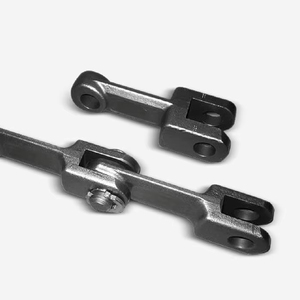
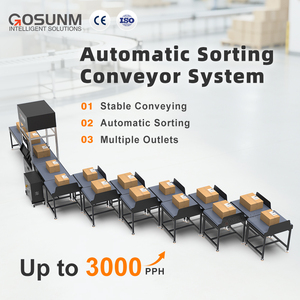
Modern global manufacturing chains rely on contract warehousing facilities to perform high-precision mechanical finishing, component kitting, and final software localization near consumption centers. Deploying automated warehouse solutions—such as high-speed automated parcel sorting conveyors and heavy-duty forged alloy steel conveyor chains—enables contract facilities to handle high throughput without compromising accuracy. By shifting light assembly, custom packaging, and localized CE marking within our contract facilities, overseas exporters eliminate duplicate customs procedures and minimize domestic return rates.
The industrial and consumer demand profile of Paris and its surrounding administrative départements (Seine-Saint-Denis, Val-d'Oise, Essonne, and Yvelines) requires highly differentiated handling protocols across varied industry verticals.
Precision temperature and humidity-controlled storage with RFID item-level traceability, white-glove packaging, and rapid replenishment cycles servicing prestigious boutique flagships along Avenue Montaigne and Place Vendôme.
Serving the heavy manufacturing corridors of Flins and Poissy. JIT (Just-In-Time) and JIS (Just-In-Sequence) supply mechanisms handling heavy castings, forged conveyor drives, and CNC fabricated mechanical assemblies.
Fully compliant ICPE (Installations Classées pour la Protection de l'Environnement) warehousing facilities equipped to store Class 3, 5, and 8 dangerous goods with retention pits, foam deluge systems, and ADR-certified transport dispatch.
Rapid container devanning, pallet breakdown, serial barcode scans, and integration with local French courier networks (Colissimo, Chronopost, DPD France) for guaranteed next-day delivery across the Grand Paris metropolitan belt.
In particular, the implementation of ICPE environmental authorization thresholds in France requires specialized contract warehouse engineering. Importers of specialty industrial chemicals and high-energy lithium batteries cannot simply lease generic storage; they must rely on certified 3PL contract warehousing partners who hold legitimate Seveso or ICPE authorizations (such as headings 1510, 1530, 2662, and 2663). This prevents severe administrative shutdowns by regional French environmental directorates (DRIEE).
Logistics directors evaluating their European expansion must choose between dedicated contract logistics, shared public warehousing, or direct capital deployment into private distribution centers in Northern France. The matrix below outlines how these models compare across critical operational, fiscal, and regulatory parameters.
| Evaluation Parameter | Dedicated Contract Warehousing (WTA Model) | Public Multi-Client 3PL Storage | In-House Private DC (Leased/Owned) |
|---|---|---|---|
| Capital Expenditure (CapEx) | ✓ Zero CapEx (Variable/Fixed SLA) | ✓ Minimal (Transaction based) | Extremely High (€12M+ investment) |
| Bonded Fiscal Postponement | Integrated Type II Bonded Facility | Limited / Rare customs clearance | Requires private customs licensing |
| Paris ZFE Urban Access | Pre-configured Green Fleets / Micro-hubs | Standard general haulage carriers | Requires private fleet decarbonization |
| Technology Integration | Proprietary Cloud Platform & API EDI | Standard rudimentary WMS | Requires standalone ERP/WMS stack |
| Scalability in Peak Seasons | Rapid surge flex (+/- 40% capacity) | Rigid slot allocation constraints | Fixed capacity ceiling |
| Regulatory Compliance (ICPE/DGR) | Pre-cleared certified sites (AEO/ICPE) | General cargo only | Protracted 18-24 month permit process |
As demonstrated by the comparative analysis, dedicated contract warehousing balances fiscal flexibility with industrial control, permitting global exporters to establish an immediate, fully certified presence in Île-de-France without assuming long-term real estate liability.
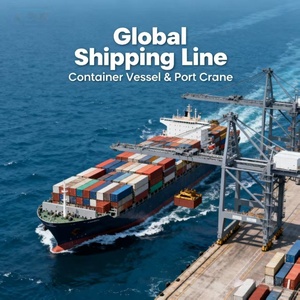
Maritime freight arriving via the major deep-sea container terminal at Le Havre is increasingly routed along the Seine river corridor directly to the fluvial ports of Gennevilliers, Bonneuil-sur-Marne, and Limay-Porcheville. Contract warehousing operators leveraging barge transport eliminate hundreds of heavy truck journeys off the congested A13 and A1 highways, reducing transport-associated carbon footprints by up to 75%—a vital metric for manufacturers complying with the European Union Corporate Sustainability Due Diligence Directive (CSDDD).
The construction of the Grand Paris Express—a 200-kilometer automated transit network with 68 new stations—is fundamentally shifting demographic and commercial density around Paris's second and third rings. Contract warehousing facilities situated in strategic outer nodes (such as Roissy-en-France, Senlis, Garonor, and Evry) are utilizing these expanded infrastructure arteries to operate high-velocity regional consolidation centers that serve both urban Paris stores and broader southern European corridors.
Faced with tightening warehouse labor pools and increasing floor-space lease rates in Île-de-France, high-performing contract warehouses have heavily adopted automated parcel handling conveyor lines, robotic picking carts, and modular pallet storage systems. Exporters shipping machinery accessories, fabricated chains, and industrial parts benefit directly from automated scanning, dimensioning, and weighing systems that prevent mis-shipments and guarantee 99.98% inventory tracking accuracy.
Built on fourth-generation family business stability, rigorous international compliance, and transparent multi-modal execution.
Authorised Economic Operator (AEO) status grants direct green-lane clearance with French Customs authorities, drastically reducing administrative inspections and border delays.
Proprietary cloud platform offering end-to-end shipment tracing, automated dwell time calculation, live temperature monitoring, and one-click ESG emissions auditing.
Strategically situated physical offices across the UK, USA, China, and the UAE, seamlessly executing unified cross-border door-to-door forwarding contracts into France.
We actively mitigate demurrage, port storage, and inland congestion fees before bookings are finalized, keeping total landed distribution costs fully transparent.
85% of long-term contract clients rate our freight operations 8/10 or higher, with industry-leading retention across demanding industrial manufacturing sectors.
Dedicated logistical engineering teams focused specifically on precision machinery, industrial chemicals, automotive manufacturing, and consumer electronics.
Direct operational answers addressing fiscal, geographic, and regulatory considerations for international enterprise procurement officers shipping to Paris.