
From data center knockdown rack structures to certified multimodal hazardous container forwarding, our direct manufacturer-backed export corridors connect Asian industrial clusters directly to San Francisco, Oakland, and Silicon Valley distribution nodes.
Navigating cross-border procurement for the Northern California economic zone requires far more than standard shipping brokerage. Enterprise buyers in San Francisco, South San Francisco’s biotech cluster, Silicon Valley’s hardware corridor, and East Bay industrial parks encounter hyper-specialized requirements: stringent clean-truck port regulations, surging demurrage penalties at the Port of Oakland, and fluctuating Section 301 tariff burdens on Asian manufactured components.
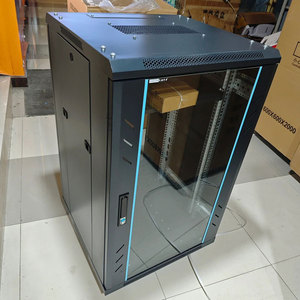
As an OEM cross-border logistics manufacturer and licensed exporter, WTA Group integrates direct factory manufacturing capacity with end-to-end forwarder infrastructure. By manufacturing modular supply chain equipment—such as disassembled Knock-Down (KD) 18U/42U server racks—and operating integrated container drayage chassis fleets, we eliminate the traditional intermediary margins while solving volumetric inefficiencies.
Our localized San Francisco operations synchronize bonded warehouse consolidation, CBP Automated Commercial Environment (ACE) customs pre-clearance, and synchronized first-and-last-mile delivery across Interstate 80 and Interstate 880 transportation arteries.
How our cross-border logistics hardware and freight services solve real engineering, supply chain, and regulatory bottlenecks throughout Northern California.
Importing assembled 19-inch steel server racks consumes prohibitive 40HQ container cubic volume. Our OEM manufacturing arm fabricates KD 18U/42U flat-pack server cabinets with IP20 industrial protection that ship at 70% reduced dimensional volume.
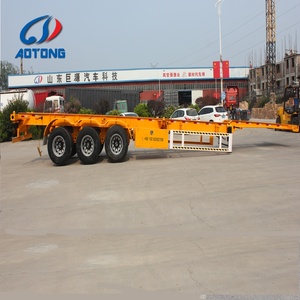
Container dwell times and port congestion in Northern California cause astronomical per-diem fees. We deploy dedicated skeletal trailer chassis fleets to rapidly evacuate 20GP, 40GP, and 40HQ loads directly out of Oakland marine terminals.
High-density tech items, lithium-ion battery assemblies, and retail SKUs enter via bonded storage. Shipments are consolidated, relabeled, and sorted under foreign trade customs supervision, allowing deferred duty payment until domestic distribution.
Strategic analysis of environmental mandates, port modernization, and trade compliance shaping the San Francisco freight landscape.
California Air Resources Board (CARB) Advanced Clean Fleets mandates require drayage operators to transition away from older internal combustion vehicles. Shippers lacking compliant carrier partnerships face severe gating restrictions at Oakland maritime facilities. WTA Group partners with clean-energy certified carriers, guaranteeing continuous terminal access and zero environmental disruption.
Electronics, industrial furniture, and hardware imported into San Francisco remain scrutinized under HTS Chapter 84 and 85 punitive tariffs. Through precise tariff engineering, First Sale for Export rules, and bonded consolidation, our licensed customs brokers legally minimize landed duty liabilities before clearance entries are transmitted.
San Francisco tech enterprises and institutional retail brands require verified Scope 3 GHG emissions reporting. WTA Group's proprietary visibility platform equips procurement managers with automated per-TEU carbon calculation, real-time vessel AIS transponder feeds, and AI-powered delay forecasting across all 679 trade corridors.
Founded in 1913, we blend fourth-generation logistics accountability with high-tech software infrastructure and global accreditation standards.
With seven owned international offices in the UK, USA, China, and the UAE, plus thousands of vetted network agents, our transpacific supply lanes connect directly to factories in Shenzhen, Ningbo, and Shanghai with local English- and Mandarin-speaking operational control.
Security audits, validated cargo handling, and green-lane customs processing. WTA holds premier accreditations including Authorised Economic Operator (AEO), C-TPAT Tier II, IATA, and BIFA memberships, drastically reducing physical examination holds at US ports of entry.
We eliminate the "hidden surcharge trap" in international freight. Bunker Adjustment Factors (BAF), Terminal Handling Charges (THC), Alameda Corridor fees, clean truck surcharges, and customs disbursement costs are 100% itemized upfront before booking release.
Practical answers addressing customs regulations, Oakland drayage protocols, DDP pricing, and technology hardware import logistics.
We execute pre-cleared ISF 10+2 entries 72 hours before vessel departure in Asia. As the vessel enters San Francisco Bay, our dispatch team schedules off-dock appointment slots at TraPac or SSA terminals. Containers are evacuated via our dedicated chassis fleet directly to our local cross-docking depot, ensuring empty return within the carrier free-time window and completely neutralizing demurrage exposure.
Fully assembled server cabinets consume immense cubic space while weighing very little, causing shippers to pay extreme dimensional freight charges for transpacific transport. Our OEM KD units pack into compact, flat modular cartons, increasing container capacity by up to 340% per 40HQ container. Upon arrival, these units can be assembled in under 20 minutes per unit using standard rack hardware.
Yes. Under our comprehensive Delivered Duty Paid (DDP) service, WTA acts as the customs broker of record or assists your foreign principal with Single Transaction / Continuous Bonds. We manage all CBP entry filing, Merchandise Processing Fees (MPF), Harbor Maintenance Fees (HMF), and applicable Section 301 tariffs, delivering freight directly to your warehouse with all duties settled.
Every heavy-duty drayage tractor deployed across our Northern California routes is fully verified and registered with the CARB Drayage Truck Registry (DTR). This guarantees uninterrupted access to maritime terminals and rail ramps in Oakland, avoiding severe state regulatory fines and preventing port gating lockouts.
The WTA visibility platform features open RESTful APIs and pre-built EDI connectors (EDI 315, 214, 856) that feed live milestone data directly into SAP, Oracle, NetSuite, and Microsoft Dynamics. Your team gains automated alerts for container discharge, customs clearance holds, chassis gate-outs, and proof-of-delivery signatures in one dashboard.
Class 9 shipments (UN3480 / UN3481) require certified UN 38.3 test summaries, Material Safety Data Sheets (MSDS) validated within the calendar year, proper hazardous cargo declarations signed by certified personnel, and compliant outer packaging with lithium battery handling markings. WTA's hazmat export department audits all paperwork before cargo leaves the factory gate.
Standard transpacific ocean shipping from Shenzhen or Shanghai into the Port of Oakland takes between 14 and 18 days on direct express services, with another 24 to 48 hours for port terminal processing and local Bay Area delivery. Premium Air Freight into San Francisco International Airport (SFO) or Mineta San Jose (SJC) delivers in 3 to 5 days door-to-door.
By routing imported goods through a bonded warehouse or Foreign Trade Zone (FTZ) facility, your company defers federal customs duties, merchandise processing fees, and state taxes until items are officially withdrawn for domestic consumption. If cargo is re-exported to Canada, Mexico, or Europe, U.S. duties are 100% exempted.
Because WTA operates licensed in-house customs brokerage teams and maintains C-TPAT security accreditation, our shipment inspection rates are significantly below industry averages. When a random CBP VACIS or CET team intensive hold occurs, our local harbor logistics agents coordinate immediate drayage to the Centralized Examination Station (CES) to expedite release.
Yes. Through our bonded consolidation centers in Yantian, Ningbo, and Shanghai, we collect LCL shipments from multiple manufacturing vendors, inspect carton labeling and pallet integrity, consolidate items into dedicated 40HQ high-cube containers, and issue a unified Bill of Lading, dramatically lowering individual entry clearance costs.