Manufactured under ISO 1496-5 standards and DNV-GL project certifications, built to service intermodal routes across Western Europe and transcontinental logistics corridors.
Luxembourg represents a geostrategic fulcrum within Western Europe's manufacturing and supply chain corridors. Bordered by Germany, France, and Belgium, the Grand Duchy functions not merely as a corporate epicenter, but as a premier multimodal transit node. The logistical demands of heavy industry—specifically steel manufacturing, automated robotic assembly, renewable energy infrastructure, and Tier-1 automotive component fabrication—require non-standard freight configurations that defy standard ISO dry van profiles. This is where high-specification flat rack containers, manufactured under stringent mechanical tolerances and certified for multimodal dynamic loads, become indispensable assets.
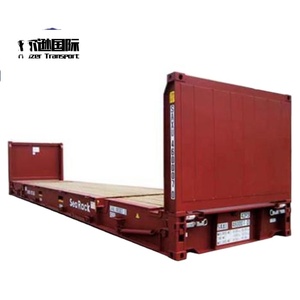
Industrial procurement teams sourcing from global manufacturing plants must analyze flat rack hardware based on strict structural criteria. Our 20-foot and 40-foot collapsible and fixed-end flat rack platforms utilize Corten steel (SPA-H or equivalent high-yield structural steel), reinforced with heavy-duty longitudinal gooseneck tunnel structures and crossmembers capable of absorbing intensive concentrated axle loads. Unlike conventional container flooring, high-payload flat racks feature dense hardwood or integrated anti-slip checkered steel plates engineered to withstand point loads exceeding 35 to 45 metric tons over short wheelbases.
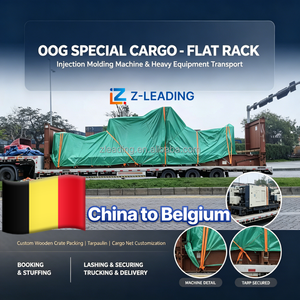
For specialized industrial equipment, such as heavy rolling mills exported to or from industrial clusters in Bettembourg, Differdange, or Esch-sur-Alzette, standard dimensions do not apply. Out-of-Gauge (OOG) shipping relies on flat racks with spring-assisted folding end walls, allowing seamless conversion into flat platforms when deadweight consolidation or oversized over-width, over-height (OW/OH) machinery is moved across European marine terminals (Antwerp, Rotterdam, Zeebrugge) onto direct inland rail shuttles.
Procurement directors and project engineers across the Grand Duchy operate within rigorous compliance structures governed by the Ministère de la Mobilité et des Travaux publics. The integration of flat racks within this specific economic zone typically falls into four high-impact verticals:
Luxembourg remains a global leader in long-product structural steel and heavy profiles. Transporting jumbo beam sections, continuous casting molds, and rolling mill spares requires custom-dimensioned flat racks with lashing pockets positioned every 300mm to secure localized tonnage without distortion.
With Luxembourg’s high concentration of Tier IV financial and colocation data centers (Betzdorf, Bissen), the import of critical power systems, modular uninterruptible power supply (UPS) enclosures, and mega-chillers requires flat rack bases coupled with anti-vibration dunnage systems.
Substation transformers, industrial battery storage containers (BESS), and specialized hydro-turbines designed for transnational grid reinforcement rely on high-capacity flatbed racks certified to withstand maritime sway and inland decelerations up to 0.8g forward inertia.
Direct intermodal crane transshipment at CFL Multimodal Bettembourg demands exact ISO top-corner casting tolerances. Our flat rack platforms ensure crane spreaders engage flawlessly without structural deflection under full-rated payload capacities.
Industrial supply chains feeding the Luxembourg market are shifting rapidly in response to environmental mandates, supply chain derisking, and digitalization:
1. Decarbonization via Modal Shift: Shippers are moving heavy freight away from pure road transport toward combined rail-barge networks originating at the North Sea ports. Flat rack hardware must now demonstrate certified dynamic lashing safety for inland waterway barges navigating the Rhine-Moselle basin to the Port of Mertert, Luxembourg’s primary water port.
2. Standardized Lashing & Smart Telemetry: High-value machinery transported via open flat racks is vulnerable to moisture and lateral shock. Export shipments are increasingly delivered with integrated IoT environmental monitoring (measuring three-axis acceleration, tilt, ambient humidity, and thermal variance) embedded directly into the side-rail profiles of the rack.
3. Lifecycle Asset Recovery: Rising raw material costs make single-use heavy export packing economically unsustainable. European buyers are actively investing in fleets of returnable, collapsible flat racks that fold down to one-fourth of their deployed height, allowing four empty units to be bundled together as a single ISO container profile for reverse logistics at minimal deadhead costs.
Expert answers addressing customs classification, maximum weight limits, road permits, and intermodal compliance for industrial equipment buyers.
Connect directly with our marine structural engineers and project freight forwarders to optimize your equipment designs, lashing calculations, and Benelux route clearances.
Get Catalog