
Strategic hardware, heavy-duty industrial handling machinery, and integrated trans-Pacific logistics services deployed to secure retail velocity, industrial food processing, and port drayage reliability.
A rigorous examination of supply chain resilience, multimodal transshipment, regulatory harmonization under SERNAC & ISP, and automated material handling across Chile's top metropolitan corridors.
The fast-moving consumer goods (FMCG) ecosystem within Chile stands as South America's most sophisticated and open trade market. Characterized by high urbanization across the Gran Santiago Metropolitan Region, deep retail concentration dominated by omni-channel supermarket giants (Cencosud, Falabella, D&S/Walmart Chile, and SMU), and strict trade compliance regimes administered by the Servicio Nacional de Aduanas, moving goods through this elongated country requires an exceptional standard of technical excellence. For FMCG distribution logistics manufacturers and international suppliers, maintaining shelf-life, minimizing port dwell times, and preventing transit spoilage are paramount engineering imperatives.
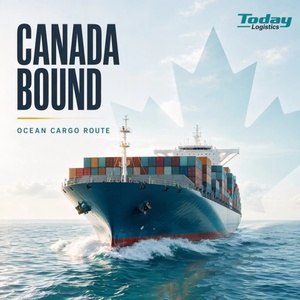
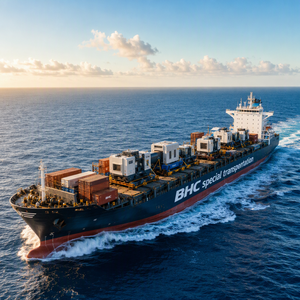
Maritime import flows account for greater than 92% of Chile's cross-border FMCG inbound cargo. The primary seaborne gate is the Puerto San Antonio (STI and Puerto Panul), handling the highest containerized volume in the country, followed closely by the historic Puerto de Valparaíso (TPS). When managing fast-moving provisions, ambient packaged foodstuffs, personal care items, and domestic cleaning chemicals, manufacturers must coordinate with certified ocean forwarding specialists capable of providing deep integrations with maritime carriers.
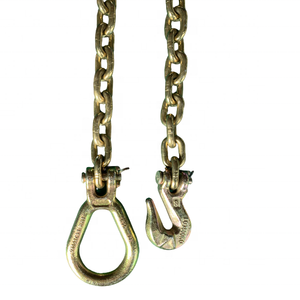
Trans-Pacific routes operating from major Asian export gateways (such as Ningbo-Zhoushan, Shanghai, and Shenzhen) interface directly with Chile’s deep-water ports. However, seasonal ocean swells along the Pacific coastline occasionally trigger navigation halts, while peak agro-export seasons (notably fresh cherry and table grape exports running December through March) severely compress chassis availability and dry container balances. Manufacturers supplying Chile's retailers must specify resilient transport equipment, such as heavy-duty load-securing chains (G70 rating) and flexible industrial bulk containers, while utilizing advanced customs digital visibility tools to circumvent terminal demurrage penalties.
Geographically, Chile extends over 4,300 kilometers north to south, with an average east-to-west breadth of merely 175 kilometers. This unique topography creates an intense reliance on the Pan-American Highway (Ruta 5) as the country's single distribution spine. Consumer products arriving at the coastal terminals of Valparaíso and San Antonio are hauled inland through the coastal mountain passes to massive regional distribution centers clustered in Santiago's northwestern and southern peripheries—including industrial nodes in Pudahuel, San Bernardo, Lampa, and Quilicura.
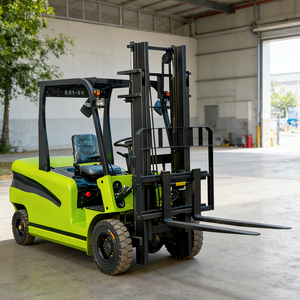
Over 75% of high-turnover consumer items are staged within metropolitan Santiago mega-facilities. Modern supply chains demand zero-emission indoor machinery, like our 1–2 ton electric forklifts, to maintain hygienic standards without emissions in high-density food rack systems.
Distribution north toward Antofagasta, Calama, and Iquique crosses the arid Atacama plateau. Cargo securing requires heavy-grade Australian-standard G70 chains and abrasion-resistant bulk bladders to withstand extreme temperature deltas and harsh desert vibrations.
Reaching the southern zones of Puerto Montt, Chiloé, and Punta Arenas combines inland highway trucking with marine ro-ro barge ferries. Ensuring high structural integrity via 40HQ multimodal container configurations protects fragile consumer packaging from moisture and sea salt exposure.
Distributors and overseas manufacturers must comply fully with sanitary import guidelines administered by the Instituto de Salud Pública (ISP) for personal hygiene and cosmetics, as well as the Servicio Agrícola y Ganadero (SAG) and SEREMI de Salud for packaged foods, confectionery, and beverages. All pallets must strictly adhere to the ISPM-15 phytosanitary standard. Failure to file Electronic Import Declarations (DIN - Declaración de Ingreso Nacional) alongside proper batch numbering and Spanish nutritional labeling under Chilean Law 20.606 leads to immediate border holds and severe storage penalties.
The operational landscape for Chile's supply chain is undergoing profound structural changes driven by three macro trends:
Targeted insights resolving legal, operational, and financial inquiries frequently encountered by Chilean purchasing directors and global logistics managers.
Direct ocean services from major Asian ports (Shanghai, Ningbo, Shenzhen) to San Antonio or Valparaíso typically range from 26 to 34 days, depending on carrier routing and transshipment stops in Mexico or Panama. During peak agro-export cycles (December through March), space must be booked 3 to 4 weeks in advance to avoid container roll-overs and demurrage bottlenecks at coastal terminals.
Thanks to comprehensive Free Trade Agreements between Chile, China, North America, and Europe, a significant majority of industrial logistics equipment (such as electric forklifts, container hardware, and storage systems) enters Chile at 0% ad valorem duty, subject to the presentation of a valid Certificate of Origin (Form F for China). The standard Chilean Value Added Tax (IVA - Impuesto al Valor Agregado) of 19% remains applicable at the time of customs clearance.
Clearance through the Servicio Nacional de Aduanas requires: the Original Commercial Invoice (Factura Comercial) in Spanish/English, the Ocean Bill of Lading (B/L) or Air Waybill (AWB), Packing List, Certificate of Origin, the Declaración de Ingreso (DIN) processed by a licensed Chilean Customs Broker (Agente de Aduana), and the Certificado de Destinación Aduanera (CDA) issued by the SEREMI de Salud or SAG for food, chemical, or pharmaceutical items.
To avoid escalating storage fees, shippers should negotiate extended free time (at least 14 to 21 combined demurrage and detention days) at the bill-of-lading stage. Additionally, coordinating with intermodal trucking providers that operate dedicated off-dock dry terminals (Extraportuarios) in San Antonio or Placilla (Valparaíso) enables rapid container de-stuffing before empty boxes are repositioned back to port terminals.
Chilean health and labor protection regulations (Decreto Supremo 594) strictly limit carbon monoxide and particulate emissions inside enclosed logistics spaces storing food and personal hygiene inventory. Consequently, operations mandate zero-emission electric material handling equipment—specifically AC-powered electric forklifts with non-marking tires, ergonomic operator cabins, and CE/ISO certified safety reverse alerts.
While DDP provides turnkey ease for local buyers who do not wish to handle import logistics, it requires the overseas manufacturer or freight forwarder to have a locally incorporated entity or designated fiscal representative with a valid Chilean tax registration (RUT - Rol Único Tributario) to pay local VAT. Alternatively, DAT (Delivered at Terminal) or DAP (Delivered at Place) terms paired with an experienced local broker offer a balanced, compliant trade structure.
Drawing on an institutional pedigree dating back to 1913, we deliver international forwarding, multi-market regulatory clearance, and advanced cargo equipment engineered for continuous performance.
Founded in 1913, our logistics legacy spans more than a century of ocean, air, rail, and overland distribution. Our four generations of hands-on forwarding ensure that client operations survive geopolitical, seasonal, and economic shifts.
Serving over 6,000 corporate clients across 122 sovereign markets, we maintain permanent international offices in the UK, USA, China, and the UAE, seamlessly executing trans-Pacific, trans-Atlantic, and intra-American intermodal routes.
Our licensed international customs brokerage teams operate with elite trade credentials including Authorized Economic Operator (AEO), C-TPAT, IATA, and WCA World memberships, protecting your brand from border delays and compliance penalties.
Managing high-turnover consumer goods into Chile leaves zero tolerance for communication lag or opaque cost markups. Our customers enjoy transparent, all-in freight quotations where Bunker Adjustment Factors (BAF), Terminal Handling Charges (THC), and documentation fees are completely visible upfront. In tandem, our complementary Digital Visibility Platform provides automated milestone alerts, delay prediction engines, and granular ESG carbon tracking from departure to final delivery at your Santiago hub.