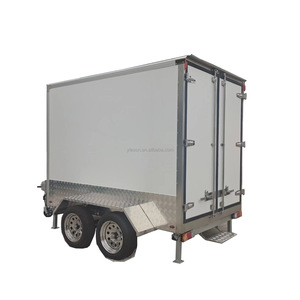
Discover specialized multimodal cargo hardware, bonded warehousing infrastructure, chemical ISO tank frameworks, and intelligent cold storage solutions deployed directly across the Eurasian-Balkan economic transit gateway.


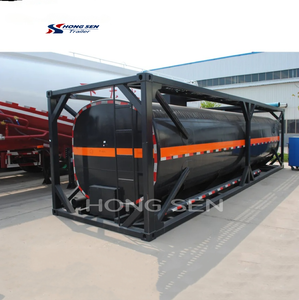

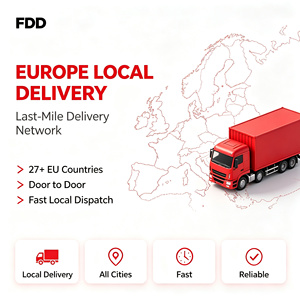
The Republic of Bulgaria has rapidly transitioned from an emerging regional transit zone into a core geopolitical and commercial hinge connecting Western and Central Europe, the Mediterranean basin, and mainland Asia. Strategically anchored along Pan-European Transport Corridors IV, VIII, and X, as well as the TRACECA (Transport Corridor Europe-Caucasus-Asia) route, Bulgaria offers international manufacturers, industrial conglomerates, and commodity traders unparalleled operational leverage. Operating as an industrial-scale logistics services factory and exporter for the Bulgarian market, our enterprise deploys capital-intensive freight architectures, proprietary end-to-end digital dispatch systems, and bonded distribution hubs across Sofia, Plovdiv, Varna, and Burgas.
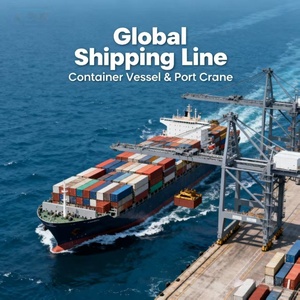
As nearshoring manufacturing trends accelerate across the European Union, global procurement directors face intensified volatility along conventional shipping lanes. Rising bunker adjustment factors (BAF), maritime bottlenecks through the Suez Canal, and stringent EU corporate sustainability reporting mandates demand an integrated logistics partner capable of delivering predictable capacity. Through direct allocations across premier container ocean lines calling at the Port of Varna and Port of Burgas, combined with scheduled express rail cargo connections linking the Yangtze River Delta and Pearl River Delta directly to Eastern European rail heads, we provide a unified supply pipeline that eliminates inventory latency and mitigates geopolitical transit risks.
Bulgaria’s domestic logistics framework is defined by distinct industrial sub-clusters that each require specialized freight configurations, handling apparatus, and regulatory compliance protocols:
As the nation's financial and transport nexus, the Sofia Metropolitan Hub requires high-density warehousing, swift last-mile intermodal transfers, and customs bonded staging for electronics, automotive sub-assemblies, and pharmaceutical products. Our operations maintain direct bonded consolidation platforms (Type A Custom Warehousing), allowing deferred customs duty payments, immediate EU value-added tax (VAT) suspension under transit procedures (T1/T2), and automated cross-docking directly servicing national distribution centers across Western Bulgaria and neighboring North Macedonia and Serbia.
Plovdiv represents the epicenter of Bulgarian automotive parts fabrication, mechanical engineering, and electronics contract manufacturing. Moving heavy production line equipment, bulk specialized raw polymers, and sensitive Tier-1 automotive assemblies necessitates dedicated flat-rack containers, industrial flexitanks, and Class 3, 5, and 8 hazardous material (DGR) handling. Our integrated logistics systems guarantee just-in-sequence (JIS) and just-in-time (JIT) trucking schedules connecting regional manufacturing plants with assembly facilities across Germany, France, and Italy.
Port Varna East/West and Port Burgas handle the primary influx of global intermediate materials, containerized chemicals, mechanical apparatus, and consumer merchandise arriving from Ningbo, Shanghai, Shenzhen, and Qingdao. We manage dedicated container yard drayage, rail feeder connectivity straight from quayside spurs, and deep-water bulk liquid container transfers. For temperature-sensitive agribusiness exports—including Bulgarian sunflower oil, dairy, lavender concentrates, and frozen fruit products—our cold chain distribution infrastructures and mobile reefers guarantee uninterrupted thermal compliance adhering to strict ATP and HACCP international standards.
Operating as Bulgaria's primary inland port on the Danube River, Ruse serves as the pivotal bridge to Central Europe via barge transport. Integrating river barge freight with bonded road trucking and rail links unlocks an economical freight conduit for out-of-gauge heavy machinery, agricultural equipment, and raw steel products destined for downstream industrial facilities.
Selecting the optimal logistics vector requires a balance of transit velocity, balance-sheet capital lock-up, carbon footprint benchmarks, and local customs friction. The following matrix illustrates the performance profiles of core freight services engineered for cargo entering Sofia and Black Sea maritime hubs from primary Asian export centers:
| Transport Mode | Average Transit (Door-to-Sofia) | Carbon Intensity (g CO2/t-km) | Cost Factor (Index: Sea = 1.0) | Customs Processing Model | Primary Sector Fit |
|---|---|---|---|---|---|
| Direct Ocean (Port Varna / Burgas) | 28 – 35 Days | 12 – 18 | 1.0x (Baseline) | Bonded Maritime Port Clearance (NCTS/T1) | Heavy commodities, mass retail, raw industrial materials |
| China-Europe Rail Express | 16 – 20 Days | 22 – 35 | 2.4x | Brest/Malaszewicze or Baku-Tbilisi-Kars transit | Automotive Tier-1, electronics, high-margin machinery |
| Air Express Freight (SOF Terminal) | 3 – 5 Days | 500 – 650 | 7.8x | Sofia Airport (SOF) Expedited Air Cargo Manifest | Critical spare parts, biologicals, urgent consumer launches |
| Combined Sea-Rail / Sea-Road Intermodal | 22 – 26 Days | 25 – 40 | 1.4x | Piraeus / Varna Hub Dry-Port Direct Forwarding | Consumer electronics, FMCG, industrial intermediate parts |
International procurement into Bulgaria is experiencing systemic transformation guided by four primary industry developments:
With Bulgaria’s accession to the Schengen zone, commercial logistics architectures are experiencing an immediate reduction in turnaround times across overland road freight borders. The eradication of intra-EU land border waiting periods across northern borders with Romania and western corridors accelerating into Central Europe unlocks true high-velocity JIT logistics, making Sofia and Plovdiv premier alternatives to traditional Visegrád Group (Poland, Czech Republic, Slovakia, Hungary) distribution bases.
Industrial importers of steel, aluminum, cement, and chemical goods into Bulgaria are now subject to stringent emissions disclosure and carbon liability under CBAM regulations. WTA Group’s proprietary Supply Chain Visibility Platform integrates dynamic, verified carbon tracking for every shipment kilometer, calculating standardized greenhouse gas expenditures according to ISO 14083 and GLEC frameworks, ensuring total audit compliance for Bulgarian manufacturers.
Bulgaria’s expanding position as an exporter of specialty foods, wine, pharmaceutical products, and biological reagents has catalyzed severe shortages of certified multi-temperature cold storage infrastructure. The integration of modular steel cold warehouses and IoT-enabled refrigerated mobile chiller units bridges this local structural deficit, guaranteeing uninterrupted preservation from agrarian production fields in the Thracian Valley to export vessels at the Black Sea.
Engineered to eliminate supply chain vulnerability, suppress demurrage fees, and maximize capital velocity across European and cross-border customs territories.
Navigating EU customs compliance requires absolute precision. Our certified Authorised Economic Operator (AEO) status facilitates fast-track customs clearance, prioritized physical inspections, and reduced administrative security guarantees across Bulgarian customs posts.
Eliminate the black box of ocean transit and overland rail corridors. Our proprietary digital platform provides millisecond-level telemetry, predictive artificial intelligence arrival modeling, and centralized financial document archives.
Bulgaria's thriving chemical manufacturing and agricultural treatment sectors require specialized, fail-safe hazmat shipping capabilities. We maintain end-to-end ADR-compliant road freight, Class 3, 5.1, 6.1, and 8 DGR packaging, and bulk liquid container solutions.
Established in 1913, our organization pairs institutional longevity with state-of-the-art technological innovation, offering the global corporate resilience required in high-stakes logistics.
Founded in 1913, operating as a fourth-generation logistics enterprise with stable capital structures and risk-averse asset stability.
Recognized for exceptional client retention: over 85% of our international commercial customers evaluate our service delivery at 8/10 or higher.
Guaranteed extended container free-time agreements and immediate yard clearing protocols that prevent port demurrage and detention charges.
Direct operational headquarters in Manchester, UK, paired with fully staffed corporate branches across China, the United States, and the UAE.
Clear, technical answers to critical logistical, fiscal, and regulatory inquiries commonly encountered by Bulgarian procurement directors and supply chain controllers.
Upon arrival, import goods must be placed into temporary storage (up to 90 days) under the summary declaration (ENS) or directly cleared for free circulation using EU Single Administrative Document (SAD) protocols. Our in-house AEO-certified brokers handle immediate customs duty evaluation, import VAT registration, and phytosanitary or CE conformity filings, routing cleared shipments straight onto our national trucking network within 24 to 48 hours of vessel discharge.
Utilizing our Type A Customs Bonded Warehousing permits companies to defer Bulgarian VAT (standard 20%) and common customs duties until items are formally released into the domestic consumer market. If inventory stored in Sofia or Plovdiv is re-exported to non-EU nations (such as Serbia or Turkey) or dispatched under intra-community VAT regimes to Greece or Romania, import tariffs are completely eliminated, unlocking vital working capital reserves.
Yes. China-Europe Rail Express cargo dispatched from Asian intermodal hubs (such as Xi'an, Chengdu, or Wuhan) enters Europe via primary rail corridors. Shipments are seamlessly transitioned either through Central European rail hubs (Budapest or Vienna) down to Sofia via block train or road feeder systems, or transited via the Middle Corridor across the Caspian Sea, completing transit in 16 to 20 days—over 14 days faster than direct ocean routes.
Chemical imports require a standardized 16-point Material Safety Data Sheet (MSDS) translated into Bulgarian or English, compliant with European REACH regulations. Furthermore, shipments must possess standard Dangerous Goods Declarations (DGD), correct UN packaging numbers, CLP classification labeling, and registered transport authorization under international ADR road agreements. Our technical compliance team audits documentation prior to carrier loading to prevent port customs quarantine.
All our active reefer containers and mobile chiller trailers feature autonomous telematics systems logging temperature, relative humidity, and air circulation rates every 60 seconds. This sensory data is broadcast via dual-satellite and cellular SIM networks directly to our digital platform. Automated alarm thresholds trigger immediate protocol interventions if temperatures deviate by more than ±0.5°C from pre-programmed set points.
For established commercial enterprises importing into Bulgaria, purchasing on FCA (Free Carrier) or FOB (Free on Board) terms is significantly advantageous compared to CIF/CFR or DDP controlled by overseas sellers. Controlling the freight booking via WTA Group ensures absolute visibility, eliminates concealed destination port handling kickbacks (CISF charges), provides access to 14 to 21 container free days, and avoids costly demurrage charges.