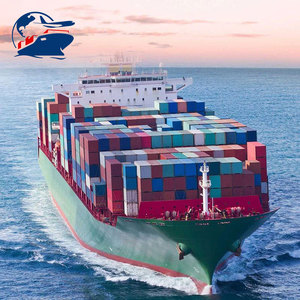
Explore our specialized hardware, containerization infrastructure, and cross-border logistics lanes engineered to sustain rigorous Japanese Just-In-Time (JIT) production rhythms across Kanto and Tokyo Bay terminals.
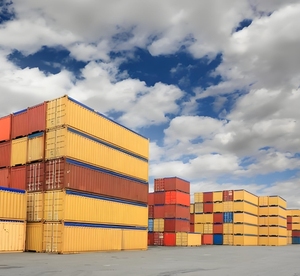

The Greater Tokyo Area, encompassing over 38 million consumers and generating one-third of Japan’s gross domestic product, constitutes one of the world's most intricate and demanding logistics environments. For global manufacturers and international trading houses, maintaining competitive lead times across the Kanto industrial plain is no longer simply an exercise in securing ocean container space; it demands a granular convergence of inventory velocity, digital transparency, customs compliance, and synchronized inland distribution.
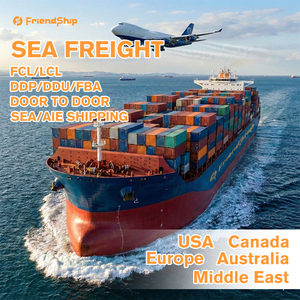
From the deep-water berths of Tokyo Port’s Oi and Aomi container terminals to the precision air cargo gates at Haneda (HND) and Narita (NRT), cross-border freight requires proactive routing to counter structural bottlenecks. Japanese industrial supply chains operate under exacting Just-In-Time (JIT) tolerances, zero-defect quality management (Kaizen/Poka-Yoke), and rigorous warehousing standards. When foreign exporters ship into Tokyo, unanticipated terminal delays, documentation mismatches on the Nippon Automated Cargo and Port Consolidated System (NACCS), or inadequate local pallet standards immediately inflate detention fees and destabilize downstream assembly operations.
Seamless orchestration between Oi, Shinagawa, and Yokohama terminals eliminates terminal dwell time and provides immediate access to primary arterial networks like the Shuto Expressway.
Direct electronic document exchange with Tokyo Customs speeds tariff classification, excise calculation, and preferential tariff applications under RCEP, CPTPP, and bilateral EPA frameworks.
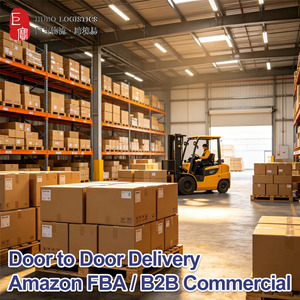
Strategic inventory positioning across multi-tenant automated fulfillment centers in Saitama, Chiba, and Kanagawa guarantees rapid last-mile replenishment into central Tokyo.
Bridging global manufacturing lines with Japanese industrial nodes through tailored inventory management infrastructure.
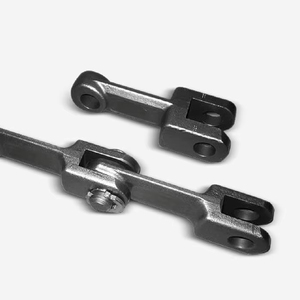
Large-scale multi-tenant logistics centers along the Ken-O Expressway require precision component feeding. By utilizing high-spec alloy conveyor chains and standardized 40HQ multimodal routing, overseas manufacturers feed Automated Storage and Retrieval Systems (ASRS) without repackaging pauses.
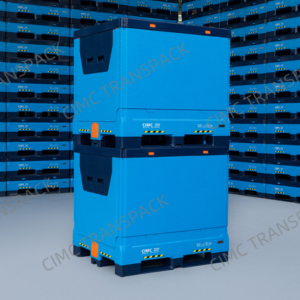
The coastal belt extending from Tokyo’s Ota ward down through Kawasaki and Yokohama anchors Japan’s high-precision semiconductor, electronics, and specialty chemical facilities. Foldable 1,000L UN-certified IBC tanks and flat-rack heavy logistics maintain secure handling compliant with Japan’s Fire Service Act.
Tokyo’s flagship retail districts demand rapid replenishment cycles with high SKU proliferation. Direct-from-factory bonded consolidation programs bundle seasonal apparel lines into barcoded cartons, allowing customs clearance in transit and cross-docking straight into Tokyo city-center boutiques overnight.
Understanding the transition from legacy transport practices to automated, ESG-centric logistics networks across Japan.
| Market Driver | Operational Impact on Greater Tokyo | WTA Strategic Countermeasure |
|---|---|---|
| The "2024 Problem" (2024年問題) | Statutory caps on Japanese commercial driver overtime (960 hours annually) trigger severe long-haul trucking capacity shortages across domestic trunk routes. | Establishment of modal shift corridors: shifting inland container movements to coastal feeders, coastal Ro-Ro vessels, and JR Freight rail networks connecting Tokyo to Osaka and Kyushu. |
| NACCS Customs DX & Paperless Trade | Phased evolution of Japan’s single-window customs platform demands end-to-end digital commercial invoices, packing lists, and automated Certificate of Origin matching. | Direct ERP-to-NACCS API connectivity via the proprietary WTA digital visibility engine, eliminating physical document delivery and achieving same-day clearance at Port of Tokyo. |
| Tokyo Metropolitan Net-Zero 2050 | Stringent municipal ESG regulations demand Scope 3 logistics emission transparency, green warehouse certifications (CASBEE), and Low-Emission Zone (LEZ) compliance. | Real-time per-shipment CO2e accounting generated automatically on every invoice; deployment of electric drayage fleet partnerships for intra-Tokyo terminal runs. |
| Seismic & Climate BCP Resiliency | High vulnerability to seismic disruption (Tokyo Inland Earthquake preparedness) forces enterprises to decentralize inventory away from single-point coastal warehouses. | Decentralized inventory distribution across seismic-isolated (免震) inland bonded depots located on higher ground across western Saitama and Gunma prefectures. |
Backed by 110+ years of operational resilience, global licensing accreditations, and client satisfaction metrics recognized worldwide.
Founded by Ernest Sommer in 1913, WTA has navigated over a century of geopolitical shifts, economic cycles, and supply chain disruptions. As a fourth-generation family-directed forwarder, we prioritize long-term client stability over quarterly margin optimization.
Fully licensed customs brokers holding international Authorised Economic Operator (AEO) status and C-TPAT certification. Our direct liaison with Tokyo Customs minimizes inspection delays and ensures strict conformity with Japan’s Customs Tariff Law.
Demonstrated customer satisfaction with a Net Promoter Score of 77, where 85% of our international clientele rate our service quality at 8/10 or higher. We serve leading conglomerates including Eaton, JDE Peet's, and Tesco.
Every account gains comprehensive access to our proprietary cloud visibility platform and mobile application. Track container milestones, forecast port congestion delays via predictive machine-learning models, and download live ESG carbon audits.
Comprehensive service spanning 122 countries and 679 direct trade lanes, anchored by dedicated corporate offices in the United Kingdom, the United States, China, and the United Arab Emirates, with dedicated Asia-to-Tokyo gateway services.
We eliminate hidden terminal inflation. By aggressively managing port free time, pre-clearing paperwork, and quoting all-in transparent ocean, air, and drayage rates, our landed logistics cost frequently outperforms local forwarders.
Authoritative answers to regulatory, operational, and documentation inquiries regarding shipments into the Kanto region.
Implemented in October 2023, the Qualified Invoice System requires registered invoice numbers to claim Japan Consumption Tax (JCT) input credits (currently 10%). For foreign exporters shipping under DDP terms, having an established Non-Resident Importer (NRI) structure with a designated Attorney for Customs Procedures (ACP) in Tokyo is crucial to ensure downstream Japanese business customers can legally offset import consumption taxes.
Yes. The standard industrial pallet in Japan is the JIS Z 0601 Type T11 (1,100 mm × 1,100 mm). Most modern automated distribution facilities (ASRS) throughout Kanagawa and Saitama are specifically calibrated for T11 dimensions. Goods shipped on Euro pallets (1,200 mm × 800 mm) or US GMA pallets (48 in × 40 in) frequently require costly, labor-intensive transloading at Tokyo port container freight stations.
Standard carrier free time at Tokyo’s Oi and Aomi terminals typically ranges from 5 to 7 calendar days for standard dry containers, and 3 to 4 days for refrigerated units. Because drayage driver availability has tightened under the 2024 labor regulations, we negotiate extended 14-day combined demurrage and detention packages prior to vessel departure, preventing steep port storage penalties.
Our digital visibility infrastructure features open RESTful APIs and EDI interfaces (EDIFACT, ANSI X12, and NACCS-compatible flat formats). We push real-time milestone events, estimated time of arrival (ETA) alterations, container gate-in confirmations, and digital commercial documentation directly into your enterprise ERP, reducing manual status tracking.
Yes. We operate verified bonded logistics capabilities spanning Tokyo Port, Yokohama, and Narita gateways. This permits non-resident sellers to hold inventory locally in Japan without immediately disbursing customs duties and consumption tax until the cargo is released for local commercial distribution or re-exported across the Asia-Pacific basin.
We mitigate trucking shortfalls by pre-booking drayage slots via appointment-based chassis reservation systems, utilizing twin-trailer configurations where allowed, and shifting non-urgent transshipments onto domestic coastal cargo barges (内航船) and Japan Freight Railway (JR Freight) container cars for intercity distribution outside Kanto.
Consult with our international freight directors and Tokyo logistics desk. From multimodal ocean lanes and time-critical air freight to integrated bonded warehousing and automated supply chain tracking, we guarantee optimized landed costs and reliable delivery.