
1. Navigating Nigeria's Maritime Logistics Landscape: Ports, Infrastructure, and Industrial Capacities
The Federal Republic of Nigeria represents the primary maritime commercial gateway in Sub-Saharan Africa, accounting for over 65% of all seaborne traffic entering the Gulf of Guinea. However, managing freight forwarding operations into and out of this market demands deep structural awareness of regional bottlenecks, port architectures, customs mechanics, and inland transit dynamics. Commercial ocean shipping in Nigeria centers predominantly around the Lagos Port Complex (Apapa), Tin Can Island Port, the newly commissioned deep-water maritime asset at Lekki Deep Sea Port, and the eastern maritime cluster encompassing Onne Port, Rivers Port complex at Port Harcourt, Warri Port, and Calabar Port.
For industrial factories, assembly plants, and agro-commodity exporters, logistics execution is rarely a pure matter of booking vessel slots. Instead, it is an integrated engineering discipline combining customs tariff classification, automated terminal clearance, Pre-Arrival Assessment Report (PAAR) issuance, and intermodal drayage execution. A failure in container handling strategy can quickly result in catastrophic terminal demurrage and shipping line detention fees, which frequently exceed the actual ocean freight invoice if not managed proactively.
"Strategic marine logistics in Nigeria requires transforming ocean shipping from an isolated freight procurement exercise into an end-to-end engineered protocol—merging advance manifest declarations, customs risk mitigation, and bonded corridor evacuation before the vessel even crosses the fairway buoy."
While Apapa and Tin Can Island historically suffered from severe arterial traffic choke points along the Liverpool and Oshodi-Apapa express corridors, modern freight logistics strategies bypass highway congestion through bonded river barge transfers across the Lagos Lagoon directly to inland container depots (ICDs) such as Ikorodu, Lilypond, or direct intermodal rail links. Concurrently, the commissioning of the Lekki Deep Sea Port—boasting a 16.5-meter draft capable of berthing Neo-Panamax vessels up to 18,000 TEU—has fundamentally altered the West African maritime matrix, reducing turn-around times and unlocking regional transshipment viability for high-capacity manufacturers.
2. Localized Industrial Application Scenarios in Nigeria
Operating as a premier logistics partner and freight exporter across Nigeria entails designing specialized protocols matched to sector-specific supply chains. Below are the primary commercial environments where marine freight engineering delivers critical operational leverage:
Heavy Machinery & Industrial Plant Commissioning
Targeted at industrial corridors like the Ogun-Guangdong Free Trade Zone (FTZ), Ikeja Industrial Estate, and Agbara Industrial Belt. Entails moving breakbulk, Out-Of-Gauge (OOG) machinery, heavy hydraulic presses, and automated assembly apparatus from China, Europe, and North America. Requires specialized flat-rack container stowage, heavy-lift shore crane coordination at Apapa, and escorted low-bed multi-axle heavy transport movements coordinated under specialized Ministry of Works transport permits.
Agro-Commodity Export & Controlled Cold Chain
Positioned for export processing hubs across Kano, Kaduna, Benue, and Cross River states. We coordinate non-oil exports including raw cashew nuts (RCN), sesame seeds, ginger, premium cocoa beans, and frozen seafood. Incorporates ventilated containers with high-grade desiccant liners to prevent "container sweat" during the equatorial voyage, alongside digital reefer monitoring ensuring precision cold-chain temperatures for seafood and perishable shipments departing via Onne and Tin Can terminals.
FMCG, High-Velocity Retail & Automated Storage
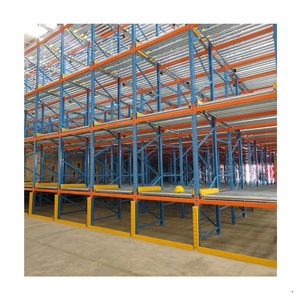
Designed for fast-moving consumer goods conglomerates and pharmaceutical producers in Lagos and Ibadan. Utilizes dense storage configurations such as Gravity Pallet Flow Storage Racks within bonded receiving warehouses. Integrates swift customs release via Fast Track Level 2 (FT2) status, bypassing standard physical inspection bays, immediately transferring freight onto bonded trailers to maintain relentless production cycles without maintaining bloated raw material buffers.
Oil & Gas EPC Project Supply (Onne / Port Harcourt)
Focusing on the Niger Delta energy sector, operating out of the Onne Oil and Gas Free Zone. Manages offshore drilling equipment, OCTG piping, subsea valves, and time-critical spares. Operates in rigorous compliance with the Nigerian Oil and Gas Industry Content Development (NOGICD) Act and coastal maritime Cabotage mandates, coordinating seamless sea-to-berth transfers with zero operational downtime for offshore platforms.
Inland Dry Port (IDP) Intermodal Consolidation
Supporting hinterland trade through the Kaduna Inland Dry Port, Dala Inland Dry Port (Kano), and Kano Free Trade Zone. Freight arriving at coastal maritime ports is bonded directly under the Nigerian Customs Service Electronic Cargo Tracking System (ECTS), transshipped onto dedicated freight rail corridors or secured container convoys, clearing final import declarations directly at northern industrial terminal destination gates.
3. Localized Development Trends Driving Nigerian Seaborne Commerce
The Nigerian maritime and port logistics sector is currently undergoing a structural transformation powered by regulatory modernization, technological deployment, and geopolitical trade agreements. Global exporters and local manufacturers must align their supply chain architecture with the following systemic shifts:
Digital Customs Modernization (B’Odogwu & Single Window)
The transition from the legacy NICIS II system to the indigenously engineered Nigerian Customs Service "B’Odogwu" digital platform, alongside the Federal Government's National Single Window Project, is automating document verification, valuation assessments, and risk routing. This fundamentally reduces clearing timelines from 14–21 days down to 48 hours for compliant operators.
Port Automation & The Lekki Super-Hub Paradigm
Equipped with semi-automated Ship-to-Shore (STS) gantry cranes and automated Rubber-Tyred Gantry (RTG) yard systems, the Lekki Deep Sea Port has set an unprecedented standard for berth productivity in West Africa. Marine traffic is shifting toward deep-draft direct calls, drastically decreasing container feeder surcharges and transshipment delays in Lomé or Pointe-Noire.
AfCFTA & Regional Cabotage Integration
The gradual operationalization of the African Continental Free Trade Area (AfCFTA) is fostering intra-African maritime commerce. Nigerian industrial factories are expanding maritime feeder exports of processed plastics, building materials, and packaged goods along the West African Coastal corridor, necessitating compliant regional bills of lading and non-restrictive cabotage clearances.
Green Maritime Logistics & Decarbonization Mandates
In step with IMO 2030 decarbonization directives, leading multinational brands in Nigeria are actively tracking Scope 3 logistics emissions. Forwarders equipped with carbon auditing algorithms, optimized vessel lane routing, and energy-efficient warehousing (such as gravity-flow storage) are capturing substantial enterprise market share.
Enterprise Heritage & Operational Mastery
Backed by over 110 years of international freight forwarding pedigree, our infrastructure unifies multi-national scale with granular African market mastery, providing total operational certainty across every container movement.
Founded 1913 Heritage
Over a century of continuous global freight execution. Four generations of logistics excellence managing complex international cargo through global shocks, market transitions, and technological revolutions.
679 Active Global Lanes
Direct contractual ocean carrier capacity across Asia, Europe, the Transpacific corridor, and the Middle East, guaranteeing equipment availability and competitive spot/contract pricing even during peak shipping volatility.
AEO & C-TPAT Accreditations
Fully accredited Authorised Economic Operator status and licensed in-house customs brokerage teams ensuring seamless compliance, expedited green-lane clearance, and robust trade security governance.
24/7 Digital Visibility Platform
Complimentary enterprise-grade tracking dashboard for every shipment. Features predictive delay detection driven by live AIS feeds, integrated digital documentation archives, and instant Scope 3 ESG carbon reporting.
Dedicated Sector Expertise
Specialized vertical units dedicated exclusively to Industrial Manufacturing, Automotive Components, Food & Beverage, Temperature-Controlled Cold Chains, and High-Value Project Cargo Logistics.
Zero Hidden Costs Policy
Transparent, all-in itemized quotes detailing ocean freight, BAF, CAF, THC, and port clearance overheads upfront. Proactive container free-time negotiation preventing exorbitant demurrage and detention fees.
4. Frequently Asked Questions: Navigating Nigerian Customs & Freight Clearances
Procuring marine logistics services in Nigeria requires precise understanding of local regulatory frameworks, monetary policies, and operational practices. Below are clear, verified answers to critical logistics questions faced by local procurement officers and international traders:
Every commercial sea import into Nigeria requires an electronic Form M registered through an Authorized Dealer Bank via the Nigeria Single Window Trade Portal, validated by the Central Bank of Nigeria (CBN). Following document submission (Commercial Invoice, Bill of Lading, Packing List, and SONCAP/NAFDAC certificates), the Nigeria Customs Service Headquarters issues a Pre-Arrival Assessment Report (PAAR) specifying duty valuation and classification prior to vessel discharge.
We negotiate extended shipping line free days (typically 21 to 28 days for Lagos and Onne calls) directly within the master contract of carriage. Furthermore, by initiating pre-clearance procedures via advanced electronic manifest transmission before vessel arrival, cargo can be discharged directly onto bonded barges or rail shuttles, transferring instantly to off-dock holding facilities without accruing terminal dwell penalties.
These represent distinct regulatory standards: SONCAP (Standards Organisation of Nigeria Conformity Assessment Programme) regulates manufactured industrial goods, mechanical spares, electronics, and construction supplies; NAFDAC controls processed foods, pharmaceuticals, cosmetics, and chemicals; while NESREA regulates environmental waste, used electronics, and toxic effluents. Each agency requires independent laboratory conformity reports before Form M approval.
Yes. While traditional international trade in Nigeria was dominated by CIF or FOB Incoterms due to foreign exchange volatility and customs complexities, our specialized Door-to-Door DDP service provides an all-inclusive solution covering origin export protocols, international ocean freight, full customs duty assessment, terminal handling, and inland trailer delivery to your factory premises under one predictable invoice.
Lekki Port offers significantly faster vessel turnaround times, state-of-the-art container scanners, and minimal road congestion along the Lekki-Epe expressway, making it superior for manufacturing plants in the Lekki Free Zone, Epe, and eastern Lagos. However, for factories situated in Ikeja, Ogun State, or northern inland corridors, Apapa and Tin Can still provide direct access to rail networks and dedicated lagoon barge terminals.
Exporters require an active Nigerian Export Promotion Council (NEPC) certificate, an Electronic Export Proceed Form (NXP) processed via the commercial bank, a Clean Certificate of Inspection (CCI) issued by a government-appointed Pre-Shipment Inspection Agent (PIAS), and relevant phytosanitary or Fumigation Certificates for agricultural goods (such as sesame, cocoa, or cashew nuts).