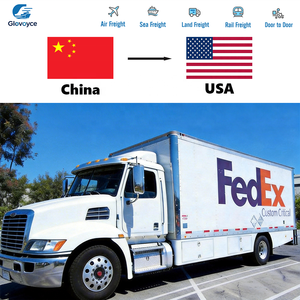

Tailored bonded containment, automated customs brokerage, and direct-to-factory freight solutions calibrated for manufacturing entities and cross-border distributors in northern Vietnam.
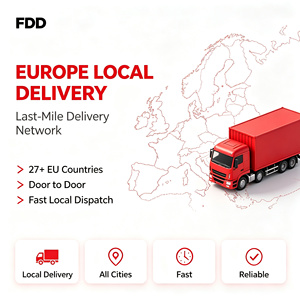
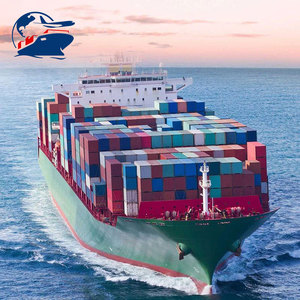
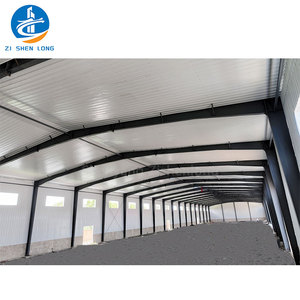
Strategic bonded solutions designed around regional industrial clusters, inland container depots (ICDs), and high-velocity manufacturing supply chains in the Red River Delta.
Hanoi serves as the control and logistics coordination hub for major semiconductor and consumer electronics clusters in neighboring Bac Ninh, Bac Giang, and Thai Nguyen. OEM suppliers utilize our bonded facilities to maintain Vendor Managed Inventory (VMI). High-value microchips, multi-layer PCBs, and display modules are held in suspension of import tariffs and value-added tax (VAT) until production trigger signals demand line-side delivery, minimizing working capital exposure.
Export Processing Enterprises (EPEs) within Thang Long Industrial Parks I & II require rigid compliance under Vietnamese Customs decrees. Our bonded network facilitates cross-border sub-assembly, temporary export for repair, and domestic tariff-free transfer between qualified processing zones. By synchronizing customs handoffs via local ICDs like Gia Lam and My Dinh, we eliminate terminal congestion at Hai Phong port while maintaining strict audit trails.
Leveraging Hanoi's close proximity to the Pingxiang and Hekou land borders with China, cross-border distributors use bonded hubs to consolidate bulk shipments arriving via highway before breaking down parcels into individual e-commerce consignments. The bonded facility performs SKU verification, custom labeling, localized repackaging, and handles cross-border reverse logistics without triggering unnecessary re-importation liabilities.
Critical shifts in regulatory frameworks, infrastructure upgrades, and trade routes dictating procurement strategy in northern Vietnam.
Procurement directors are diversifying away from pure ocean routes. The overland trucking corridor connecting Shenzhen/Guangzhou through the Lang Son (Huu Nghi) border gate straight into Hanoi-area bonded facilities has matured. Transit times are reduced to 48–72 hours door-to-door, offering an agile alternative that is 70% faster than sea freight and substantially more cost-effective than air transport during peak electronic production cycles.
Vietnam's General Department of Customs continues to enforce strict automated clearance protocols through the VNACCS/VCIS infrastructure. Bonded operations in Hanoi are rapidly adopting API-integrated Warehouse Management Systems (WMS) that synchronize real-time inbound stock with customs green-channel parameters. High-compliance operations benefit from near-instantaneous automated liquidation and duty-deferment reconciliations.
With multinational corporations enforcing Scope 3 emissions reporting, modern bonded facilities throughout Hanoi are retrofitting prefabricated industrial infrastructure with rooftop solar arrays, smart LED sensors, and consolidated trucking schedules. The deployment of integrated carbon calculation platforms empowers logistics managers to accurately report per-TEU transit emissions across European and American export corridors.
Founded in 1913 by Ernest Sommer, WTA Group integrates four generations of freight pedigree with proprietary predictive tracking and globally certified compliance standards.
Our licensed international customs brokerage professionals navigate multi-jurisdictional compliance across the UK, USA, Europe, and Asia. WTA holds internationally recognized trade security accreditations including Authorised Economic Operator (AEO) status and Customs-Trade Partnership Against Terrorism (C-TPAT) validation, mitigating inspection holds and ensuring priority customs processing.
Every account gains enterprise access to WTA's cloud platform and mobile interface. Live tracking predicts port congestion and route disruptions via automated data streams, centralizes purchase orders and commercial invoicing, and generates instant ESG carbon documentation to satisfy stringent corporate audit standards across 122 destination territories.
Backed by physical offices spanning Manchester, the United States, mainland China, and the United Arab Emirates, our network provides direct coordination on 679 lanes. WTA operates with complete cost transparency upfront—actively auditing demurrage, detention, and handling fees to prevent the quiet invoice inflation common in Southeast Asian trade operations.
Direct answers addressing technical customs regulations, tax deferment mechanics, and operational logistics for manufacturing procurement directors.
Under Vietnamese customs regulations, goods brought into an authorized bonded warehouse are exempt from immediate import duties and Value-Added Tax (VAT). Tax liability is legally deferred until the cargo is officially cleared for domestic consumption. If raw components or semi-finished goods are processed, assembled, and subsequently re-exported to markets such as the European Union or North America, import tariffs are never levied. This preserves critical cash liquidity for fast-turnaround assembly operations in industrial zones like Bac Ninh and Vinh Phuc.
In accordance with the Customs Law of Vietnam, goods deposited in a bonded warehouse may be stored for an initial period not exceeding 12 months from the date of inbound customs registration. If valid operational justifications exist, the head of the relevant Customs Department can grant a single extension of up to 12 additional months (maximum total of 24 months). This extended retention window is particularly advantageous for high-tech OEM manufacturing partners managing seasonal fluctuations in consumer electronics components.
Bonded warehouses in Vietnam are authorized to perform non-transformative preservation and customization services. These include product consolidation, sorting, commercial grading, repackaging, replacement of defective packaging, cargo sampling, and localized labeling or barcoding. While heavy industrial transformations require designated Export Processing Enterprise (EPE) status, bonded facilities routinely serve as the pre-assembly staging zone for kitting OEM components before line-side injection.
Containers entering through deep-water berths at Lach Huyen or Hai Phong are placed under customs transit seals and transferred via dedicated expressway corridors or river barge systems directly to Inland Container Depots (ICDs) and bonded facilities in the Hanoi perimeter (such as Gia Lam, My Dinh, or Long Bien). Customs clearance formalities are completed at the destination bonded terminal via electronic manifest declarations, completely avoiding port demurrage charges and terminal dwell times at the coast.
Yes. Our reverse logistics protocols allow foreign suppliers and Hanoi-based exporters to receive defective batches or customer returns directly into bonded storage without paying import duties. The components can undergo diagnostic screening, sorting, repair staging, or be re-exported back to primary manufacturing hubs in China, Europe, or the United States under secure customs-bonded supervision.