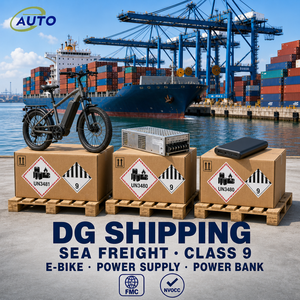

Strategic equipment, temperature-controlled facilities, and specialized logistics corridors engineered to mitigate surcharge vulnerabilities across Indian maritime hubs.


Operating through the Mumbai metropolitan freight cluster—specifically Jawaharlal Nehru Port Authority (JNPA/JNPT) across its multiple terminal concessions (GTI, NSICT, NSIGT, BMCT) and the legacy Mumbai Port Trust (MbPA)—requires precise administrative governance. High volume corridors connecting China, Southeast Asia, Europe, and the Middle East to western India frequently suffer from unexpected accessorial fees.
Ocean carrier base freight contracts rarely represent the true landed transportation cost. Without systematic oversight, shippers encounter compounding ancillary line items: Emergency Bunker Surcharges (EBS/BAF), Currency Adjustment Factors (CAF), Terminal Handling Charges (THC) discrepancies, Equipment Management Fees, Container Imbalance Charges (CIC), and punitive inland movement tariffs between off-dock Container Freight Stations (CFS) and hinterland destination depots.
How specialized surcharge control protocols mitigate financial drain across Maharashtra's critical manufacturing, engineering, and chemical clusters.
Industrial units importing hazardous materials (IMDG Classes 3, 4, 8, and 9) via JNPT frequently face unannounced "Dangerous Cargo Gate In" penalties and mandatory hazardous storage surcharges. Our localized protocol enforces direct delivery coordination (DPD) to private storage facilities, bypassing punitive CFS terminal surcharges.
Just-in-Time (JIT) manufacturing plants connected via the Mumbai-Pune Expressway depend on synchronized ocean deliveries. We mitigate ocean line "Peak Season Surcharges" (PSS) through committed long-term space-allocation agreements and prevent detention through pre-cleared automated bill of entry filings prior to vessel berthing.
As one of Asia's largest warehousing clusters, Bhiwandi operations often suffer from secondary handling, de-stuffing accessorials, and inland toll surcharges. Our sea freight management consolidates bills of lading to enforce single-window inland transport tariffs, eliminating redundant local origin agency disbursements.
Import/export movements through SEEPZ-SEZ and Mumbai Port Trust require strict adherence to regulatory tariff declarations. We audit currency conversion markups and prevent the common carrier practice of converting USD baseline surcharges at non-standard corporate exchange rates, enforcing CBIC statutory exchange benchmarks.
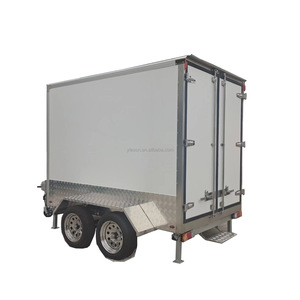
Reefer monitoring at JNPT terminals can rack up astronomical "Plugging & Monitoring Surcharges" during customs query delays. By employing our end-to-end active tracking and pre-planned reefer trailer shuttles, temperature-critical containers bypass staging backlogs, reducing dwell time surcharges to absolute zero.
A deep dive into maritime regulatory interventions, infrastructure shifts, and digital freight compliance governing the western seaboard.
The standard operating mechanism for ocean imports arriving at JNPT historically relied on designated Container Freight Stations (CFS). While intended to decongest port quays, it created a lucrative secondary market of unregulated local surcharges, including ground rent, shifting charges, survey fees, and documentation retrieval expenses. Under current Central Board of Indirect Taxes and Customs (CBIC) directives, over 65% of Tier-1 and AEO-certified importers utilize Direct Port Delivery (DPD).
Our localized surcharge architecture integrates continuous DPD facilitation. Consignments move directly from the terminal quay to the client's production facility or dry port depot within 24 to 48 hours of discharge, stripping away up to ₹25,000–₹45,000 ($300–$550 USD) per TEU in intermediate CFS processing charges.
India's National Logistics Portal (Marine) and the digitization of port procedures are curbing arbitrary invoicing by ocean carriers. However, forwarders lacking modern technical infrastructure frequently misclassify documentation, triggering automated penalty surcharges from port terminals. Automated vessel-bay reconciliation, instant e-Delivery Order (e-DO) releases, and digital invoice verification ensure our clients never face "DO Late Issuance" penalties or terminal paperwork reconciliation surcharges.
| Surcharge Classification | Standard Market Approach | Our Governed Management Architecture | Bottom-Line Variance |
|---|---|---|---|
| Bunker Adjustment Factor (BAF) | Floating, carrier-dictated index updated retroactively without auditable fuel metrics. | Tied strictly to Rotterdam / Singapore platts fuel index pegs with quarterly fixed ceilings. | 12% to 18% cost avoidance per FEU |
| Demurrage & Detention (D&D) | 3–5 standard free days; steep tiered penalties escalating daily upon expiry. | 14–21 pre-contracted combined free days negotiated globally directly with shipping lines. | Elimination of secondary tier demurrage risks |
| Terminal Handling Charges (THC) | Invoiced with arbitrary forwarder/broker operational surcharges added to port tariffs. | Pass-through billing based on published JNPA/MbPA gazetted statutory tariff rates. | 100% auditable; zero administrative markup |
| Currency Adjustment (CAF) | Inflated commercial exchange margins applied to freight collection bills. | Calculated exactly against official CBIC daily notified customs exchange rates. | 2.5% to 4% margin containment |
International shipping lines are aggressively expanding ESG-related surcharges, including the European Union Emissions Trading System (EU ETS) surcharges and FuelEU Maritime levies for Europe-Mumbai maritime lanes. Procurement executives serving the Mumbai trading market require itemized auditing rather than accepting bundled "Green Fuel Surcharges." Through our visibility platform, every shipment receives verified carbon metrics alongside itemized billing, enabling procurement teams to audit carbon cost legitimacy down to the exact gram per nautical mile.
Founded in 1913, WTA Group has delivered over 110 years of unimpeachable logistics execution. We engineer end-to-end transparency, active risk containment, and predictable bottom-line stability for world-class supply chains.
Founded by Ernest Sommer in 1913, our organization stands as a fourth-generation family-owned enterprise. We prioritize generational partner trust over volatile short-term transactional margins.
Holding premier international accreditations including AEO (Authorized Economic Operator) and C-TPAT, our licensed internal brokers navigate clearance protocols with zero third-party markups.
Complimentary 24/7 web and mobile platform delivering end-to-end milestones, delay prediction algorithms, ESG emissions tracking, and consolidated digital invoice auditing.
Direct contractual relationships with world-class ocean carriers across transpacific, Asia-Europe, and Indian Ocean networks provide guaranteed allocation and vetted pricing caps.
Engineered logistics divisions specializing in high-precision manufacturing, automotive JIT lines, chemical hazardous freight, retail consumer goods, and publishing supply chains.
With 85% of our global clients rating our operational transparency 8/10 or higher, our proactive cost containment is validated by market leaders like Eaton, JDE Peet's, and Tesco.
Essential operational clarity for Indian supply chain directors, trade managers, and procurement officers navigating western seaboard imports and exports.