
Engineered industrial asset transportation, open-top stowage, heavy machinery consolidation, and temperature-controlled cross-border execution designed for European trade corridors.
Over a century of forwarding heritage combined with modern engineering capabilities, ensuring zero-incident delivery for heavy industrial, civil, and energy equipment.
A rigorous structural, nautical, and regulatory breakdown for procurement managers and project logistics engineers coordinating out-of-gauge (OOG) infrastructure transfers.
Break bulk transportation of ultra-heavy industrial equipment—including wind turbine components, forged steel rollers, stamping presses, and pre-assembled industrial subassemblies—precludes standard ISO container stowage. Our engineering division in Shanghai and Ningbo develops custom Stowage and Lashing Plans adhering strictly to the International Maritime Organization (IMO) Code of Safe Practice for Cargo Stowage and Securing (CSS Code, Annex 13) and Germanischer Lloyd / DNV marine warranty inspection protocols.
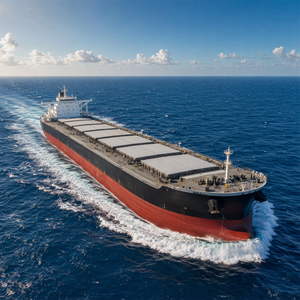
Before vessel chartering (Geared General Cargo Vessels, Multipurpose Heavy-Lift MPVs, or Semi-Submersible project carriers), our marine structural architects calculate static, dynamic (pitch, roll, yaw), and heave forces under Sea State 6+ North Atlantic and Baltic Sea weather profiles. Heavy cargo footprint distribution is engineered across ship tank tops using heavy timber dunnage, high-tensile steel load-spreading girders (welded H-beams), and calibrated elephant foot lashings, avoiding localized shear failures on vessel structural frames.
Shipments routed from Chinese oceanic gateways (Tianjin, Qingdao, Shanghai, Shenzhen) into Poland encounter two predominant routes: the maritime deep-water line via Gibraltar, Skagerrak, and the Danish Straits directly into Baltic container/break bulk terminals (Port of Gdańsk DCT, Port of Gdynia BCT), and the alternative overland Trans-Eurasian Southern and Northern rail vectors terminating at the Małaszewicze dry port hub.
For break bulk modules exceeding 100 metric tons or heights greater than 4.5 meters, maritime direct calls into Gdańsk's deepwater quays offer superior economic and structural security over rail infrastructure restricted by UIC standard railway loading gauges (GB, GC envelopes). Baltic maritime calls eliminate transshipment risks at rail border gauge exchanges (1520 mm to 1435 mm), ensuring zero structural fatigue on precision industrial castings.
| Transport Dynamic | Geared MPV Break Bulk (Direct Sea) | Flat Rack / Open Top (OOG Sea) | Eurasian Express Rail Corridor |
|---|---|---|---|
| Discharge Terminal | Port of Gdańsk / Gdynia Bulk Quay | Deepwater Container Terminal (DCT Gdańsk) | Małaszewicze Euro-Terminal / Łódź |
| Weight / Dimension Capacity | Single-piece up to 450T via tandem vessel cranes | Limited by container vessel cell guides (<45T) | Restricted to PKP Cargo railway profile gauge |
| Transit Time (Port-to-Port) | 32 – 42 Days (Cape or Suez) | 30 – 38 Days | 14 – 18 Days (Subject to border fluidity) |
| Cargo Typology | Steel mills, chemical autoclaves, power turbines | Modular machinery, extruders, chassis frames | Critical components, electronics, auto spare parts |
| Port Dwell & Handling Risk | Direct hook-to-barge or SPMT trailer discharge | Standard gantry handling with special lifting gear | Gantry crane axle-switch at border crossing |
Tailored engineering, river barge lighterage, and heavy road haulage tailored to the specific topography and industrial clusters of Poland.
Delivery of heavy offshore transition pieces, monopile tooling, and high-voltage transformer substations into Gdynia and Ustka staging ports, supporting the Polish Baltic Power and MFW Bałtyk energy developments.
Bespoke heavy automotive press installations and die casting tooling for factories situated across Katowice, Gliwice, and Wrocław Special Economic Zones (KSSE), utilizing low-bed hydraulic multi-axle trailers (Goldhofer / Scheuerle).
Combined deep-sea vessel discharge to shallow-draft inland Ro-Ro barges via Martwa Wisła, circumventing overland bridge height restrictions when delivering pressure vessels and cracking towers into Płock petrochemical hubs.
Structural pivots reshaping how Polish procurement directors, EPC contractors, and global manufacturers manage Sino-European break bulk routing.
Investments in the Port of Gdańsk Northern Port development and Gdynia’s Outer Port have drastically expanded break bulk staging berths, enabling Poland to function as the premier heavy-cargo transit transshipment hub for Slovakia, the Czech Republic, and Western Ukraine.
Under the EU Carbon Border Adjustment Mechanism (CBAM), Polish importers of steel beams, aluminum structures, and heavy machinery must now account for origin carbon emissions. WTA's Visibility Platform provides automated lane-by-lane carbon accounting from China foundry to Polish factory.
Polish engineering directors are transitioning from conventional FOB port-handover models to Turnkey DDP Project Forwarding. Buyers require suppliers and forwarders to guarantee Polish GDDKiA road permits, civilian police escorts, and bridge reinforcement clearances upfront.
Operating continuously since 1913, WTA Group pairs four generations of family-owned cargo governance with digital supply chain control towers.
With fully licensed operations across China since 2006, our on-site port captains directly supervise rigging, crane slings, crating, and marine lashing inspections across Shanghai, Ningbo, Qingdao, and Tianjin.
All clients receive complimentary access to WTA’s cloud tracking suite: live satellite AIS vessel positioning, predictive delay modeling, automated milestone triggers, and integrated document libraries for bill of ladings and phytosanitary certificates.
Our licensed international customs brokerage team minimizes destination dwell times via simplified procedures, bonded warehousing entries, and compliant handling of Polish SAD/AIS customs declarations.
Turnkey overland solutions across Poland including civil road survey analysis, overhead obstacle removal, route planning with GDDKiA authorities, and pilot car escorts right to foundation placement.
.png) AEO Accredited
.png) WCA Projects Member
.png) IATA Endorsed
.png) BIFA Standard
.png) C-TPAT Certified
Real-world commercial, technical, and regulatory answers for project logistics managers, industrial buyers, and EPC contractors.
Consult with our heavy-lift naval architects, route surveyors, and licensed European customs specialists. Gain access to transparent pricing models, comprehensive stowage plans, and end-to-end supply chain visibility.