
Whether retrieving high-value components, recycling bulk liquid containers, managing Class 9 lithium return cargo, or deploying industrial conveyor networks, explore our certified cross-border assets engineered for reverse and forward trade.

In modern industrial commerce and omnichannel expansion, forward fulfillment represents only half of the balance sheet equation. Reverse logistics—encompassing Return Merchandise Authorization (RMA), warranty component restoration, hazardous material decommissioning, industrial asset redeployment, and circular packaging reclamation—has evolved into a primary determinant of gross margin preservation and regulatory compliance. For enterprises distributing consumer electronics, heavy machinery, automotive components, and energy storage systems throughout Manila, Taguig, Pasig, Cavite, and Laguna, the absence of a structured reverse corridor to mainland China manufacturers results in ballooning dead inventory, prohibitive local scrap penalties, and lost warranty recoveries.
Operating as a specialized China reverse logistics solutions manufacturer and supplier serving Manila, our supply chain group bridges the operational chasm between original equipment manufacturers (OEMs) in Shenzhen, Dongguan, Ningbo, and Shanghai, and downstream distributors in the National Capital Region (NCR) and Luzon industrial parks. By integrating localized collection sorting in Metro Manila with maritime short-sea shipping into Shekou, Nansha, or Ningbo, and providing dedicated bonded repair solutions in Chinese Comprehensive Bonded Zones (CBZs), we convert reverse supply chains from friction-heavy cost centers into rapid, value-generating asset recovery loops.
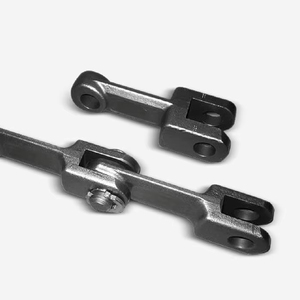
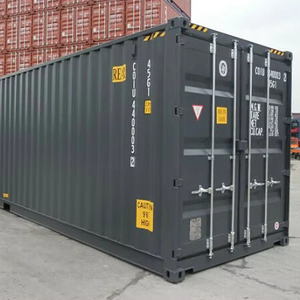
Our infrastructure couples physical hardware (such as second-hand certified maritime containers, flexitanks, and heavy conveyor chain sorting apparatus) with digital supply chain control towers. From the moment a defective server rack, returned EV battery pack, or leased bulk liquid container is flagged at a Manila delivery station, our tracking platform registers the serial number, coordinates Bureau of Customs (BOC) clearance, assigns compliant Class 9 or general cargo stowage, and executes the transshipment to China within 3 to 5 business days transit time.
How top-tier multinational brands, electronics fabricators, and regional importers deploy our reverse logistics mechanisms to streamline asset recovery, eliminate scrap, and maintain trade compliance.
Consumer electronics brands distributing through Shopee, Lazada, and offline malls across Metro Manila (Divisoria, Greenhills, SM Megamall) face return rates of 8% to 15%. Defective smartphones, IoT peripherals, and telecom PCBA units are retrieved by our localized vans, brought to a central Parañaque sorting center for visual grading and serialization, and consolidated for weekly consolidated air or sea express returns to Shenzhen and Huizhou for factory refurbishment.
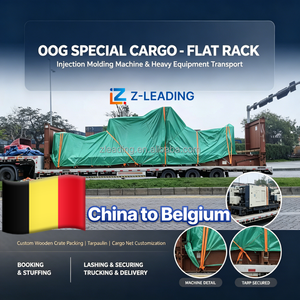
In Philippine Economic Zone Authority (PEZA) sites throughout Laguna Technopark, First Philippine Industrial Park (FPIP) in Batangas, and Cavite Economic Zone, manufacturers frequently encounter tooling degradation, CNC controller failures, and heavy conveyor chain fatigue. Utilizing our flat-rack sea containers and bonded customs brokerage, we coordinate the temporary export of industrial machinery to original equipment foundries in Jiangsu and Zhejiang under Section 800 of the CMTA, bypassing standard import duties upon re-entry.
With the surge in two-wheeler e-bikes, solar rooftop installations, and backup telecom power across Luzon, damaged, defective, or recalled (DDR) lithium iron phosphate (LiFePO4) and ternary lithium batteries represent extreme thermal hazards. As a certified Class 9 dangerous goods forwarder, we deploy UN-certified blast-proof salvage drums, inert vermiculite packing, and IMO-compliant short-sea transport from Manila South Harbor to southern Chinese specialized hydro-metallurgical battery recyclers.
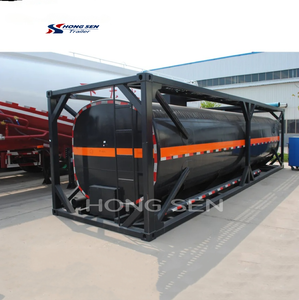
Food processing, oleochemical, and industrial surfactant plants along the Pasig River and Manila Bay require continuous inbound bulk liquids. Utilizing high-capacity bulk liquid containers, flexitanks, and intermediate bulk containers (IBCs), we institute circular cleaning, sanitization, pressure-testing, and empty repositioning back to chemical filling hubs in Guangzhou and Shanghai, reducing single-use drum disposal costs by up to 64% per shipment cycle.
Undelivered (RTS - Return to Sender) packages from Cash-on-Delivery (COD) cross-border orders clog Manila sorting hubs in Bulacan and Taguig. Rather than incurring terminal demurrage, our cross-border system performs reverse de-kitting, local secondary marketplace restaging, or bulk maritime container consolidation for duty-free returns to Shenzhen Bonded Port Area for inventory relabeling and redeployment to other ASEAN markets.
The operational landscape for logistics directors in the Philippines is undergoing tectonic shifts driven by legislative, ecological, and infrastructural changes. Companies relying on rudimentary, informal return mechanisms face severe compliance penalties and escalating costs under the following developments:
1. Enforcement of Republic Act No. 11898 (Extended Producer Responsibility Act - EPR): The Philippine Department of Environment and Natural Resources (DENR) mandates that brand owners, manufacturers, and importers establish audited recovery programs for plastic packaging and post-consumer electrical waste. Large enterprises must achieve 80% recovery compliance. Our China–Manila reverse infrastructure incorporates verifiable recovery registries, allowing enterprise partners to document circular retrieval flows directly through our supply chain visibility platform for submission to the National Solid Waste Management Commission.
2. Bureau of Customs Modernization (BOC CMO 16-2020 & e-Transit Systems): Customs supervision over bonded goods and temporary exportations has fully digitized. For cross-border RMA cargo leaving the Port of Manila (Manila International Container Terminal - MICT or South Harbor) or Ninoy Aquino International Airport (NAIA), the filing of Advance Electronic Declarations and Electronic Tracking of Containerized Cargo (E-TRACC) seals is strictly enforced. Non-compliance results in the forfeiture of re-importation duty exemptions, saddling firms with standard 12% Value Added Tax (VAT) and up to 15% customs duties on goods they already owned.
3. Port Decongestion & North/South Luzon Bypass: With congestion recurring along the radial corridors of Metro Manila (R-10, Roxas Boulevard, and C-5) during daytime truck ban windows, intelligent reverse routing utilizes alternative gateways. For industrial estates in Batangas and Laguna, our drayage operations bypass Manila completely via the Port of Batangas; for Pampanga and Subic locators, Subic Bay International Terminal offers direct short-sea connections to Xiamen and Hong Kong, shaving up to 48 hours off inland demurrage.
A rigorous breakdown showing why reverse flows require specialized customs, packaging, and handling protocols compared to standard forward shipping from China to Manila.
| Workflow Dimension | Standard Forward Freight (China → Manila) | Reverse Freight Corridor (Manila → China) | Our Optimized Solution Matrix |
|---|---|---|---|
| Customs Documentation | Standard Bill of Lading, Commercial Invoice, Packing List, Form E (ACFTA). | CMTA Section 800 Re-exportation bond, BOC Form 8105, Certificate of Identification. | Automated Bonded Filing with zero double-taxation guarantee. |
| Transit Lead Time | 3–5 days port-to-port via direct South China sea lanes. | Often stalled 14–25 days due to lack of reverse sorting and export clearances. | 3–4 Days Port-to-Port with pre-cleared return cargo manifests. |
| Packaging & Containment | Factory-new cartons, standard corrugated boxes, clean bulk tanks. | Damaged primary packaging, leaking fluids, volatile degraded batteries. | UN Hazmat Packaging, steel-reinforced drums, industrial chain sorters. |
| Destination Handling in China | Direct delivery to commercial warehouse or domestic logistics parks. | Rigorous China Customs CIQ inspection on imported solid waste/scrap. | Comprehensive Bonded Zone Entry for duty-free triage & remanufacturing. |
| Visibility & Tracing | Container-level milestone updates (Vessel departed, arrived). | Often completely invisible once retrieved from end-consumer in Manila. | Item-Level Serial Telemetry via 24/7 visibility portal & mobile app. |
Drawing on an international logistics legacy founded in 1913, we combine the financial stability of a century-old forwarder with cutting-edge digital tracking and specialized localized Manila operations.
Founded in 1913, our organization pairs institutional knowledge with multi-generational resilience. Having navigated global trade shifts for over a century, our teams resolve complex geopolitical, customs, and intermodal supply chain disruptions with practiced precision.
We eliminate border hold-ups with dedicated, in-house licensed customs brokers in Manila, Hong Kong, and mainland China. Accredited with AEO and C-TPAT credentials, our green-lane status reduces inspection hold rates to an absolute minimum.
Every account gains 24/7 access to our cloud visibility suite and mobile app. Gain predictive delay intelligence, monitor sea water temperature conditions for sensitive return electronics, and download verified carbon footprint (ESG) data calculated using GLEC standards.
Our strategically situated facilities in the Qianhai (Shenzhen), Nansha (Guangzhou), and Waigaoqiao (Shanghai) Comprehensive Bonded Zones allow Philippine-origin goods to enter China under bonded status for repair, testing, and restocking without paying full import tariffs.
Maintaining a Net Promoter Score of 77 and an 85% top-tier satisfaction index, our dedicated bilingual Philippine-desk managers communicate in English, Tagalog, and Mandarin, ensuring seamless communication across all operational touchpoints.
Reverse logistics frequently suffers from unforeseen destination detention fees and terminal surcharges. We provide unyielding transparency: bunker adjustments (BAF), currency factors (CAF), terminal handling (THC), and documentation costs are fixed upfront.
Clear, definitive technical answers addressing customs legalities, hazmat constraints, duty drawbacks, and port handling protocols between the Philippines and China.
Under Section 800 of the Philippine Customs Modernization and Tariff Act (CMTA - RA 10863) and corresponding BOC regulations, machinery or high-value components sent abroad for repair, processing, or alteration can be re-imported without paying normal duties on the full product value. To qualify, your shipment must be formally processed before departure through a BOC Certificate of Identification (CI) and exported under a Temporary Export Bond. Upon re-importation through MICT or South Harbor, duties and VAT are calculated solely on the value of repairs, replacement parts, and associated shipping costs, rather than the initial capital expenditure. Our Manila customs team handles both the outward identification filings and inward reconciliation declarations.
Defective, damaged, or recalled (DDR) lithium batteries cannot be transported via standard commercial cargo flights or dry shipping containers due to severe thermal runaway risks. Under the International Maritime Dangerous Goods (IMDG) Code Special Provision 376 and Packing Instruction P908/LP904, every individual unit must be placed in a non-combustible, thermally insulating cushioning material (such as vermiculite or pyro-stop glass beads) inside an impact-resistant UN-certified salvage container (UN 1A2 steel drum or 4G box). Our certified Hazmat specialists provide compliant on-site packaging at your facility in Manila, complete with Class 9 dangerous goods placards and hazardous waste movement approvals from the Philippine Environmental Management Bureau (EMB-DENR).
Direct short-sea feeder services operating from Manila International Container Terminal (MICT) or Manila South Harbor to Shenzhen (Shekou/DaChan Bay), Guangzhou (Nansha), or Hong Kong typically feature a sea transit time of 2.5 to 4 days. When factoring in export container drayage across Metro Manila, customs security scanning, export clearance, destination discharge, and bonded truck delivery into Chinese Comprehensive Bonded Zones, the total door-to-hub timeline spans 6 to 9 working days. For urgent engineering parts, our expedited air freight links from NAIA Terminal 3 to Shenzhen Bao'an or Guangzhou Baiyun compress transit to under 24 hours.
Yes. By routing return shipments directly into one of our partner Comprehensive Bonded Zones (CBZs)—such as Qianhai Bonded Area or Nansha Free Trade Zone—goods are treated as extraterritorial for customs purposes. This means that returned smartphones, smart appliances, or power supplies enter duty-free and tax-free for inspection, cosmetic refurbishment, testing, repackaging, or software updates. Once restored, the products can be re-exported directly to other global destinations or re-shipped to Manila without entering mainland China's domestic tax perimeter, safeguarding working capital.
Metro Manila's truck ban window (enforced by the MMDA between 6:00 AM – 10:00 AM and 5:00 PM – 10:00 PM on major arteries, with total bans on EDSA) represents a primary cause of port demurrage and delayed container returns. We neutralize this bottleneck by deploying licensed 4-wheel and 6-wheel forwarder trucks below gross vehicle weight restrictions during peak daylight hours for localized collection in Ortigas, BGC, and Makati. Heavy containerized tractor-trailers are dispatched along designated 24-hour truck corridors (such as Circumferential Road 5 and Port of Manila access corridors) during night windows, backed by strict pre-booked terminal appointments through the MICT Terminal Appointment Booking System (TABS).
Exporting machinery or defective inventory from a Philippine Economic Zone Authority (PEZA) enterprise requires strict adherence to non-taxable export procedures to avoid jeopardizing fiscal incentives. Crucial documents include a completed PEZA Form 8105 (Boatnote / Permit to Transfer), an approved Letter of Authority (LOA) for repair abroad, the original commercial invoice, packing list, and the Export Declaration through the BOC Electronic-to-Mobile (e2m) system. Our dedicated PEZA clearance team handles full liaison between the Zone Manager's office, the BOC Export Division, and shipping terminals to guarantee continuous tax exemption.
Under Republic Act No. 11898 (Extended Producer Responsibility Act), large enterprises must provide third-party audited proof of their product footprint mitigation. Our real-time supply chain visibility portal integrates telematics from our freight fleet and cargo handlers to compute precise emissions using Global Logistics Emissions Council (GLEC) compliant frameworks. Clients can generate automated ESG reports logging total metric tons of packaging diverted from municipal landfills, circular container cycles completed, and CO2 emissions saved by choosing maritime short-sea consolidation over air transit, directly satisfying DENR audit requirements.