Engineered for original equipment manufacturers (OEMs), precision engineering exporters, and turnkey plant developers serving the Czech Republic and wider EU single market.
Freight heritage since 1913, managing complex project cargoes worldwide.
Global manufacturing, automotive, and industrial buyers serviced annually.
Direct multimodal trade lanes connecting Central Europe to world ports.
Authorized Economic Operator certified customs brokerage and compliance.
The Czech Republic represents the industrial backbone of Central and Eastern Europe (CEE), maintaining the European Union’s highest industrial contribution to gross domestic product (exceeding 31%). Known historically for heavy mechanical engineering (strojírenství), automotive manufacturing, metal fabrication, precision machine tooling, and energy turbines, the domestic economy relies intrinsically on resilient, low-latency, and highly specialized machinery shipping corridors.
As a landlocked sovereign state situated in the center of the European continent, Czech machinery manufacturers and international equipment exporters operate under distinct logistics realities. Unlike coastal industrial hubs, Czech factories in Plzeň, Brno, Liberec, and the Moravian-Silesian region (Ostrava) require sophisticated multimodal consolidation. High-value plant components, robotic automation cells, CNC milling centers, and industrial casting equipment enter and depart through designated maritime sea-rail links via Northern European ports (Hamburg, Bremerhaven, Rotterdam) or the Southern Adriatic gateway (Port of Koper, Slovenia; Trieste, Italy). Managing transport in this sector demands rigorous adherence to international engineering norms, oversized roadway permits under Czech Act No. 13/1997 Coll., and predictive customs clearance frameworks.
Direct specialized transit routes supporting power generation turbines, heavy metallurgy, and industrial presses from historical mechanical centers such as Plzeň and Ostrava directly onto ocean flat-racks.
High-frequency bonded shuttle transport catering to the automotive triangle of Mladá Boleslav, Kolín, and Nošovice, handling stamping dies, robotic arms, and high-precision tier-one machinery assemblies.
Comprehensive AEO-certified fiscal representation, Czech bonded warehousing, Carnet ATA support for international machinery expos (MSV Brno), and seamless Intrastat reporting protocols.
Precision execution of machinery freight requires deep alignment with regional geography, physical plant constraints, and the surrounding transportation network. Our heavy-cargo shipping solutions are tailored specifically to the regional industrial specializations of the Czech market:
| Czech Industrial Cluster | Predominant Industrial Sector | Typical Machinery Logistics Profile | Primary Routing & Port Gateway |
|---|---|---|---|
| Plzeň Region (West Bohemia) | Heavy mechanical engineering, steam/gas turbines, rail rolling stock | Out-of-Gauge (OOG), modular breakbulk, specialized flat-racks, high-capacity low-bed road trailers | Hamburg Port / Metrans Rail |
| Mladá Boleslav & Kvasiny | Automotive OEM and automated assembly lines | Time-critical air-freight charters for tooling, scheduled FCL sea freight for robotic assembly cells | Bremerhaven / Rotterdam Direct |
| Brno & South Moravia | Electron microscopy, semiconductor tools, medical instruments | Climate-controlled, air-ride van transit, anti-vibration crating, high-value armed security escort | Port of Koper / Vienna Air Cargo |
| Ostrava & Třinec (Moravia-Silesia) | Heavy metallurgy, mining machinery, oilfield and energy tubular structures | Breakbulk rail wagon carriage, multi-axle modular hydraulic trailers, heavy sea lashings (G70/G80) | Koper Adriatic / Gdańsk Deepwater |
| Hradec Králové & Pardubice | Chemical processing systems, modular fluid skids, industrial storage | ADR-compliant chemical transport, 1000L IBC tank liquid logistics, stainless structural steel delivery | Rotterdam / Elbe River Barge |
Turnkey disassembly, ocean crating with vapor corrosion inhibitors (VCI), sea freight transit, and on-site positioning using indoor hydraulic gantry systems across Czech precision toolmakers.
Direct utilization of the terminal network in Česká Třebová, Prague-Uhříněves, and Ostrava-Paskov, bypassing highway congestion and achieving lower carbon-intensity per heavy ton shipped.
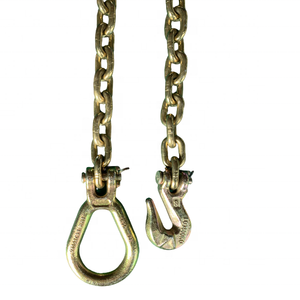
Application of EN 12195-1 and AS standard Grade 70 / Grade 80 transport chains with pear links and clevis grab hooks to secure heavy castings during sea journeys through rough weather conditions.
The Czech Republic is experiencing a profound transformation in how industrial goods, equipment, and automated capital assets move across its borders. Four structural trends define this operational evolution:
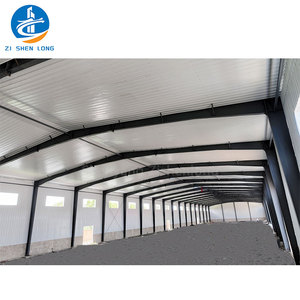
European manufacturers are mitigating transpacific vulnerabilities by establishing advanced satellite production in Central Europe. This shift drives high demand for modular steel-structure factory construction components and rapid-deployment production machinery.
Under EU CSRD regulations and the impending CBAM (Carbon Border Adjustment Mechanism), Czech heavy equipment exporters must measure and minimize logistics carbon emissions, accelerating the switch from diesel heavy road haulage to electric-rail intermodal freight corridors.
The complete rollout of the European Union's Import Control System 2 (ICS2) and NCTS Phase 5 requires real-time, pre-arrival advance cargo declaration. Automated data pipelines eliminate customs border delays at Hamburg and Rotterdam before machinery enters Czech territory.
Combining 110+ years of British-born maritime forwarding heritage with on-the-ground operational mastery of European heavy industrial transit corridors.
Over a century of continuous multimodal expertise, remaining a client-first logistics provider spanning four generations of family ownership.
Direct door-to-door project networks spanning 122 sovereign nations, including dedicated hubs in the UK, USA, China, and the UAE.
Top-tier Authorised Economic Operator accreditations granting priority customs treatment, reduced inspections, and simplified border entries.
Proprietary digital supply chain visibility platform providing live sensor tracking, automated carbon auditing, and proactive delay mitigation.
Clear, technical, and regulatory answers addressing the primary challenges encountered by plant managers, logistics directors, and machinery procurement teams:
Because the Czech Republic is landlocked, industrial cargo primarily utilizes two maritime routes: the Northern Range (Hamburg, Bremerhaven, Rotterdam) and the Southern Adriatic corridor (Port of Koper, Slovenia; Trieste, Italy). Hamburg offers the densest rail connectivity directly into Prague and Česká Třebová via Metrans container trains. The Port of Koper provides an advantageous ocean transit time savings of 5–8 days for shipments originating from East Asia, India, and the Middle East entering South Moravia (Brno) and Ostrava.
Under Czech Act No. 13/1997 Coll. on Road Communications, any vehicle assembly exceeding standard legal parameters (width > 2.55m, height > 4.0m, total weight > 48 tons, or axle load > 10 tons) requires a Special Use Permit (Rozhodnutí o zvláštním užívání pozemní komunikace) issued by the Ministry of Transport (Ministerstvo dopravy ČR) or regional highway authorities. Processing lead times vary from 10 to 25 business days, frequently requiring structural bridge static assessments and mandatory Czech Police (PČR) escort units.
Under the Czech VAT Act (Zákon o DPH č. 235/2004 Sb., Section 23), registered Czech taxable entities can apply the Reverse Charge Mechanism on imported commercial machinery. Rather than paying 21% import VAT at the physical border or port of entry, the VAT liability is declared directly within the company's monthly or quarterly tax filing. Customs clearance can be executed under the T1 transit regime from European ports directly to an inland Czech bonded customs warehouse (Celní sklad), conserving working capital.
Maritime container shipping subjects precision machinery to extreme thermal cycling and salt-fog atmospheric condensation. Standard practice involves treating unpainted machined surfaces with active VCI (Vapor Corrosion Inhibitor) oils or coatings, vacuum-sealing the entire unit inside an aluminum multi-layer barrier foil (MIL-PRF-131K Class 1), and embedding measured quantities of activated clay desiccant bags. The equipment is then bolted and chocked onto heavy timber skids compliant with ISPM 15 phytosanitary wood packaging standards.
Yes. In addition to port-to-port and road transportation, WTA Group coordinates heavy rigging, skidding, and indoor positioning. Utilizing electric multi-axle modular transporters (SPMTs), low-clearance hydraulic gantry cranes, and air-bearing flotation systems, our specialized rigging teams extract equipment from existing industrial plants and set up new CNC production centers directly onto prepared reinforced foundation slabs across Czech production facilities.
For capital equipment, DAP (Delivered at Place) or DDP (Delivered Duty Paid) are frequently requested by buyers to consolidate risk. However, seasoned buyers often choose FCA (Free Carrier) or FOB (Free on Board), retaining control over carrier selection, route speed, transshipment safety, and avoiding inflated CIF carrier local destination surcharges. For full manufacturing plant projects, structured DPU (Delivered at Place Unloaded) terms clarify rigging and unloading liabilities between the supplier and the consignee.