
Engineered shipping assets, customs clearance infrastructure, and specialized intermodal platforms designed to withstand maritime transit between mainland China manufacturing hubs and Southern African commercial ports.
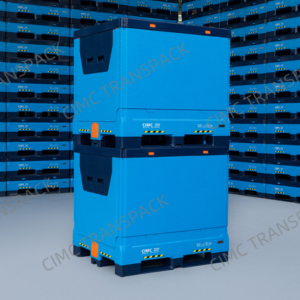
The bilateral maritime supply corridor between the People's Republic of China and the Republic of South Africa stands as one of the most vital arteries in the Global South. As South Africa accelerates industrial infrastructure upgrades, expands renewable energy installations, and modernizes its manufacturing ecosystem, the demand for precision-engineered, damage-resistant pallet shipping services has shifted from a rudimentary packaging consideration into an essential strategic competence.
Procuring pallet shipping services directly from Chinese factories or contracting China-based pallet freight consolidation plants requires deep technical scrutiny. Palletized freight traversing the Indian Ocean faces rigorous mechanical vibration, drastic ambient temperature variations across equatorial zones, marine humidity, and intensive physical handling at major transshipment gateways such as Singapore, Port Louis, or Colombo, before arriving at South African ports like Durban Container Terminal (Pier 1 and Pier 2), Cape Town Container Terminal (CTCT), or Port of Ngqura (Coega).
Selecting the optimal pallet substrate and construction grade directly impacts deadweight ratios, ocean freight container utilization, phytosanitary clearance friction at South African Revenue Service (SARS) customs checkpoints, and downstream warehouse integration.
| Pallet Substrate | Standard Dimensions | Dynamic / Static Load | Phytosanitary Protocol (ISPM 15) | Optimal South African Application |
|---|---|---|---|---|
| Heavy Solid Pine Wood | 1200 × 1000 mm (4-way entry) | 1,500 kg / 4,000 kg | Mandatory Heat Treatment (HT) stamp (56°C for 30 min) | Heavy industrial castings, pumps, mining consumables into Gauteng & Mpumalanga |
| Molded Compressed Wood (Presswood) | 1200 × 1000 mm / 1100 × 1100 mm | 1,000 kg / 2,500 kg | Exempt from ISPM 15 (Manufactured under high heat/pressure) | High-density export packaging, automotive spare parts, wholesale dry goods |
| Virgin HDPE / PP Plastic | 1200 × 1000 mm (Perforated/Flat) | 1,200 kg / 5,000 kg | Fully exempt; non-porous, washdown certified | Pharmaceuticals, food processing, cold-chain poultry & citrus processing equipment |
| Galvanized Steel / Aluminum | Customized up to 2200 × 1200 mm | 2,500 kg / 8,000 kg | Fully exempt; zero organic infestation potential | Deep-level mining machinery components, high-voltage transformers, renewable battery banks |
South Africa’s geographic landscape mandates multimodal freight strategies where maritime discharge is merely the initial phase of an intricate inland haulage operation. Sourcing palletized freight from Chinese factories requires an end-to-end alignment with specific regional operating conditions:
The economic heartland encompassing Johannesburg, Ekurhuleni, and Pretoria accounts for over 60% of inbound containerized freight. Pallets entering via the Natcor rail link or road transport along the N3 highway must feature heavy-duty perimeter skids and reinforced edge-boards to resist high vibration across inland transit to the Bushveld Complex and Witwatersrand mining operations.
Gqeberha (Port Elizabeth), East London, and the Coega Special Economic Zone (SEZ) require Just-In-Time (JIT) palletized delivery of Tier-1 and Tier-2 automotive components from Chinese industrial hubs (Ningbo, Taizhou, Guangzhou). Pallet nesting designs and returnable foldable packaging matrices are essential to feed OEM assembly plants without packaging degradation.
Massive utility-scale solar photovoltaic (PV) plants and wind farms in the Karoo and Northern Cape demand specialized palletized shipping for PV modules, inverters, and battery energy storage systems (BESS). Pallets require high UV resistance, multi-axial strapping, and heavy desiccants to survive ocean condensation during transit from Shanghai or Shenzhen.
Navigating the South African import landscape requires proactive mitigation of systemic infrastructure developments and regulatory changes:
Executing resilient pallet logistics from mainland China to South Africa demands the operational backbone of a forwarder that pairs deep Chinese manufacturing presence with proven African trade lane execution. WTA Group brings over a century of continuous logistics mastery to your supply chain.
Founded in 1913, WTA Group has grown across four generations into a trusted international logistics partner, supporting over 6,000 enterprise customers across 122 countries and 679 active trade lanes.
Our dedicated operations in China (established in 2006) oversee factory-gate collection, multi-supplier pallet consolidation, automated strapping inspection, and phytosanitary verification before containers are sealed at Chinese load ports. In parallel, our licensed customs brokerage professionals manage seamless clearing under SARS tariff classifications, eliminating port dwell times.
.png)
.png)
.png)
.png)
.png)
Access precision factory consolidation, guaranteed ISPM 15 compliance, competitive container freight rates, and dedicated SARS-licensed customs brokers.
Get Catalog